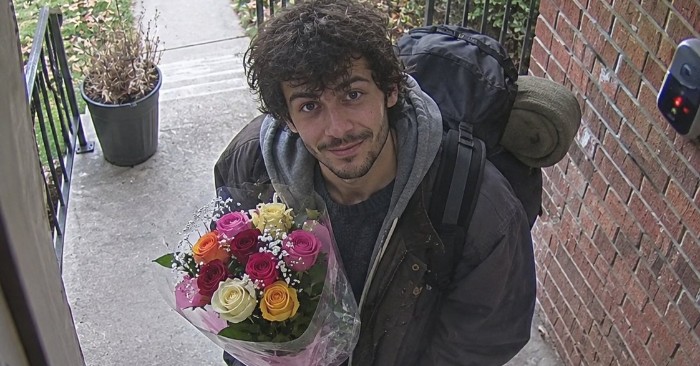
A young homeless man used the last of his money to buy yellow roses for a lonely widow on her birthday. My mother was so deeply touched by his kindness that she gradually welcomed him into her life. When she passed away a few months later, she specifically requested that he attend the reading of her will. But when the attorney handed him a mysterious wooden box, my brother suddenly panicked. What we discovered inside changed everything.
The first time my mother invited a stranger to Sunday dinner, my brother Peter asked whether she had completely lost her mind.
I told him to lower his voice.
Mom was standing at the stove, quietly humming a song our father used to sing.
I hadn’t heard her hum like that in years.
My name is Grace.
I’m 52 years old, and I have two grown children.
Until that spring, I thought I knew my family pretty well.
Peter and I had grown up together in the same modest house.
Our father could fix practically anything that stopped working.
And our mother never allowed anyone to leave her dinner table hungry.
Dad passed away eight years ago.
After losing him, Mom tried to keep herself occupied with gardening and spending time with her friends from church.
But the evenings were especially difficult for her.
She never admitted that outright.
Still, I could tell by how reluctant she was to end our phone conversations.
Sometimes she would ask about people she barely knew, simply to keep me talking for a little longer.
My brother Peter lived only twenty minutes away.
Even so, he rarely visited unless he needed something from her.
He drove an expensive car, wore designer clothes, and owned a business that, according to him, was always just one payment away from becoming a huge success.
Whenever I expressed concern that Mom had lent him money again, she immediately defended him.
“He’s still trying to get his business properly established,” she would say.
“Mom, he’s 49 years old.”
“Just because my children have grown up doesn’t mean they’ve stopped being my children.”
I didn’t argue any further.
After all, she would have said exactly the same thing about me.
Then Ethan entered our lives.
Before long, the quiet, lonely woman I’d been so worried about began setting an extra place at her table every Thursday.
My mother was eighty when she brought a young homeless man home for dinner.
His name was Ethan.
He was 24 years old, slept behind a bookstore that had closed down, and owned nothing beyond what he could carry in his backpack.
They had first encountered each other outside a pharmacy.
Mom had accidentally dropped one of her grocery bags there.
Her groceries spilled across the sidewalk.
While everyone else walked past without stopping, Ethan knelt down and helped her gather everything.
After that, he began visiting her regularly on Thursdays.
He carried her shopping bags.
He repaired the broken steps leading up to her porch.
And he listened patiently whenever she shared memories of my late father.
On her eightieth birthday, he unexpectedly appeared at her front door holding a bouquet of yellow roses.
The flowers had cost twelve dollars.
Mom burst into tears.
Only later did I discover that Ethan had spent every dollar he had left on them.
“Why would you do that?” I asked him.
He simply shrugged.
“She deserved flowers on her birthday.”
Over the following months, Mom became increasingly attached to the young man.
Then, one Sunday, she confessed something that left me completely speechless.
“I asked Ethan if he would marry me,” she admitted.
I nearly dropped my coffee mug.
“Mom! He’s fifty-six years younger than you!”
She gave me a sad little smile.
“I know. I just wanted him to have a home and someone who would look after him.”
But Ethan had turned down her proposal.
“He told me he wouldn’t marry me simply to have somewhere to live.”
Three months later, my mother passed away peacefully in her sleep.
While making arrangements for her funeral, I came across a handwritten note.
In it, Mom specifically asked me to invite Ethan to the reading of her will.
I assumed she had probably left him a little money.
So I went looking for him.
When he finally arrived at the attorney’s office, he was wearing a borrowed jacket.
He clutched his worn backpack tightly against his body.
My brother looked furious.
“What’s he doing here?” Peter demanded, rolling his eyes.
“Mom wanted him here,” I replied.
The attorney, Mr. Collins, opened a thick file.
He began by going through the standard provisions concerning the distribution of her estate.
But then he paused.
“There’s one final instruction concerning Ethan.”
Ethan lowered his eyes.
Mr. Collins reached beneath his desk.
When he brought his hand back up, he was holding a small wooden box.
My brother suddenly leaped to his feet.
“Hold on! What’s that box?”
The attorney handed Ethan a tiny brass key.
The young man stared at it in confusion.
Then Peter abruptly lunged forward.
“Don’t open it!”
But Ethan had already slipped the key into the lock.
A faint click echoed through the room.
He slowly lifted the lid.
Then he reached inside and pulled out a photograph.
It showed our father standing on the porch of a small vacation cottage.
He was holding a hammer in one hand.
He grinned proudly at the camera, looking as though he had just finished building an entire palace.
Beneath the photograph were a folded letter and another key.
This second key was considerably larger than the first.
“That’s Dad’s vacation house,” I whispered.
Peter immediately stopped reaching for the box.
His face had turned deathly pale.
The little cottage stood on the outskirts of town, close to a narrow creek.
Dad had purchased it when Peter and I were children.
He had spent years working on renovations.
After his death, the property had passed into Mom’s ownership.
She hardly ever went there anymore.
Every room reminded her too much of him.
“Why is he getting that photograph?” Peter demanded.
Mr. Collins looked at him calmly.
“Please sit down.”
Ethan turned the letter over.
His name was written on the front.
In Mom’s neat, familiar handwriting.
“Would you like me to read it aloud?” the attorney asked.
Ethan swallowed hard.
“I think I can manage.”
He unfolded the paper.
But his voice broke before he could get past the opening sentence.
Eventually, he handed the letter to me.
I began reading aloud.
“Dear Ethan,
You once told me that the worst thing about sleeping on the streets isn’t the cold. The worst part is believing that nobody would notice if you failed to return one day.
I noticed you.
And I’m grateful that you noticed me, too.”
Ethan pressed both palms over his eyes.
I continued reading.
“I wanted to give you a home while I was still alive. But you were too proud to accept one.
And I was foolish enough to imagine that getting married might solve the problem.
Thank you for refusing my proposal with such kindness.
You reminded me that genuine affection should never come with conditions attached.”
I briefly looked up.
Peter was staring at the wooden box.
Not at Ethan.
Then I resumed reading.
“The little cottage belongs to you now, if you’re willing to accept it.
It was the first home my husband and I worked together to turn into something beautiful.
I hope it becomes the first place where you can finally feel safe again.”
“No,” Ethan whispered.
“She couldn’t have done that.”
Mr. Collins nodded.
“The will specifies that full ownership of the vacation property is to be transferred to you. The ownership records are clear, and the necessary transfer will be completed during the administration of the estate.”
He paused briefly.
“You don’t have to make your decision today.”
Peter slammed his palm against the armrest of his chair.
“That house is worth a fortune! She promised us it would stay in the family!”
Ethan answered so quietly that I could barely hear him.
“She was family to me.”
Peter whipped around toward him.
“You only knew her for a few months! Don’t you dare say something like that!”
“Peter,” I warned.
But Mr. Collins raised his hand.
“There’s something else inside the box.”
At the very bottom lay an envelope.
Peter’s name was written across it.
My brother’s chair scraped loudly against the floor.
“That’s private!”
Mr. Collins remained perfectly composed.
“Your mother explicitly instructed that this document be opened in the presence of all the beneficiaries.”
Then he added:
“The original is already in my records, in any event. Even if this copy were to disappear, it wouldn’t change anything.”
For a moment, Peter looked as though he might try to snatch the envelope anyway.
But eventually, he sank heavily back into his chair.
I opened the envelope.
Inside was a document bearing Peter’s signature.
It was dated six months earlier.
And the amount written on it made my stomach twist.
Eighty-seven thousand dollars.
“What is this?” I asked.
Peter said nothing.
Mr. Collins answered carefully.
“It’s a written acknowledgment of funds your mother advanced to Peter. The document also contains his commitment to repay that money.”
He pointed to the signature.
“Your mother asked me to keep this agreement on file.”
Peter raised his voice.
“She gave me that money! She knew my company needed help!”
“She believed your company needed help,” Mr. Collins replied.
“However, she later discovered that some of the explanations you had given her were untrue.”
I stared at my brother.
For years, Peter had told me his company was struggling financially because customers weren’t paying their invoices on time.
Mom had helped him cover the rent for his office.
Then a supplier’s invoice.
Then an unexpected tax bill.
Every single time, Peter had promised that the problem was only temporary.
“You told her you were going to lose your company,” I said.
“That could have happened.”
“But you didn’t actually use the money to pay those bills?”
Peter looked away.
Then I asked the question that had been bothering me from the beginning.
“Why did you recognize that box immediately?”
He stared at the tiny brass lock.
“Mom brought it out when she made me sign that agreement.”
His voice grew quieter.
“She told me she was going to keep my written promise inside it until I’d paid everything back.”
I looked at him in disbelief.
“That’s why you tried to stop Ethan from opening it?”
Peter nodded reluctantly.
“I thought everyone would find out what I’d done.”
“And you thought grabbing the box would somehow prevent that?”
“I wasn’t thinking,” he muttered.
Mr. Collins tapped his file lightly.
“The signed original is kept here. Your mother wanted the copy placed inside the box so that nobody could later accuse Ethan of inventing the matter.”
For the first time, I understood that Peter hadn’t been trying to protect our mother from a stranger at all.
He had been trying to protect himself from the truth.
The attorney closed the file.
“Your mother required repayment of the money. Whether the estate pursues additional action will be determined separately.”
Then he turned toward Ethan.
“The transfer of the vacation cottage is entirely independent of this dispute.”
Ethan pushed the wooden box back toward Mr. Collins.
“I didn’t know anything about this. I don’t want to be the reason this family is fighting.”
“You’re not,” I answered.
Although I was only beginning to understand why that was true.
Suddenly, I remembered an evening from six months earlier.
Mom had called and asked whether I could come over.
When I arrived, she was sitting at the dining room table.
A bank statement lay in front of her.
“Do you know what an advance against future business revenue is?” she had asked.
I explained what I understood about it.
She pointed to a withdrawal from her savings account.
Then to another one.
“Peter says he’ll repay everything once he finishes a big contract.”
“How much have you given him?”
But before I could make out the total, Mom folded the bank statement.
“That’s between us. I only wanted to understand what these documents meant.”
I had strongly urged her to discuss the matter with Mr. Collins.
She promised me she would.
And I assumed that would take care of the problem.
Only now did I realize how deeply worried she must have been at the time.
I looked at Peter.
“So she knew?”
He rubbed his forehead.
“She found out I’d spent some of the money on other things.”
Then he added:
“But I was going to pay her back.”
“What other things?”
Peter avoided my gaze.
“A car. Credit cards. What difference does it make?”
“It made a difference to Mom.”
His voice rose.
“Do you think I don’t know that? She made me sign that stupid paper like I was some kind of criminal!”
Mr. Collins intervened.
“Your mother offered you a repayment plan at the time rather than immediately pursuing further action.”
His voice was firm.
“She wanted to give you an opportunity to put things right yourself.”
Peter pointed angrily at Ethan.
“And instead, she gave my inheritance to this guy!”
“No,” I replied.
“She gave you chance after chance. That’s not the same thing.”
I wanted to know why Mom had never told me the rest of what had happened.
Mr. Collins explained that she had specifically requested that her financial affairs remain confidential during her lifetime.
She hadn’t wanted an open confrontation with Peter.
Especially not during her final months.
But she had left another letter.
One addressed to both of us.
With trembling hands, I opened it.
“Grace and Peter,
I loved both of you long before either of you could speak your first words. And nothing you’ve ever done has changed that.
But loving someone doesn’t mean I have to pretend everything is fine when it isn’t.
Peter, I wanted you to learn how to stand on your own two feet. I hope you still choose to do that.
Grace, please don’t take responsibility for decisions that were mine to make.”
The next lines were even harder for me to read.
“I know you’ll both wonder why I trusted Ethan.
I trusted him because he never once asked me for anything.
When he noticed I was worried about my bank accounts, he advised me to speak to my attorney.
He never asked what I owned.
Nor did he offer to manage my money for me.
He simply sat beside me and stayed there until I stopped crying.”
I looked at Ethan.
He was staring down at the floor.
And suddenly, I remembered our first real conversation.
It had happened shortly after Ethan began visiting Mom regularly.
When I arrived, he was kneeling on her porch.
He was using Dad’s old screwdriver to secure a loose wooden board.
“Mom says you won’t accept any money for fixing that,” I had told him.
Ethan shrugged.
“She feeds me dinner.”
“But that’s hardly proper payment.”
He glanced briefly toward the front door.
“She talks to me like I’m someone who matters.”
Back then, I had been suspicious of him.
A young stranger spending so much time with an elderly widow seemed questionable to me.
I had even checked whether Mom had given him her bank card.
Ethan noticed what I was doing.
“You’re right to look out for her,” he told me at the time.
“She’s lucky to have you.”
I hadn’t known what to say in response.
On another occasion, I stopped by without calling ahead.
Mom and Ethan were sitting at the kitchen table, sorting through a box of old photographs of my father.
Ethan held up a picture in which Dad was wearing an absolutely ridiculous fishing hat.
Mom laughed.
“He wore that on our first date. He insisted the hat brought him good luck.”
“Well?” Ethan asked.
“Did it?”
Mom beamed.
“I married him, didn’t I?”
She laughed so hard that she had to wipe tears from her eyes.
Ethan seemed delighted to see her so happy.
But he didn’t try to make the moment about himself.
Instead, he simply passed her another photograph and asked her to tell him the story behind it.
That evening, I stayed for dinner.
It was the first time since Dad’s death that Mom had been able to talk about him all evening without eventually breaking down in tears.
A few weeks later, I also learned how Ethan had ended up homeless.
He had worked in a warehouse.
But eventually, his hours had been cut drastically.
He could no longer afford to pay his rent consistently, and he ultimately lost the room he’d been living in.
Since then, he’d been taking whatever temporary work he could find, saving as much money as possible, and trying to secure steady employment again.
Mom had offered him her guest bedroom several times.
But he repeatedly turned her down.
He didn’t want other people accusing him of taking advantage of her generosity.
Then came the yellow roses.
I had just arrived on her birthday when I spotted Ethan in the kitchen.
He stood somewhat awkwardly beside a vase filled with yellow flowers.
Mom kept gently touching the petals.
As she did, she explained that Dad had given her yellow roses on every wedding anniversary.
After Ethan left, she showed me a small grocery store receipt.
It had accidentally gotten caught in the wrapping paper.
“Twelve dollars,” Mom said softly.
“He told me he still had enough money to buy breakfast tomorrow.”
I later discovered that Ethan hadn’t eaten anything that morning.
Mom found out and insisted that he stay for lunch.
Afterward, she packed enough food for him to have two more meals.
His brave smile hadn’t fooled her.
And eventually, it stopped fooling me, too.
I looked back down at Mom’s letter and read the final lines.
“Ethan gave me something that no amount of money could ever have purchased.
He made me look forward to my ordinary Thursdays again.
Please don’t turn my final gift into something ugly.”
Nobody spoke.
Eventually, Peter broke the silence.
“Did she leave me anything at all?”
Mr. Collins explained that Mom had divided her remaining personal belongings and savings equally between the two of us.
Naturally, that distribution would be subject to the estate’s outstanding obligations.
The matter of Peter’s debt would be handled through the appropriate legal process.
Mom hadn’t disinherited him.
That realization seemed to surprise my brother even more than the news about the cottage.
“So she still wanted me to receive something?” he asked.
“She was your mother,” I replied.
His eyes filled with tears.
But he turned away before anyone could see them fall.
Ethan stood up.
The letter trembled in his hands.
“I can’t accept this house,” he said.
“She gave me dinner. She listened when I talked about my father, who abandoned us, and about my mother, who was sick.”
He shook his head.
“I bought her flowers because it was her birthday. Not because I expected someone to give me a house someday.”
“We know that,” I said.
He looked at me desperately.
“But what if people think I took advantage of her?”
I answered truthfully.
“Some people might think that. I was suspicious of you myself at first.”
I paused.
“But I was wrong.”
Ethan looked at me in surprise.
“Mom knew exactly what she wanted,” I continued.
“She could be unbelievably stubborn. Sometimes she nearly drove all of us crazy with it.”
A faint smile crossed my face.
“If you refuse her gift now just because you’re afraid of what other people might think, you’re allowing those people to make her decision for her.”
Ethan sat down again.
He picked up the photograph of my father and turned it over.
On the back, Mom had written one final sentence.
“He always said a home was meant to be shared with others. I think he would have liked you.”
That was when Ethan began to cry.
Very quietly.
He pressed the photograph of my father against his chest.
Peter left the attorney’s office before we were finished.
I didn’t try to stop him.
Whatever happened next between him and the estate was not something I could fix on his behalf.
Two weeks later, Ethan invited me to visit the little vacation cottage.
He had accepted Mom’s gift.
He had also managed to find a permanent job at a nearby hardware store.
There was still plenty of cleaning and repairing to be done around the house.
But warm sunlight streamed through the windows into the small kitchen.
And Dad’s old rocking chair was still sitting beside the window.
Outside, Ethan had planted a row of yellow roses.
“I thought she would have liked these,” he said.
I gazed at the flowers.
“She would have loved them.”
For a while, we stood together on the porch without speaking.
I thought about all the times Mom had worried that she wasn’t doing enough for the people she loved.
Then I looked at the young man standing beside me.
At Ethan, who had once spent his final twelve dollars simply to bring a smile to her face.
Now, at last, he had a front door of his own.
A place he could return to every evening.
And Mom had made sure that someone was thinking of him again, too.