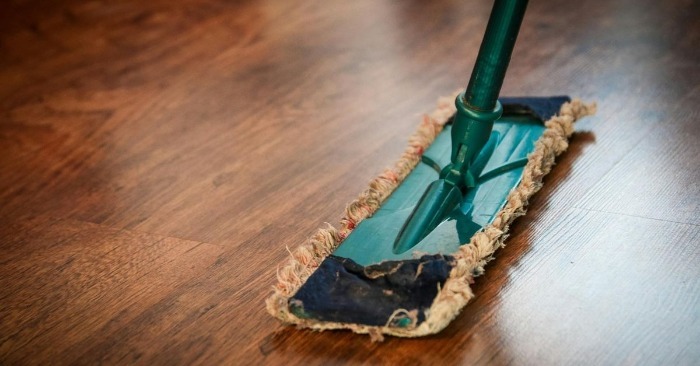
When Lena accepted a new, well-paid cleaning job, she initially thought it was just another client added to her growing business. But when she read the name, her breath caught. Twenty years after her aunt had taken everything from her and abandoned her, fate had led Lena straight back to that woman’s front door. Would justice finally find its way to her?
I was barely old enough to form memories when my world collapsed. At three years old, I lost both of my parents in a car crash as they were driving back from a short getaway. Everything they had built — their home, their savings, the insurance meant to protect my future — legally became mine.
That’s when my aunt Diane appeared, perfectly composed and perfectly timed. She arrived at the funeral dressed elegantly, pearls at her throat, grief practiced just enough to convince the room. She told anyone who would listen that she would raise me, protect me, be my anchor. For a little while, she even played the part.

She moved into my parents’ house. Changed the furniture. Took control of the routines. She liked to introduce herself as “all the family she had left,” as if it were a badge of honor.
Six months later, everything was gone.
The money disappeared. The house was sold. And one quiet afternoon, she left me at a foster home with a suitcase that wasn’t even mine. After that, she erased herself from my life completely — no calls, no explanations, no goodbye.
I was too young to name what she’d done, but old enough to feel the hollow space she left behind. The years that followed blurred together: unfamiliar houses, borrowed beds, kind strangers who never stayed long enough to matter. I couldn’t understand why life seemed determined to keep taking from me.
At sixteen, I found my first sense of control with a sponge and a bucket, cleaning homes after school. At eighteen, I scrubbed office floors late into the night. By twenty-three, I had turned that work into something of my own — a cleaning business called PureSpace Services.
It started small. Then it grew.
Six employees. Two vans. A reputation for doing things flawlessly.

Now, when people see me in my neat uniform, calm and self-assured, they assume I’ve always been steady, always capable. They don’t see the child who learned survival through repetition. They don’t see the young woman who clawed her way out of loss one polished surface at a time.
For years, I hadn’t thought about Diane — until one completely ordinary Tuesday morning. I was sitting in my small office, drinking lukewarm coffee and scrolling through new client requests, when an ad caught my eye: large estate, weekly cleaning, cash payment, discretion required. Then I saw the name. And the address. It was the same postal code as my parents’ old house. My heart stopped. Could it really be her?
I stared at the screen, memories flooding back — the smell of my childhood bedroom, Diane’s promise to take care of me. I should have deleted the request. Instead, I typed back: “Accepted. I’ll handle this personally.” I told myself it wasn’t about revenge. It was about closure. About facing her as an equal.
Three days later, I stood in front of a large colonial house — not my parents’ home, but very close to it. When the door opened, Diane stood there, a pearl necklace around her neck. She looked at me with thinly veiled disdain and let me inside. The house gleamed, smelled of lemon polish and cold marble, yet it felt hollow. Everything about it screamed wealth, but it was the kind of wealth that concealed something rotten underneath.

Week after week, I returned. Diane never thanked me, but she loved to talk — about herself, her charity work, her important friends. One day, she casually mentioned that she’d once had a niece. Difficult. Ungrateful. A disappointment. My breath caught, but I stayed calm. With every visit, more cracks appeared in her carefully constructed façade.
At a large charity dinner, I overheard someone remark that her sister’s money had helped her get started. Diane brushed it off, claiming she’d built everything on her own. That night, I couldn’t sleep. By the next appointment, I knew exactly what I was going to do.

When she later entered the living room, she froze. On the table lay a photograph: my parents and me, three years old, sitting on a picnic blanket. Her hand trembled. She recognized me. I told her who I was. I reminded her of everything she had taken from me. She cried, asked why I was there. I told her the truth — to see who she had become, and to show her who I had become despite her. Then I walked away.
Two weeks later, her husband called me. He had discovered everything — hidden accounts, missing money, fake charities. He thanked me. Months passed, until one day Diane appeared in my office. No pearls. No pride. She apologized. She said my mother would be proud of me.

I looked at her for a long moment and finally said that my mother would have forgiven her — and that I was still learning how to do the same. Diane left quietly, broken.
That afternoon, I sat at my desk and studied the old photograph. Revenge had felt satisfying for a moment. But grace lasted longer. Because some things can’t be cleaned with anger — only with forgiveness.