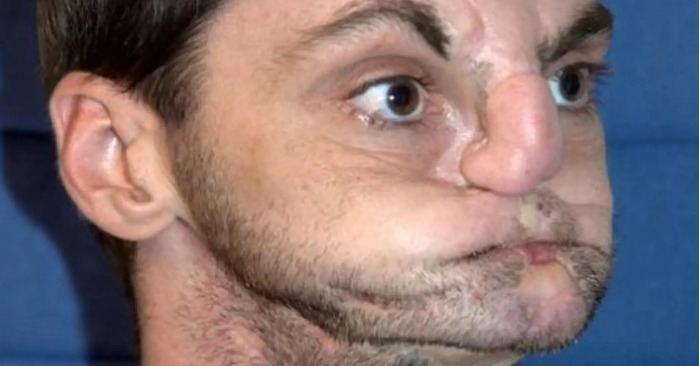
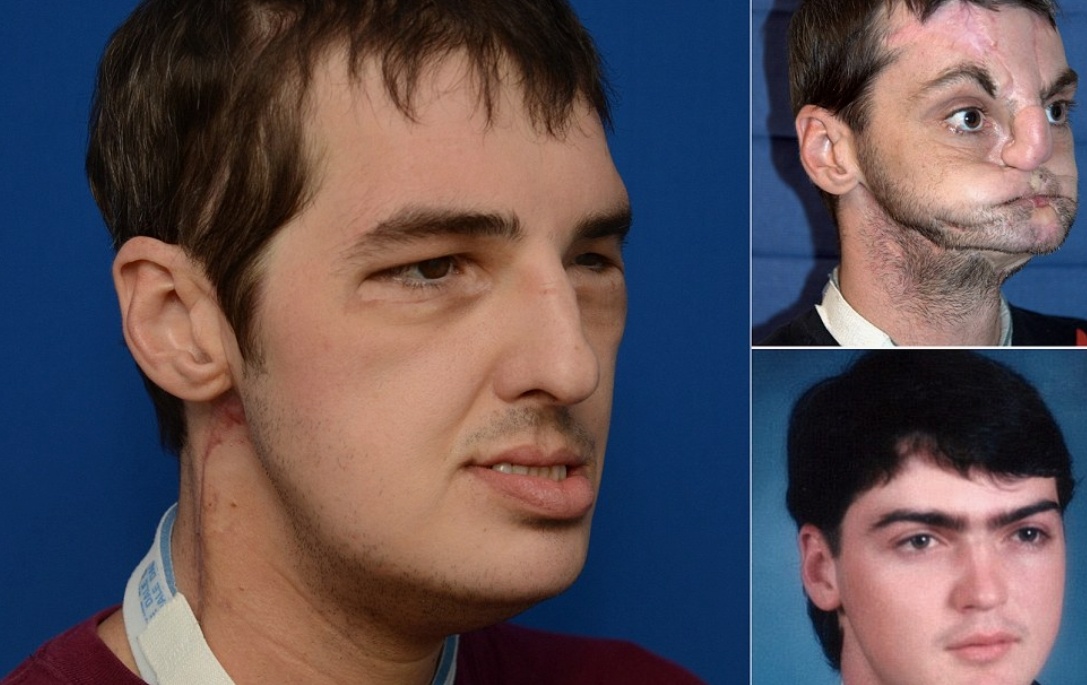
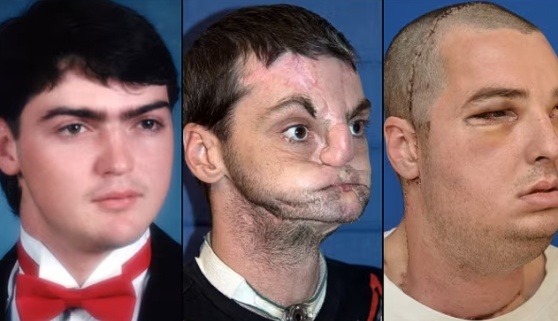
In March 2012, Richard Norris underwent one of the most extraordinary medical procedures ever performed—a full face transplant at the University of Maryland Medical Center.
The surgery lasted 36 hours. Doctors replaced nearly his entire face—from jaw to tongue, including skin and muscles. Only his eyes and parts of his throat remained unchanged.
It was a historic moment in modern medicine. Years earlier, in 1997, Richard’s life had taken a devastating turn. A tragic accidental gunshot injury left his face severely disfigured. From that moment on, everything changed.
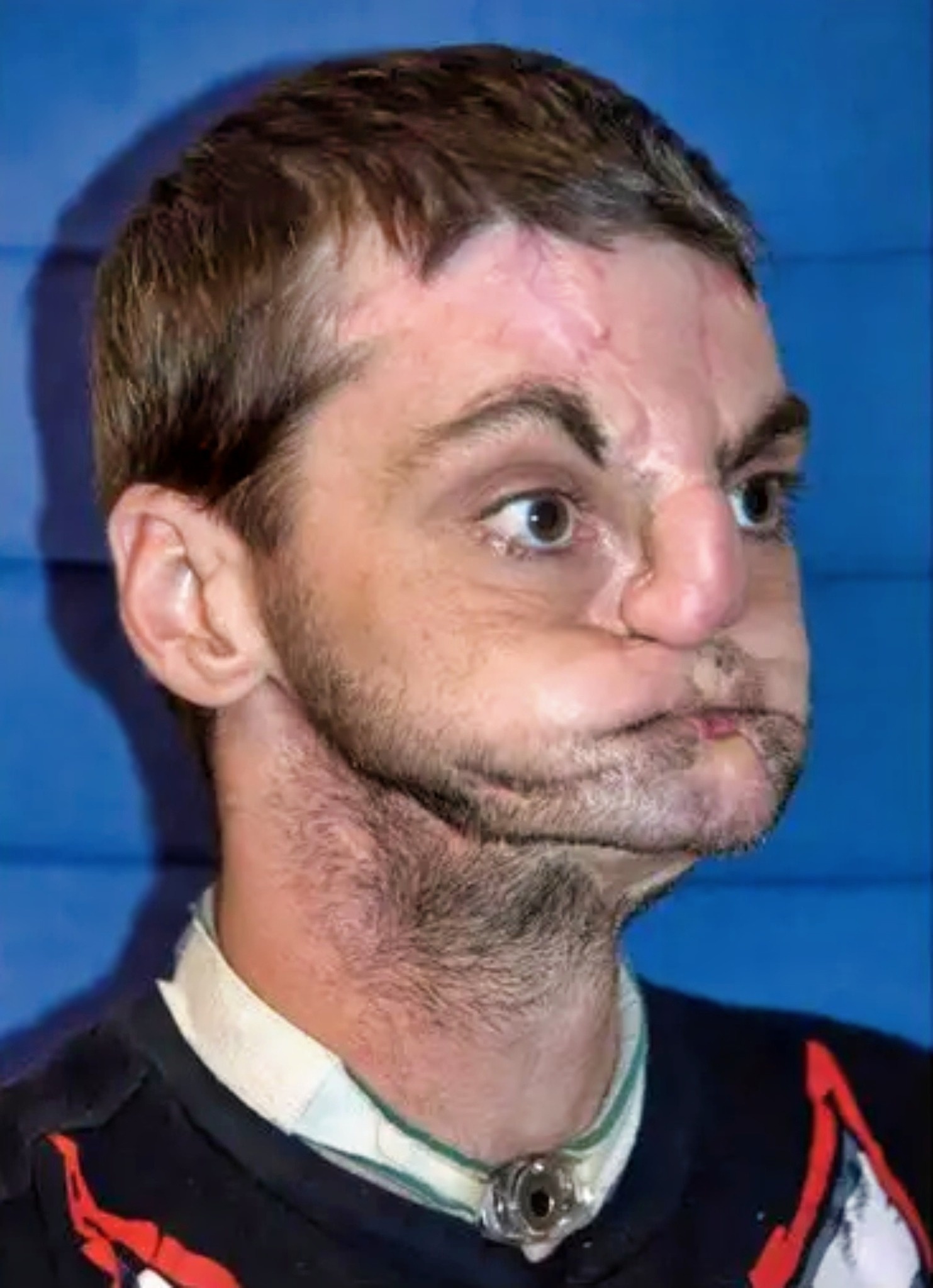
He withdrew from the world. He only went outside at night. He hid behind masks to avoid being seen. For more than a decade, he lived in isolation—cut off from normal human interaction.
The donor was Joshua Aversano, a 21-year-old who lost his life in a car accident. Through unimaginable loss, his family made a decision that would give someone else a second chance at life.
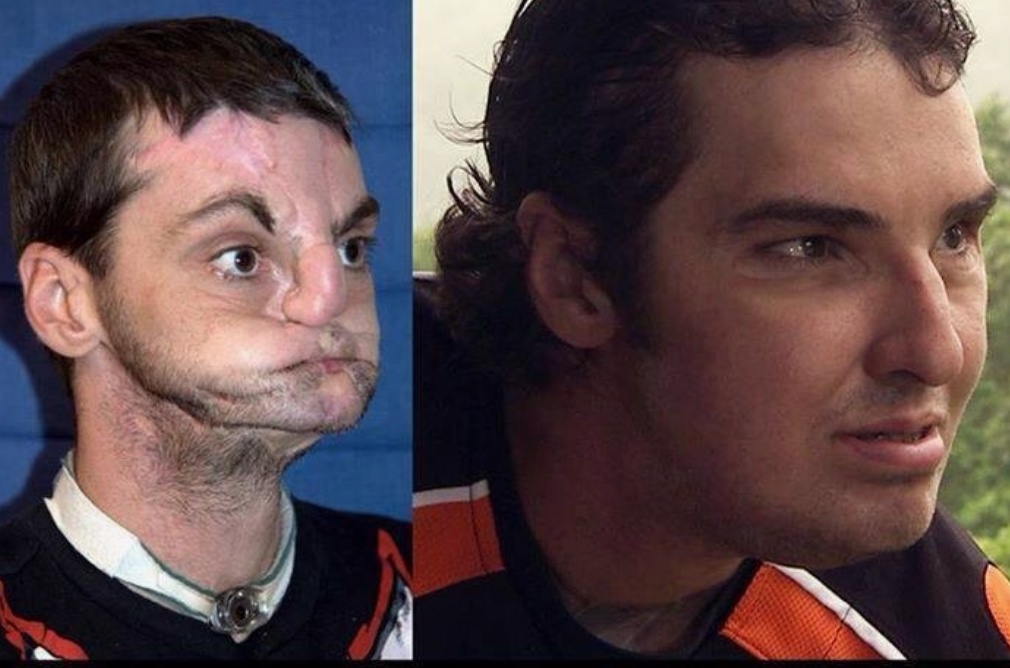
Their generosity became the foundation of Richard’s transformation. After the surgery, Richard’s world opened again. For the first time in years, he could: walk outside without fear, look people in the eyes, feel part of society again.
He once said: “People used to stare at me because of my deformity. Now they stare because of what I’ve become.”
It wasn’t just a new face. It was a new life. One of the most emotional moments came when Richard met Rebekah Aversano, the donor’s sister. She gently asked if she could touch his face. When her hand rested on his forehead, she said: “This is the face I grew up with.”
It was a moment that captured something deeper than medicine—a connection between loss, love, and renewal.
Richard Norris’s story is not just about science. It’s about: resilience in the face of unimaginable hardship, the power of human generosity and the courage to start over. His journey reminds us that even after the darkest moments, hope can return in ways we never expect.