My name is Caleb. I’m fifty-five years old, and more than thirty years ago, I lost my wife and my young daughter in a single night. That night collapsed my entire world.
It happened suddenly. A crash. A phone ringing.
The person on the line spoke gently, carefully — the kind of calm that makes your stomach drop. They said there had been an accident. Then they told me no one survived.
Mary. My wife.
Emma. Our little girl. Six years old.
I remember standing in the kitchen afterward, the phone still pressed to my ear long after the call had ended, staring at a blank wall like it might explain what had just happened.
The quiet that followed wasn’t just around me — it moved inside my head. Even during the day, my thoughts felt hollow, like sound had been drained from them.
The years after that weren’t really living. They were motion. Wake up. Go to work. Come home. Heat something from the freezer. Eat without noticing the taste while the TV talked at me. One day slid into the next until time lost its edges.
People tried. Friends stopped by. My sister called every Sunday, never missing one. Their voices reached me, but nothing got through.
I was still breathing.
But I wasn’t really there.
The house stayed empty.
I left Emma’s drawings on the refrigerator until they faded to yellow, corners curling. I couldn’t bring myself to take them down. I moved through my days with a broken heart, surrounded by reminders of a life that no longer existed.
I never thought I would be a father again. That part of me felt buried.
I had tried once — and failed to protect the people I loved most.
But life has a strange way of finding you when you stop expecting anything.
One rainy afternoon many years later, I found myself pulling into the parking lot of an orphanage. I told myself I was just curious. I wasn’t looking to replace anyone. I wasn’t committing to anything.
But something inside me — maybe the faint echo of the man I used to be — wanted to know if I could still matter to someone, even if I didn’t fully understand why I was there.
Inside, the building smelled of disinfectant and crayons. Children’s laughter echoed from down the hall, and behind a closed door someone was trying to calm a tantrum.
I met a social worker named Deirdre. She spoke calmly and honestly. She didn’t sugarcoat anything.
Then we passed a large window overlooking a small play area, and that’s when I saw her.
She sat apart from the noise, settled in a wheelchair with her back straight, her hair pulled neatly away from her face. A notebook lay open on her knees.
While the other children chased each other, laughing and shouting, she stayed still, observing. Her expression was composed — almost unnervingly so for someone so young.
“That’s Lily,” Deirdre murmured when she noticed where my gaze had landed. “She’s five. She’s been here longer than most.”
I hesitated. “Why the wheelchair?”
“Car crash,” she said gently. “Her father didn’t survive. Lily suffered an incomplete spinal injury. There’s potential for improvement with intensive therapy, but it will take years.”
“And her mother?”
Deirdre’s voice lowered. “She signed away her rights not long after. Said she couldn’t manage the medical care. Or the loss.”
I looked back at Lily.
As if she felt the attention, she turned her head and met my eyes.
She didn’t shy away. Didn’t stare either. She simply held my gaze — patient, cautious — like someone who had learned not to expect much, but hadn’t entirely stopped hoping.
Something inside me gave way.
I didn’t see charts or limitations. I didn’t see something to be “managed.” I saw a child who had been abandoned twice — and was still quietly waiting for someone to choose her.
There was something in her face that echoed my daughter’s. I couldn’t explain it. I didn’t need to.
Deirdre told me Lily had no prospective adoptive families. My chest tightened. I knew, with an absolute clarity that frightened me, that she was the one.
Not because she needed saving — but because she needed belonging.
I asked to start the adoption process that same day. Deirdre blinked, clearly caught off guard.
What followed was a blur of evaluations, interviews, home visits, and paperwork.
I began visiting Lily regularly. We talked about books and animals. She showed me her drawings — careful, detailed sketches. She loved owls.
“They see everything,” she told me once.
The weight of that sentence stayed with me. She had already seen more than most adults ever would.
The day I brought her home, she arrived with very little: a frayed backpack, a well-loved stuffed owl, and that notebook filled with drawings. I showed her her room and gave her space.
In the beginning, she spoke rarely. But she watched constantly — as if she was still deciding whether this was permanent, or just another stop before being sent away.
One evening, while I folded laundry in the living room, she rolled in quietly and said, “Dad… can I have some more juice?”
The towel slipped from my hands.
It was the first time she’d ever called me that.
From then on, we moved forward together. Therapy appointments filled our weeks. Every milestone mattered — ten seconds standing on her own, five shaky steps with braces. Each one felt like a victory parade.
She worked harder than anyone I had ever known.
School wasn’t always easy. Some children didn’t know how to interact with her. But Lily never wanted sympathy. She wanted respect. She learned quickly, built friendships slowly, and grew fiercely independent. Being treated as fragile annoyed her more than anything.
She became my whole world.
Time passed. Lily grew into a bright, compassionate, determined young woman with a stubborn streak and a generous heart.
She loved science and chose to study biology.
One summer, she volunteered at a wildlife rescue center. She spent weeks caring for an injured barn owl, naming him Harold. She cried when he was released.
At twenty-five, she met Ethan at university. He studied engineering, laughed easily, and loved her openly.
Lily tested him — she tested everyone — but he never wavered.
When she told me they were engaged, she did it casually over breakfast. I nearly inhaled my toast.
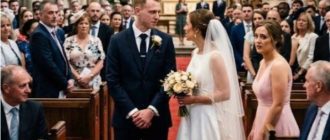
The wedding we planned more than two decades after I first met her was small, warm, and beautiful.
She wore a simple white satin gown that fit her as though it had always belonged to her. The reception hall glowed with soft lights and white lilies.
I watched her laugh, dance, and move with confidence beside Ethan — surrounded by people who had watched her grow. People who had stayed.
My chest felt unbearably full.
Then, in the middle of the celebration, I noticed someone standing near the exit.
A woman I didn’t recognize. Mid-forties. Dark hair pulled tightly back.
And the air around me changed.
She looked like she was searching for someone. At first, I assumed she was part of Ethan’s family.
Then I realized she wasn’t watching the crowd.
She was watching Lily.
She looked out of place — like she knew she didn’t belong there.
I was about to approach her when she noticed me. Our eyes met. She looked away, then slowly made her way toward me along the edge of the room.
When she reached me, she exhaled and spoke quietly, without introducing herself. “I know we don’t know each other, but you need to listen to me. Can we talk privately?”
Uneasy but curious, I led her to a quieter corner near a window.
“You have no idea what your daughter has been hiding from you for a long time,” she said, her voice trembling.
I glanced across the room at Lily, laughing with her best friend and Ethan’s younger sister, completely unaware.
“I’m her biological mother,” the woman added.
The room seemed to disappear.
“She found me two years ago,” the woman continued. “After college. The orphanage still had old contact information, and she convinced them to give it to her.”
I said nothing.
“She wrote to me. Asked questions. I told her why I left. I told her everything.”
“Everything?” I asked.
“I was young. I was scared. After the accident, I didn’t know how to raise a disabled child. People looked at me with pity — or like I was a monster. I couldn’t handle it.”
“So you left,” I said.
“I thought it was best,” she replied. “Better than dragging her down with me.”
I took a slow breath.
“She stopped writing to me a few months ago,” the woman said. “Said she didn’t want contact anymore. But before that, she mentioned her wedding. She told me where it would be.”
“Why are you telling me this now?”
“Because you need to know,” she said. “And because I’m her mother. I have a right to be part of her life. I carried her for nine months.”
“And I’ve carried her ever since,” I said.
She flinched.
“She built a life without you. She learned to walk again. She studied. She found love. All without your help.”
Her eyes filled with tears, but I continued.
“Today belongs to the people who stayed. You had your chance. You chose to walk away.”
Silence stretched between us.
She didn’t argue. She simply turned and left — quietly, unnoticed, the same way she had arrived.
Later that evening, when the music softened and the guests thinned out, Lily and I stood alone on the terrace. The air was cool. She leaned against the railing, staring into the dark.
Then I said, “There’s something I want you to know.”
She looked at me like she already did.
“She was here, wasn’t she?”
I didn’t lie. “Yes.”
“I’m sorry I didn’t tell you I found her,” she said softly. “I was afraid of hurting you. Afraid you’d think you weren’t enough.”
“Lily,” I said, “you never had to protect me from your truth. Whatever choice you make, I stand with you.”
She nodded, tears shining. “I had to meet her. To understand. To ask why. But I also needed to know I could walk away. And I did.”
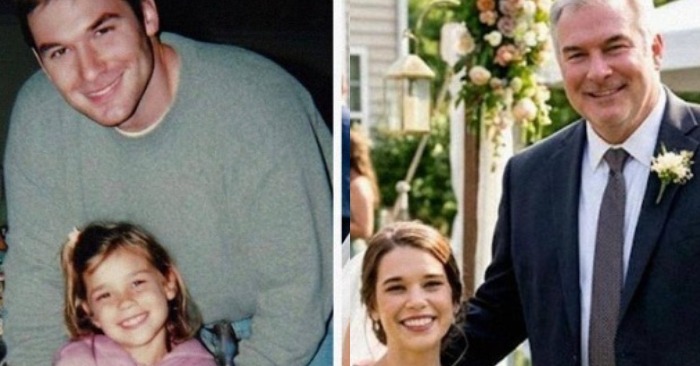
I took her hand. “You are my daughter — not because of paperwork, but because we stayed, we fought, and we built something together.”
“Thank you for choosing me,” she whispered. “Every single day.”
I tightened my grip on her hand and smiled back at her.
Later that night, I stood quietly at the edge of the room, watching her laugh and spin with Ethan beneath the soft glow of the lights. And suddenly, something that had weighed on me for years finally made sense.
Family isn’t defined by biology.
Family is made up of the people who don’t walk away when everything breaks — and who wake up each morning choosing to stay anyway.
Which part of this story stayed with you the most? Share your thoughts in the Facebook comments.