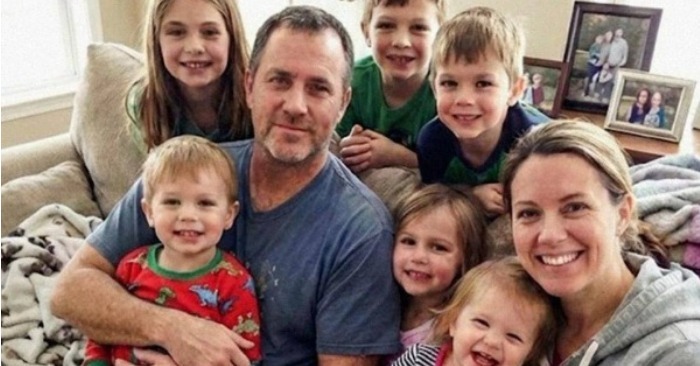
I believed adopting the four children of my late best friend would be the hardest thing I would ever do. I was wrong. Years later, a stranger appeared at my door, looked me straight in the eye, and said, “She wasn’t who you thought she was.” Then she handed me a letter that dragged my dead friend’s secrets back into our lives and threatened to tear apart everything we had built without her.
Rachel had been my best friend for as long as I could remember.
There was no single day when we decided to be friends. We simply always were.
In elementary school, we sat next to each other because our last names landed close together in the alphabet. In high school, we shared clothes and secrets. In college, we shared terrible apartments and even worse stories about men who never deserved us.
Rachel had been my best friend for as long as I could remember.
When we became mothers, we shared calendars and carpool schedules. I had two children. She had four.
“I don’t think anyone prepares you for this part,” Rachel once said, standing in my kitchen with a baby balanced on her hip while another tugged at her leg.
“The chaos?” I asked.
“No,” she said, smiling in that way that always felt genuine. “The love. How it just keeps multiplying.”
She was always exhausted, but she glowed in a way that made it look worth it. Rachel loved being a mother more than anything in the world.
At least, that’s what I believed.
You think after twenty years you truly know someone. You assume friendship means honesty, openness, nothing hidden. Looking back now, I wonder how many secrets Rachel carried quietly while I stood right beside her.
Everything changed after her fourth child was born, a little girl she named Rebecca. The pregnancy had been difficult. Rachel spent months on bed rest, frustrated and scared but determined.
Less than a month after bringing Becca home, Rachel’s husband was killed in a car accident.
I was folding laundry when my phone rang.
“I need you,” Rachel said.
Her voice was breaking.
“Please come. Now.”
At the hospital, she sat on a plastic chair with the baby carrier locked between her knees. She looked up at me with eyes swollen from crying.
“He’s gone,” she whispered. “Just… gone.”
I didn’t know what to say, so I wrapped my arms around her and held her while she fell apart.
The funeral took place on a rainy Saturday. Rachel stood at the cemetery with her children pressed tightly against her, rain soaking through their coats.
“I don’t know how I’m supposed to do this alone,” she whispered afterward.
“You’re not alone,” I told her. “I’m here.”
Not long after that, she was diagnosed with cancer.
“I don’t have time for this,” she said bitterly when she told me. “I just survived a nightmare.”
She tried to be brave for the kids. She joked about wigs. She insisted on walking them to school even when standing made her dizzy. I started stopping by every morning.
“Go rest,” I’d say. “I’ve got this.”
“You already have your own kids,” she’d protest weakly.
“So? They’re all just kids.”
There were moments during those months when Rachel looked at me like she wanted to say something. She’d open her mouth, hesitate, then stare off into space with a furrowed brow.
Once she said quietly, “You know you’re the best friend I ever had, right?”
“You are too,” I answered.
“I’m not sure I’ve been… a good friend,” she said.
At the time, I thought she felt guilty for leaning on me so much. Now I know I was wrong.
Six months later, she was dying.
“I need you to listen,” she whispered from her hospital bed.
“I’m here.”
“Promise me you’ll take my kids. Please. There’s no one else, and I don’t want them separated. They’ve already lost so much.”
“I promise,” I said without hesitation. “I’ll raise them like my own.”
“You’re the only one I trust.”
Those words settled heavily in my chest.
“There’s something else,” she said faintly.
I leaned closer. “What is it?”
Her eyes closed. For a moment, I thought she had slipped away. Then she opened them again and looked at me with an intensity that sent a chill through me.
“Rebecca,” she whispered. “Watch her closely. Promise me.”
“Of course,” I said, assuming she was worried because Becca was the youngest, still a baby. I would later realize how wrong I was.
When the time came, keeping my promise wasn’t difficult in a practical sense. Rachel and her husband had no close relatives willing to take the children. My husband didn’t hesitate for a second.
Overnight, we became parents to six children.
Our house felt smaller, louder, messier — but also fuller in a way I can’t quite explain. Weeks turned into months. The kids bonded like siblings. My husband and I loved them as fiercely as our own. Eventually, life found a rhythm again. I began to believe we had survived the worst of it.
Then one afternoon, while I was home alone, someone knocked on the door.
A well-dressed woman stood on the porch. I didn’t recognize her. She was a few years younger than me, her hair pulled back tightly, wearing a gray coat that looked expensive. Her eyes were red, as if she’d been crying.
She didn’t introduce herself.
“You’re Rachel’s friend,” she said. “The one who adopted her four children.”
I nodded, uneasy.
“I knew Rachel,” she continued. “And you need to know the truth. I’ve been trying to find you for a long time.”
“What truth?” I asked.
She handed me an envelope. “She wasn’t who she claimed to be. You need to read this letter from her.”
I stood there with the door half open, the envelope heavy in my hand.
The handwriting was unmistakable.
Rachel.
As I read, it felt like the air had been sucked from my lungs.
I’ve rewritten this letter so many times. Every version feels like too much or not enough. I don’t know which truth you’ll be ready to hear.
My hands trembled as I continued.
I remember exactly what we agreed on, even though we both told ourselves different stories afterward. You came to me pregnant and terrified. You told me you loved your baby but didn’t know how you could raise her under the circumstances.
I looked up at the woman. “What is this?”
“Just keep reading,” she said.
When I offered to adopt her, it wasn’t to take her from you. I thought I could give her stability until you found your footing again.
My fingers tightened around the paper. One of Rachel’s children wasn’t biologically hers? And I had never known?
We agreed to keep it private. You didn’t want questions. I didn’t want explanations. I told people I was pregnant because it felt easier than the truth — and because I believed it would protect everyone.
“So she was never pregnant,” I said aloud.
“No,” the woman replied. “Not with my daughter. And now that you know the truth, it’s time for you to give her back.”
Instinct took over. I stepped forward, blocking the doorway.
“That’s not happening.”
She moved closer. “I came peacefully. Without the police. But if you make this difficult—”
Somehow I stayed calm, even though my heart was racing and every instinct screamed to protect my children.
“Rachel adopted her. I adopted her. That doesn’t just disappear because you want it to.”
“She promised me!” the woman shouted, pointing at the letter.
I forced myself to keep reading.
I told you we’d talk again when things got better. I don’t know if that was kindness or cowardice, but I know it gave you hope — and for that, I’m sorry.
“I have my life together now,” the woman said, her voice shaking. “I can take care of her.”
All I can ask is that you think about her first. Not about what was lost or what feels unfinished — but about the life she has now.
“She belongs with me,” the woman insisted.
I thought of the four children upstairs. Of the family we had carefully built. Of the trust Rachel placed in me — and the secret she kept hidden.
“She lied to me,” I said quietly.
“Yes,” the woman replied. “She lied to everyone.”
“But she didn’t steal your child,” I said. “And nowhere does this letter say she promised to return her.”
“She convinced me to give her up,” the woman cried. “She said we’d fix it later.”
“You signed the papers,” I said. “You knew what adoption meant.”
“I thought I’d get another chance! I thought if I became the mother she deserved—”
“That’s not how this works,” I said gently. “You can’t undo a child’s life years later.”
“She’s mine,” the woman said. “She has my blood.”
“She has my last name,” I replied. “She has siblings and a bedroom full of her things. Blood isn’t the only thing that makes a family — and I have the legal documents to prove it.”
“You can’t do this to me,” she pleaded.
“I understand what Rachel did. And I understand what you want. But the answer is no.”
“You don’t even want to know which one it is?” she asked.
Rachel’s words echoed in my mind: Watch Rebecca closely.
“It doesn’t matter,” I said. “They are all mine now. Every one of them.”
“I have legal rights,” she whispered.
“The adoption was private,” she continued. “There were irregularities. My lawyer says—”
“No,” I said firmly. “Whatever your lawyer says, the answer is still no.”
She ripped the letter from my hand.
“I’ll be back,” she said. “And next time, you won’t stop me from taking what’s mine.”
Then she walked away.
I closed the door and rested my forehead against it.
Rachel had lied.
She had carried a massive secret to her grave, and now I had work to do. I searched through her documents, contacted a lawyer, and prepared myself for whatever came next.
A year later, the courts confirmed what I already knew: adoption cannot be undone because someone changes their mind.
Rebecca was legally and irrevocably my daughter.
I walked down the courthouse steps that day knowing my family was safe — and no one could take my children from me.
What do you think happens next? Share your thoughts in the Facebook comments.