On a cold Thanksgiving morning, a widower still drowning in grief gives his jacket to a woman on the edge of disappearing. Two years later, she appears at his door with a black backpack — and a story that will change everything. A quiet, powerful tale about second chances, unexpected grace, and the echo of kindness.
Thanksgiving hasn’t meant much to me for a long time. Not since I lost my wife, Marla — she was 49.
It was cancer — the slow kind. The kind that dismantles a person in silence long before the body gives up. By the end, she was mostly shadow and whisper. For three months, I slept in an armchair beside her hospice bed.
Some nights, I forgot what it felt like to exhale without fear.
After she died, my world shrank to one thing: Sarah.
Sarah was our only child, and she became the reason I even put my feet on the floor in the morning. Holidays and birthdays stopped mattering. It was only about keeping her afloat while I quietly sank under the weight of things I couldn’t say out loud.
When she moved abroad for work, I told Sarah I was proud of her — and I meant it. Truly. But the moment the door clicked shut behind her, the silence came back like water through a cracked hull.
It filled everything.
Music stopped sounding like music. Food became mechanics. Even the walls felt as if they had shifted a little farther apart.
That Thanksgiving, I was 51, and Sarah was in Scotland and couldn’t fly home. We’d planned a video call for the evening, but the morning lay ahead of me like a hallway I didn’t want to walk down — too many closed doors, too many memories behind them.
And somewhere out there, a moment was waiting for me that I didn’t expect — in the last place I would have looked for it.
The house felt wrong that morning.
It wasn’t the familiar quiet I’d grown used to. This was different. Heavy. As if the house itself had paused, suspended in a moment it didn’t know how to move past. The countertops looked unnaturally spotless, the dishes were already stacked away, and even the refrigerator’s low buzz felt intrusive — almost taunting in a space where nothing else made a sound.
I stood at the sink with a mug of coffee I didn’t actually want. I’d made it out of habit, forcing the motion because Marla’s voice echoed in my mind, steady and certain.

“When I’m not here anymore, Eric,” she’d said once, “keep a routine. Just something simple. It gives you a way back in. A way to stand up again. Trust me.”
I trusted her. I always had.
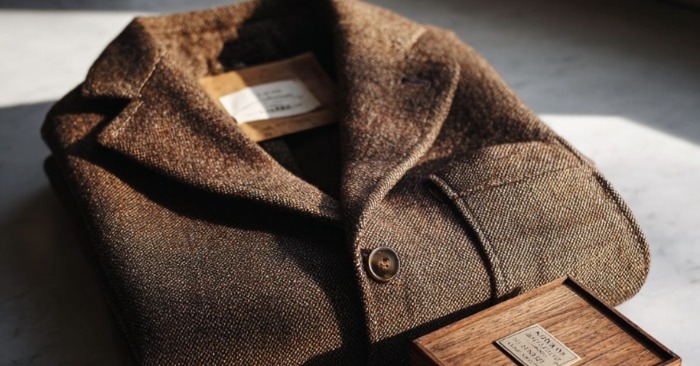
After a moment, I set the mug down untouched, grabbed my keys, and reached for the jacket hanging by the door — the brown one Sarah had given me years ago for Father’s Day. It was heavier than I needed, warmer than the weather called for, but it carried a quiet reminder that I was loved, even on days when loneliness pressed in hard.
It was far too nice for a grocery run. I wore it anyway.
I needed motion. I needed air. I needed the cold to bite just enough to remind me I was still here.
I walked slower than usual, letting the chill sting my face.
At the store, I picked up a rotisserie chicken, soft dinner rolls, a can of cranberry sauce, and a pumpkin pie. I didn’t truly need any of it. I told myself it was for later — for a real meal. But I knew the truth: I’d probably just take a fork to the pie and leave the rest untouched.
When I stepped back outside, arms full of grocery bags, that’s when I saw her.

She was sitting alone under a bare maple tree not far from the shopping carts. Her hands were shaking in her lap, and she wasn’t wearing a coat. Her eyes were fixed on the ground as if she wanted the concrete to swallow her.
People walked past her. Some avoided her gaze. Others stared straight ahead as if she didn’t exist. But something tugged at me.
I hesitated. I could have kept walking. And then I heard my wife’s voice again in my head.
“Do something, Eric. Do something good.”
I walked toward the woman slowly, not even sure what I was going to say. When she noticed me, her body tensed.
“I don’t want to bother you,” I said quietly. “I’m not going to ask you questions. You just… look cold.”
She didn’t respond. She only blinked up at me, wary and exhausted — like the whole world had stacked its burdens on her narrow shoulders.
I unzipped my jacket and held it out to her with both hands.
“Here,” I said. “You need it more than I do.”
She looked up, blinking at me as if I’d spoken in a foreign language. Her mouth opened slightly, as if she wanted to say something — but as if she’d forgotten how.

Her fingers, red and cracked, hovered near mine before she finally took the jacket. She didn’t say thank you right away; she just clutched the fabric like it might vanish any second.
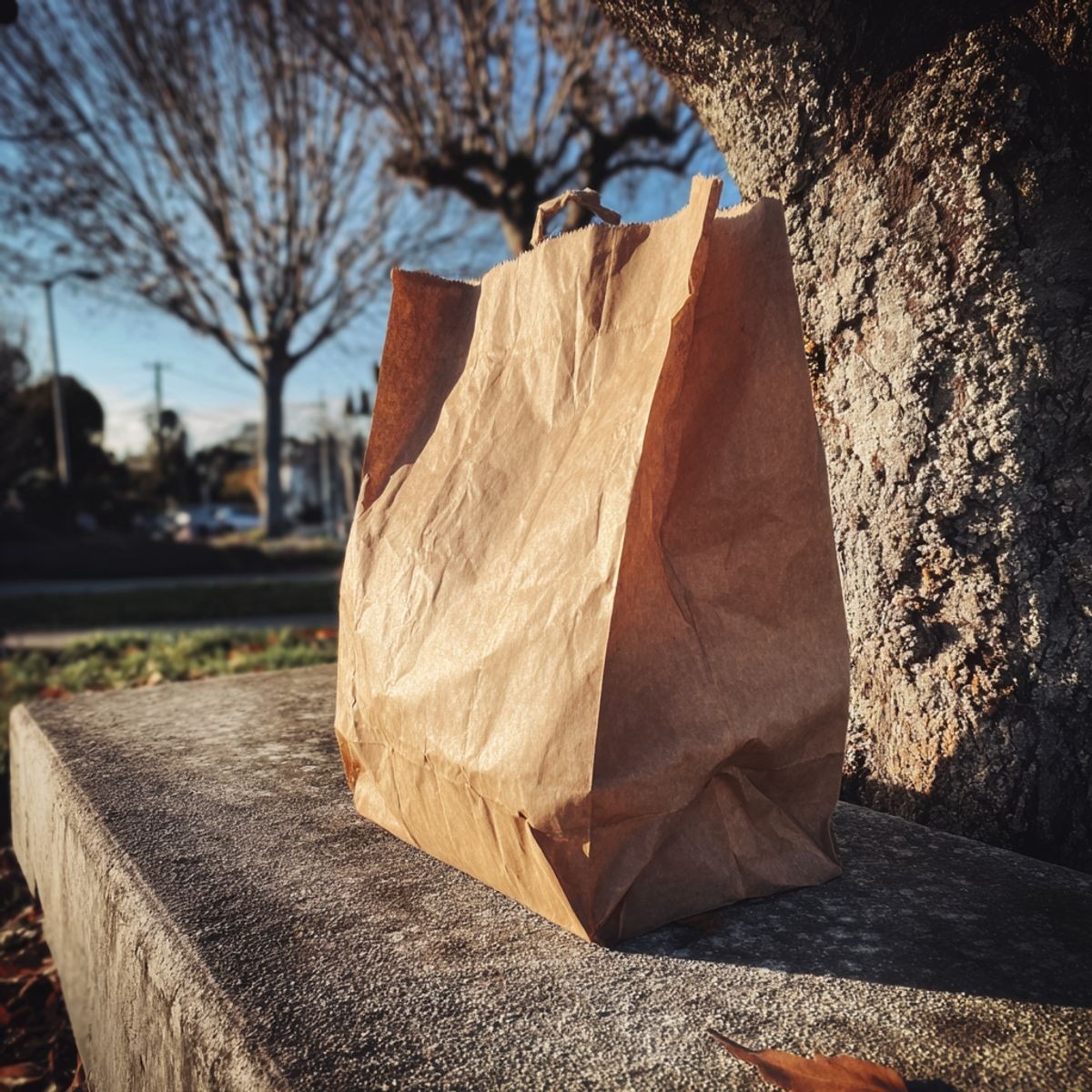
I handed her one of the grocery bags too, then reached into my pocket for the pen I always carried. It was half dried out, but I managed to scribble my address on top of the pie box.
I hesitated, then held it out.
“If you really need help,” I said. My voice caught on the word help. I cleared my throat, trying to hide what it did to me. “My name is Eric.”
She nodded once — almost invisible — and whispered “thank you” so softly I wasn’t sure I hadn’t imagined it.
That night, Sarah and I video-called. She was in Scotland near her fireplace wearing that oversized hoodie she’d stolen from me in high school.
“Did you eat anything, Dad?” she asked.
“Of course,” I lied, trying to sound casual. “I had a little pumpkin pie. But it was too sweet, so only a bite. Really.”

“No pie means it’s not Thanksgiving,” Sarah said with a smile. “Remember the year Mom made three different pies? Oh my God. I loved every second of it.”
I asked about the weather. She asked about the neighbors. We talked about everything — except the pull of grief we both carried deep in our bones. After we hung up, I sat in the dark living room staring at the empty kitchen chair across from me.
I wondered if the woman had eaten. If she had found somewhere to sleep. If she wore the jacket or left it on a bench somewhere. Eventually, I told myself it had to be enough. That I’d done what I could. And yet I thought about her far more often than I wanted to admit.
“You did exactly what Marla would’ve wanted, Eric,” I muttered while brushing my teeth. “And she’d be proud of you.”
Two years passed quickly.
I didn’t forget — not really — but I learned how to tuck it away. Like so many things I couldn’t carry, I put it somewhere deep and quiet inside myself.
Then, on Thanksgiving, just after noon, my doorbell rang.
Sarah and her husband, Jake — they were visiting for a while — were already arguing at the dining table over board game pieces and mugs of hot chocolate.
“Who on earth could that be?” I muttered as I slipped into my slippers.
When I opened the door, I stopped breathing.
It was her.
She looked different — healthier, and smiling. Her hair was clean and neatly brushed, tucked gently behind her ears. She wore a real winter coat, and her cheeks were pink from the cold.
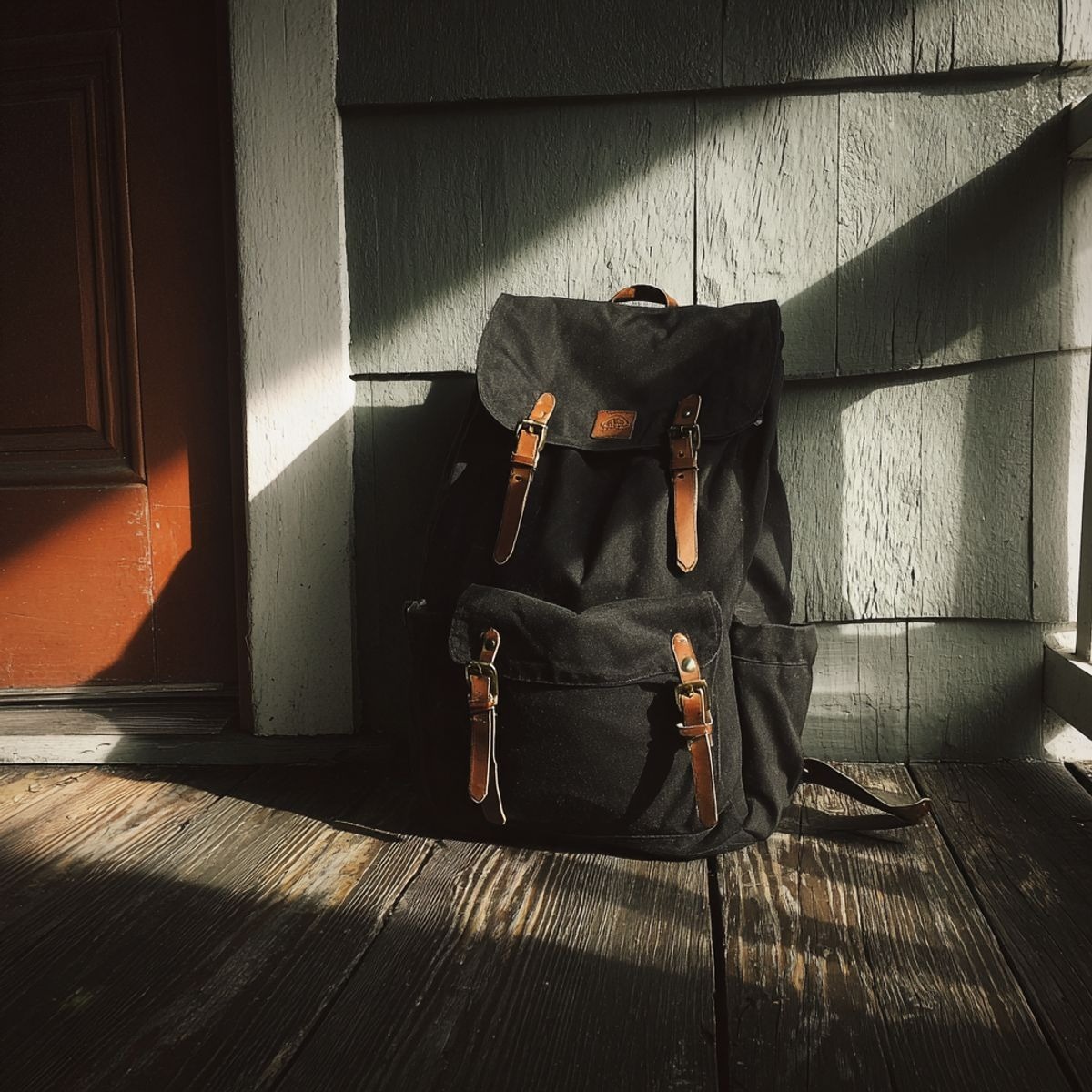
With both hands, she pressed a small black backpack to her chest as if it were something sacred.
“Thank God,” she said with a soft smile. “I was hoping you still lived here.”
Her smile this time wasn’t hunted. It was warm and whole — like someone who understands you shouldn’t be loud in moments like this.
I opened my mouth, but no words came out at first. I only stared. After a second, I found air again.
“What do you need? Are you okay?” I asked.
She glanced down at the backpack and then back at me.
“Yes. But I think it’s time I give back something that belongs to you.”
I hesitated, my mind struggling to catch up. But I stepped aside and opened the door wider. She placed the backpack into my hands.
“Come in,” I said. “Please.”
Sarah and Jake looked up from the table, both frozen mid-game. Sarah’s eyes flicked to me — silently asking who this woman was. I gave the smallest shake of my head.
Just wait.
I set the backpack gently on the counter and unzipped it. My hands were shaking harder than I expected, and I didn’t know why.
On top was my brown jacket — neatly folded, as if it had been treasured all this time.
On top of that was a small wooden box.
I opened it slowly, not knowing what to expect.
Inside was a wristwatch with a gold face and a worn leather strap. And beneath it, carefully hidden, a folded check.
It was made out to me — for twenty thousand dollars.
I stared at it, unsure whether to speak, laugh… or cry.
“What… what is this?” I asked, my voice catching. “I don’t understand. I can’t accept this. I… I don’t even know you.”
She gave a small smile and nodded as if she’d expected exactly that reaction.
“My name is Charlotte,” she said. “And I can explain everything. I promise.”
I pulled a chair out and gestured for her to sit at the kitchen island. Sarah and Jake joined us, eyes wide with quiet curiosity.
Charlotte sat down, drew the empty backpack toward her, and held it in her lap like a shield. Her fingers stayed clenched around the straps. She looked down at the counter and exhaled slowly.
“You saved my life, Eric,” she said. “And now I want to tell you how.”
The silence in the room waited with her, as if it understood how much this story was costing her to speak.
“Two years ago, when you found me,” she said, “I didn’t want to live anymore.”
The words hung in the air — heavy and bare.
And then she told us everything.
Charlotte told us how the man she married — once attentive and magnetic, later cold and methodical — had been unfaithful for years. How he and the woman he was seeing slowly dismantled her sense of reality, guiding her step by step until she signed away her parents’ legacy without fully grasping what she was losing. How Levi even pretended to share her joy when she became pregnant.
“It wasn’t chaos,” Charlotte said quietly, her gaze steady but shadowed. “It was planned. A financial snare disguised as devotion. And by the time I understood what was happening, it had already closed.”
When she tried to push back, Levi struck first. He planted falsified paperwork and arranged for her to be accused of theft at her job.
She was dismissed in humiliation — her reputation quietly poisoned across professional circles she could no longer escape.
Then, just two months before the day I met her, Charlotte lost the baby.
“I was forty-two,” she said, her voice barely above a whisper. “Given my health, it felt like a miracle. I didn’t let myself celebrate. I was afraid if I acknowledged it, something would go wrong. I didn’t even buy a single thing. And then one morning, I woke up bleeding. That was it. The end of something that never really got to begin.”
I saw Sarah lace her fingers through Jake’s. My chest tightened with the weight of it all. Charlotte wiped at her eyes and continued.
“When you saw me that day, Eric,” she said gently, “I had already decided I wasn’t going to make it to the next one. I was sitting there in the cold, thinking through how it would end. Trying to choose the quickest way. The least terrifying one.”
The room went still — heavy with the knowledge that timing, chance, and one small act of kindness had changed everything.
She paused and let the words sink in.
“And then you came,” she said. “You, a complete stranger who couldn’t tell me apart from soap in a shower, gave me something I hadn’t had in months. Eric, you gave me kindness. A jacket. Food. And an address, in case I ever needed it.”
“Oh, sweetheart,” I said, because I truly didn’t have anything else.
“That kindness gave me hope again. And I realized I didn’t want to die. I just wanted to see light again and know I wasn’t alone,” Charlotte said, tears sliding down her face.
She told us she put the jacket on, ate the rolls, and got warm enough to think clearly. It wasn’t much, but it was enough to keep her from disappearing. And that clarity gave her the courage to start walking — miles, she said — until she reached the home of a retired lawyer.
“He was an old friend of my father’s,” Charlotte went on. “I hadn’t spoken to him in years, but I remembered he once told me: if you are ever truly in trouble, you can come to me. So I went. And I told him everything. Every ugly, humiliating detail.”
Sarah reached across the table and rested her hand on Charlotte’s arm, gently brushing her sleeve — a quiet gesture of support that didn’t need words.
“I begged him,” Charlotte continued. “I just needed him to listen. To trust that I wasn’t imagining things. I wasn’t asking him to fix everything — just to help me prove I wasn’t losing my grip on reality.”
His name was Walter. He dipped into his own savings simply to get the investigation started. Over the next two years, they worked side by side — Walter calling in legal favors, Charlotte tracking down proof wherever she could find it.
They hired private investigators. Followed financial trails. Dug through records. Piece by piece, Levi’s carefully constructed lies started to crumble.
“He and his mistress thought they’d erased me,” Charlotte said, her voice calm now, but edged with steel. “But lies don’t stay buried forever.”
Both were eventually convicted of fraud. Charlotte’s name was cleared, her inheritance returned — and with it, the chance to build a future no longer defined solely by what she’d lost.
“I kept your jacket,” she said softly. “And your address. I promised myself that if I ever found solid ground again, I’d come back — with the jacket, and something more.”
She nodded toward the watch and the check resting on the table.
“The watch belonged to my father. When you showed up that day, I thought of him immediately. He would have liked you,” she said, meeting my eyes.
“And the check comes from my settlement. I know it’s a large amount. But this isn’t repayment. You didn’t ask for anything. You gave me hope when you had no obligation to do so. I want this to help you give that same chance to someone else. Someone who might need it — like I did.”
“I don’t know what to say,” I admitted, the lump in my throat making every word heavy.
“Then don’t say anything,” she replied gently. “Just use it well.”
I tried to protest again, but she lifted a hand, still smiling.
“Take a vacation. Live. Buy yourself a new jacket, Eric — if nothing else.”
That made Jake laugh. Even Sarah let out a small laugh as she wiped tears from her face.
Before Charlotte left, we exchanged numbers. I watched her hug Sarah with real warmth, then hug me — holding on a moment longer, something quiet and grateful in the way she did it.
When the door clicked shut behind her, the house felt different. Not just warmer… more alive. As if someone had opened a window we didn’t even realize had been sealed shut for years.
It’s been a year now.
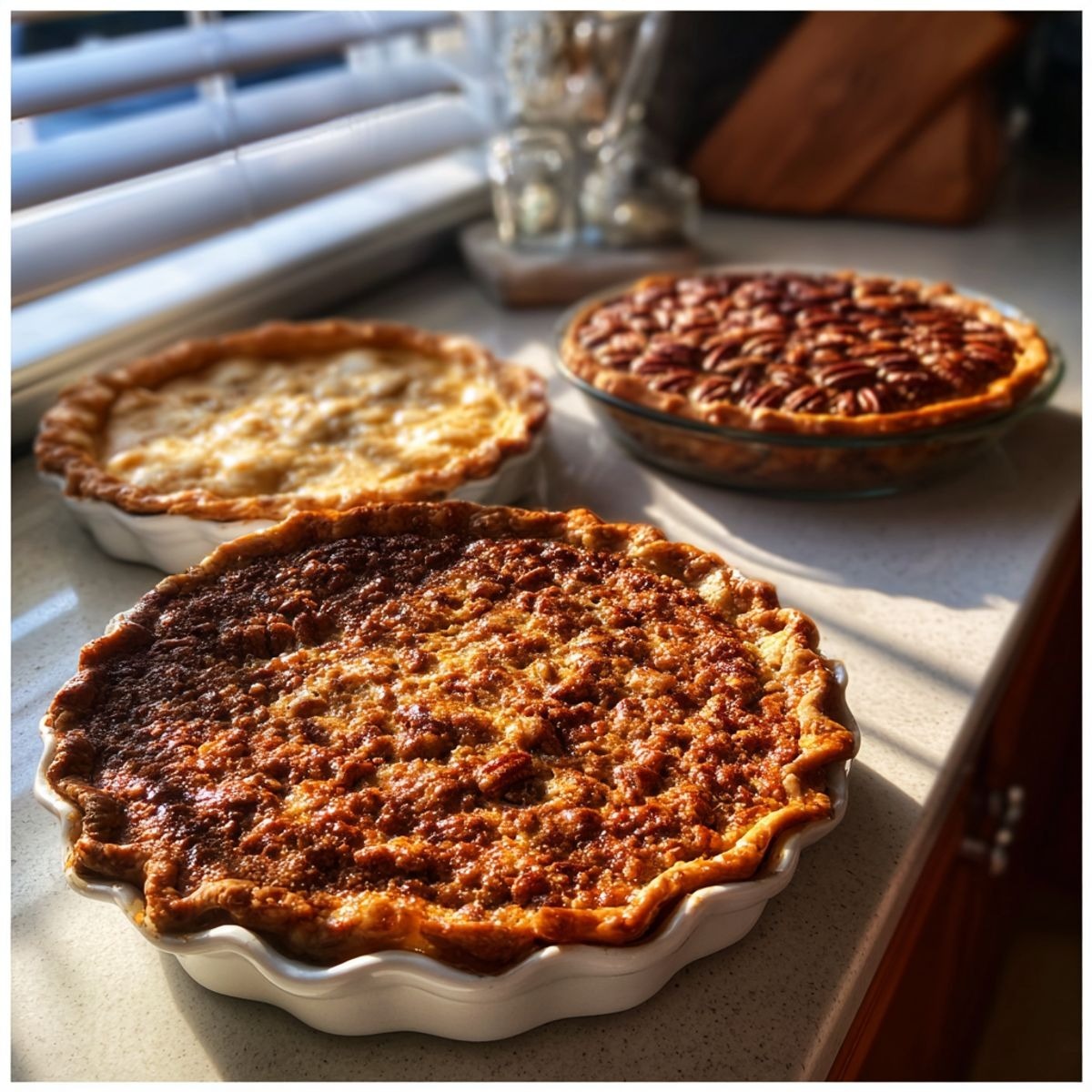
Charlotte joined us for Thanksgiving this year. She arrived carrying a sweet potato casserole crowned with toasted marshmallows — made exactly the way Marla used to prepare it. Sarah coaxed her into tasting cranberry sauce for the very first time.
She laughed after one bite. “This tastes like jelly’s eccentric relative,” she said. “And the texture is… confusing. Now I understand why I avoided it.”
When the conversation turned to gratitude, I didn’t speak right away. Instead, I took in the scene around me — my daughter, her husband, and Charlotte, who now felt woven into the fabric of our family. And in that quiet moment, I felt something I’d kept at arm’s length for a long time.
Hope.
Charlotte and I have created something together. Slowly. Gently. Nothing dramatic or rushed — just steady healing. And somehow, it feels less like starting over and more like continuing the life Marla and I once began, only in a direction I never imagined.
Sometimes I think Marla had a hand in guiding me toward Charlotte that day.
The jacket now rests in a wooden box in our hallway. But it holds more than cloth and stitching. It carries kindness. Memory. And a single moment that changed two lives — each in its own way.
It reminds me that the smallest kindness doesn’t just echo…
Sometimes it comes back — with a name, a story, and a future.