When my husband’s closest friend asked me to marry him, I honestly believed I’d already paid my full price in grief. I thought loss had already taken everything it could take from me. I thought the worst part of my life was behind me.
So I said yes.
And then our wedding night arrived—quiet, intimate, almost sacred—and I found myself standing in front of an old steel safe with trembling hands while my new husband’s voice shook behind me.
In that moment, I realized I’d been wrong about so many things: about trust, about love, about what it really means to start again.
I’m forty-one now, and sometimes my own life feels like a story I’m still learning how to read.
For twenty years I was Peter’s wife. Not in the glossy, curated version of marriage people post online, but in the real one—built on long weeks, shared fatigue, inside jokes, and the kind of loyalty you only understand after years of showing up for each other.

We lived in a slightly-too-large colonial house with creaking floors and a back porch that always seemed to need repairs. We raised two kids who somehow made every corner loud—laughter, arguments, music, slammed doors, and the constant energy of becoming themselves.
My son is nineteen now, studying engineering somewhere far across the country. My daughter is twenty-one and chose a university so far east it almost felt like a statement. Like she wanted to prove she could go as far as her life would allow.
The house feels wrong without them.
Wrong without Peter.
It’s quiet in a way that doesn’t soothe—it presses. Like the walls themselves are waiting for footsteps that will never return.
Peter used to describe our life as “ordinary,” and he meant it like a compliment. Saturday morning soccer games. Meals that turned out slightly burned, followed by pizza and laughter. Small arguments over chores that never mattered by the next day.
He insisted on fixing things himself even when it was obvious he was making the problem worse. I would stand nearby, pretending to be irritated while secretly loving the way he tried anyway—loving the effort more than the results.

Peter wasn’t perfect. He could be stubborn. He could test my patience. But he was steady. Gentle. Dependable. He gave me a kind of safety I didn’t realize I relied on… until it vanished.
Six years ago, a drunk driver ran a red light while Peter was driving home from work.
A police officer stood on my porch, and I remember my body folding in on itself. My knees hit the ground. My mouth opened, but I couldn’t breathe.
The weeks after that exist in fragments.
My daughter crying behind a bathroom door.
My son going silent, disappearing into himself.
Me standing in the kitchen at two in the morning, staring at Peter’s coffee mug exactly where he’d left it, like time had stopped around it.
That was the beginning of the version of me I never asked to become.
And through all of it—Dan was there.
Dan wasn’t just Peter’s buddy. They were family in the way only childhood friends can be. They grew up near each other, survived college on instant noodles and bad decisions, and once drove across the country at twenty-two with barely enough money to keep gas in the tank.
Dan had his own mess, too. He’d married young. It didn’t last. He spent years trying to be a stable father to a little girl who deserved a peaceful life.

What always struck me was what Dan didn’t do.
He didn’t trash his ex. He didn’t turn himself into the victim. He didn’t use his past as a speech.
After Peter died, Dan didn’t hover or ask me what I needed. He simply showed up.
He repaired the garbage disposal Peter had kept postponing. He arrived with groceries on days I’d forgotten to eat. He sat in the garage with my son, handing him tools, letting silence do what words couldn’t while my son worked out his anger on scrap wood.
Dan never made himself the center of my grief.
“You don’t have to keep coming,” I told him one night, a few months after the funeral. He was standing on a chair in the hallway, changing a lightbulb I could’ve changed myself but didn’t have the energy to touch.
“I know,” he said, not turning around. “But Pete would’ve done it for me.”
That was it.
No pressure. No expectation. No invisible price.
Just loyalty—simple and clean.
My feelings didn’t arrive like a thunderbolt. They crept in quietly, almost embarrassingly slowly.
By the third year after Peter’s death, my kids were steadier. I was learning how to be a person again—not just a widow, not just a mother holding everything together.
Dan began coming around less, giving me space instead of constant support. I didn’t realize how much I needed that space until it existed.
Then one night my kitchen sink started leaking, and I called him without thinking.
He arrived in sweatpants and an old college T-shirt, toolbox in hand, hair a mess.
“You know you could’ve shut off the water and called a plumber in the morning,” he said, already kneeling under the sink.
“I could have,” I admitted, leaning against the counter. “But you’re cheaper.”
He laughed—and something shifted inside me.
Not fireworks. Not a movie moment.
Just the realization that when he was in my kitchen, I didn’t feel so alone.
Over the next year, our lives slid into a rhythm that felt natural without either of us naming it.
Coffee on Sunday mornings.
Movies and takeout on Fridays.
Long conversations that wandered from serious to silly and back again.
My kids saw it before I let myself admit it.
“Mom,” my daughter said during winter break, “you know he’s in love with you, right?”
I scoffed. “Don’t be ridiculous. He’s just… Dan.”
She gave me that look—the one that said she thought I was lying to myself on purpose.
“Mom. Please.”
The idea terrified me. Peter had been gone for four years, but a part of my heart still treated love like a locked door. Like opening it again would mean Peter mattered less.
But Dan never pushed.
He never asked for more than I was ready to give. He never tried to claim space in my life that I hadn’t offered first.
And maybe that patience is what made it feel safe.
It didn’t feel like betrayal.
It felt like life continuing.
When he finally confessed, we were sitting on my porch watching the sky turn orange and purple. Chinese food on the table, wine in our glasses.

“There’s something I need to say,” he began, staring at the horizon. “And if you want me to disappear after I say it, I will. But I can’t keep acting like I don’t feel this.”
My heart kicked hard. “Dan…”
“I love you,” he said, so quietly it sounded like he hated the truth. “I’ve loved you for a long time. And I know how complicated that is. I know Pete was my brother in everything but blood. But I can’t pretend anymore.”
I should’ve been shocked. I should’ve needed time.
But I wasn’t surprised.
Because somewhere deep inside me, I already knew.
“It’s not wrong,” I heard myself say. “And… I love you too.”
His eyes filled with tears.
“Are you sure?” he asked, voice cracked. “Because I can’t be another regret for you. I can’t be something that hurts you later.”
“I’m sure,” I said. And I meant it.
We kept it private at first. We wanted to be absolutely certain it wasn’t grief disguising itself as comfort.
But after six months, it was clear it was real.
We told the kids. My son was quiet, but he shook Dan’s hand and said, “Dad would want Mom to be happy.” My daughter cried and hugged us both.
I was terrified to tell Peter’s mother. She’d lost her only child. How could I explain that I was moving forward with the man who had been Peter’s best friend?
I invited her over for coffee, hands shaking the entire time.
“I need to tell you—” I started.
She cut me off gently. “You’re with Daniel.”
I froze. “How did you—?”
She gave a small, knowing smile. “I have eyes, sweetheart.”
Then she reached across the table and took my hands.
“Peter loved you,” she said. “He loved you both. And if he could’ve chosen someone to hold you steady after he was gone… it would’ve been Dan.”
That was when I broke.
She squeezed my fingers. “You aren’t betraying him. You’re living. And that’s exactly what Peter would want.”
So we moved forward.
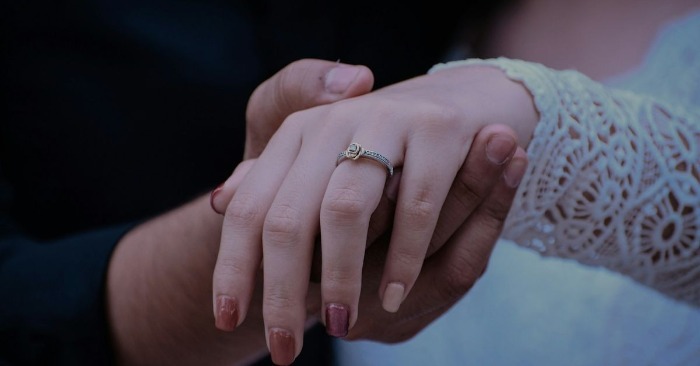
The engagement was simple. No crowd. No spectacle. Dan on one knee in the same kitchen where he’d once fixed my sink without being asked.
“I can’t promise perfection,” he said, voice steady but nervous. “But I can promise I’ll love you every day I’m given.”
“That’s all I need,” I said.
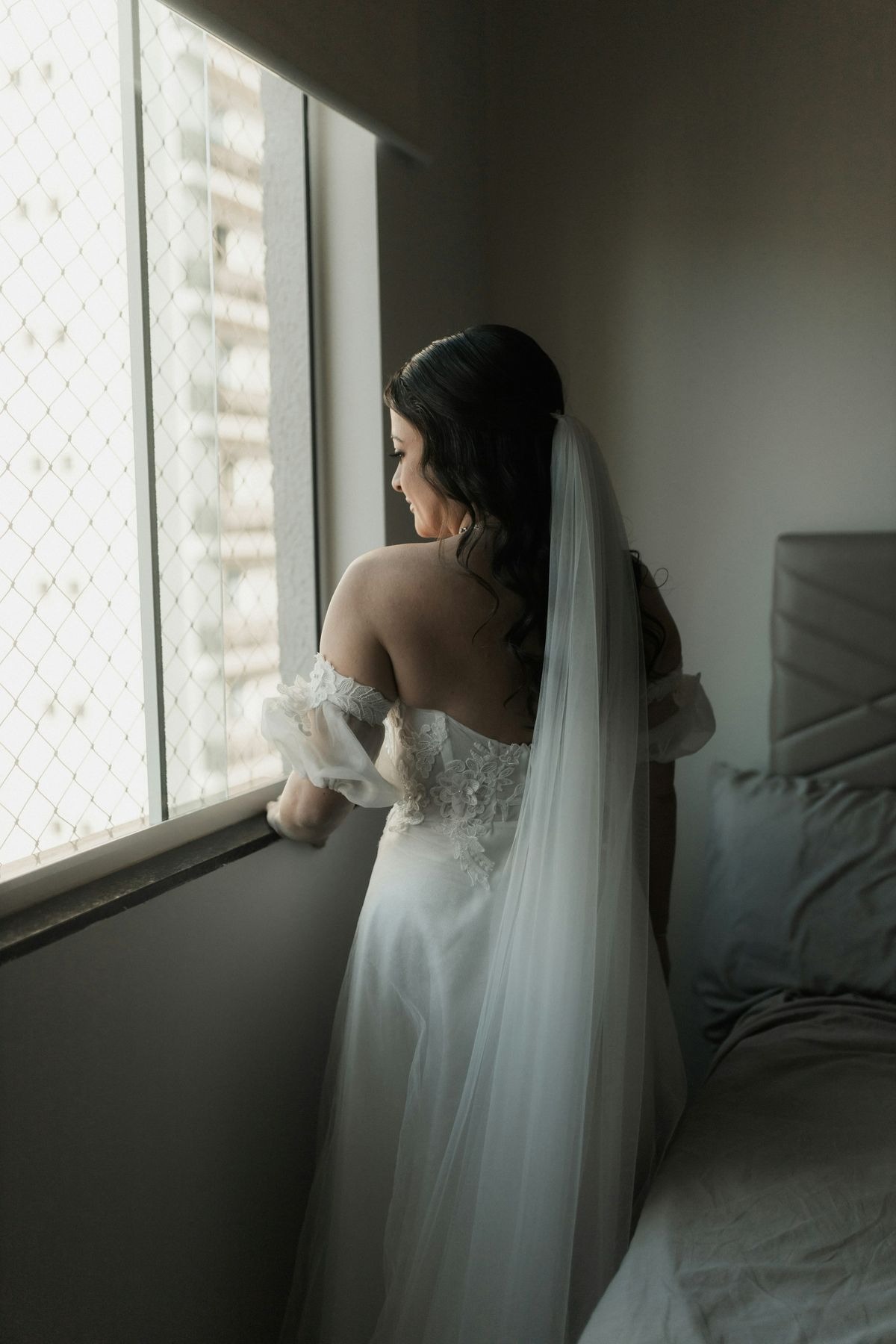
The wedding was small—our backyard glowing with string lights stretched between maple trees. Folding chairs. Close friends. Family. I wore a soft cream dress that felt like me. Dan stood beside me in a navy suit, looking nervous and joyful and exactly right.
We wrote our own vows.
His nearly destroyed me.
“I promise to honor the man who brought us here,” he said. “Even though he’s gone. And I promise to love you the way you deserve—and to keep earning you.”
The reception was everything we wanted: warm, uncomplicated, real.
My daughter’s toast made everyone laugh and cry. Dan’s thirteen-year-old daughter stood up, brave as anything, and said, “I’m happy my dad found someone who makes him smile again.”
I barely held myself together.
When the last guests left and we drove to Dan’s house—our house now—I felt something I hadn’t felt in years.
Lightness.
Hope didn’t feel naive anymore. Happiness didn’t feel like something I wasn’t allowed to want.
I took off my shoes, washed my face, still hearing echoes of laughter and hugs, still holding the warmth of the night in my chest.
I expected to find Dan finally relaxing—loosening his tie, exhaling, smiling.
Instead, he was standing in front of the safe in the closet.
Rigid. Still.
His hands were shaking.
“Dan?” I tried to laugh it off. “What is it? Are you nervous?”
He didn’t turn.
“Dan… you’re scaring me.”
When he finally faced me, the expression on his face stole my breath.
Guilt. Raw and crushing.
And fear—like he was about to lose something precious.
“There’s something I need to show you,” he whispered. “Something you need to read. Before tonight is… what it’s supposed to be.”
My stomach sank.
“What are you talking about?”
He punched in the code. The safe clicked open loudly in the quiet room.
“I should’ve told you earlier,” he said, voice breaking. “I’m sorry.”
He pulled out a worn envelope. And inside it—an old phone.
Cracked screen. Barely holding a charge.
“My old phone,” he said. “My daughter found it a few weeks ago. I charged it. And I saw something I forgot existed.”
He opened his messages and held the screen toward me.
A text conversation.
Between him and Peter.
From seven years ago—before Peter died.
At first it was normal: jokes, plans, everyday chatter. And then Dan’s words shifted—venting, spiraling, speaking from a dark place.
He had written about seeing Peter and me together.
About how we worked.
About how lucky Peter was.
And then Peter’s reply.
A hard line.
A boundary.
A demand for a promise.
My eyes stayed on the screen until the words blurred and my fingers went cold.
And suddenly it made sense: Dan had been in the wreckage of divorce, saying something careless, probably painful. And Peter—protective in the way loving husbands can be—had shut it down immediately.
“I forgot that conversation even happened,” Dan said, voice shaking. “I was broken back then. My marriage was collapsing. I saw you two at a barbecue, and I said something stupid. I never planned anything. I never tried anything. You were his wife. My best friend’s wife. I didn’t let myself think of you that way.”
He sat on the edge of the bed and dropped his face into his hands.
“When we got close after he died, it wasn’t a plan,” he said. “It wasn’t manipulation. It just… happened. Pete had been gone for years. But when I saw that message again, I panicked.”
He looked up, devastated.
“The invitations were already out. Everything was booked. And all I could think was—what if I broke my promise anyway? What if I’m the kind of man who took advantage of you when you were grieving? What if I’m… the worst version of myself?”
I couldn’t move.
“I need you to tell me the truth,” he said. “Do you think I used your pain? Do you think I engineered this?”
“Dan…”
“If you believe that,” he whispered, “we stop right now. I’ll sleep on the couch. We can annul it. Whatever you need.”
I stared at the man I had just married—who was offering to walk away on our wedding night because he was terrified of harming me.
“Do you love me?” I asked.
“Yes,” he said instantly. “More than anything.”
I crossed the room, held his face in my hands, and made him look at me.

“Peter didn’t choose to die,” I said quietly. “He didn’t know what would happen. And if he could see us now, I think he’d feel relieved. Of all the people in the world, I ended up with someone who is good. Someone who never pushed me. Someone who never turned my grief into leverage. Someone who’s tearing himself apart over a text message from seven years ago.”
Tears spilled down his face.
“You didn’t betray him,” I continued. “Life happened. We survived something brutal. And we found each other afterward. That isn’t disloyalty. That’s being human.”
“I was so scared you’d hate me,” he whispered.
“I know,” I said. “And that fear is why I trust you.”
When we kissed, it wasn’t dramatic, frantic, or hungry like people imagine wedding nights to be.
It was quiet. Steady.
It felt like choosing each other with our eyes open—fully aware, fully honest, scars and all.
That night we made new promises—just us, in the dark, no audience, no script. Promises that weren’t anchored to what we’d lost, but to what we still wanted to build.
That was two months ago.
Now I wake up beside Dan with a deep certainty—not because the road was easy, or neat, or free of shadows.
But because love isn’t perfection.
Love is staying.
Love is honesty when it’s uncomfortable.
Love is showing up—especially when it’s hard.
Peter will always belong to my story. He gave me twenty years, two incredible children, and a foundation of love that will never disappear.
But he is not the ending.
Dan is my next chapter.
And maybe that’s what people don’t tell you about grief: you don’t replace the ones you lost. You don’t erase them. You don’t stop loving them.
But you also don’t stop living.
And if you’re lucky—and brave enough to keep going—love can meet you again, not to rewrite what was, but to carry you forward.