For seven years, my life was a long hallway of silence. No calls. No sightings. No body. Just a constant, gnawing question that never closed its teeth: what happened to my daughter?
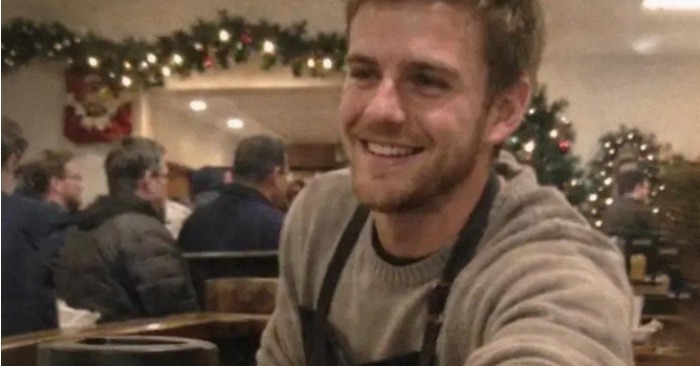
And then, in a crowded café nowhere near home, I saw something that stole the air from my lungs.
I was forty-five when Christmas stopped feeling like a season and started feeling like a test. I used to love everything about it — snow softening the streets, cinnamon warming the kitchen, my daughter Hannah singing carols off-key on purpose just to make me laugh.
Now I’m fifty-two.
Hannah disappeared seven years ago. She was nineteen. She said she was meeting a friend for a little while — a quick outing, nothing dramatic — and she never came back. No note. No voicemail. No explanation.
The police never found a trace strong enough to hold onto. No evidence that proved she was gone, and no proof she was alive either.
So I lived suspended in the worst place a parent can be: between grief and hope.
For months, I slept in scraps — one hour here, two hours there — waking up at every sound like the universe might be returning her to me.
I kept her room untouched. It was irrational, but it felt like a deal I was making with fate: If I don’t change anything, she can come back without feeling like she missed her own life.
Her favorite hoodie stayed draped over the chair. Her lemony perfume clung to the closet far longer than it should have.
That “in-between” became my home.
On the morning it happened, I was traveling back after visiting my sister, Margaret. I had a long layover in a city I didn’t know, so I wandered without purpose until I ended up in a small café near the train station.
It was packed and cozy — warm lights, holiday music bouncing off the walls, people laughing like nothing terrible had ever happened.
Mariah Carey blasted too loudly. Cups clinked. Someone spilled cocoa and laughed it off.
I ordered a latte I didn’t even want just to have something to do with my hands, then stood near the counter, staring at the twinkle lights in the window. I wasn’t planning to stay. I was just killing time.
But when the barista slid my cup toward me and I reached for it…
I saw the bracelet.
Thick, hand-braided thread — faded blue and gray — no clasp, just a crooked knot at the end. The kind of knot a child makes when they’re trying hard and laughing too much to care if it’s perfect.
I recognized it instantly.
Hannah and I made that bracelet when she was eleven. A winter afternoon, a snowstorm outside, the two of us hunched over the kitchen table with strands of thread and mugs of something warm. She’d insisted we make “matching” bracelets, even though mine turned out lopsided and hers had that slightly awkward knot.
She wore hers constantly.
Even the night she vanished.
My fingers tightened around the paper cup so hard it crumpled a little.
“Excuse me,” I said, and my voice came out thinner than I meant. “That bracelet… where did you get it?”
He blinked like I’d dragged him out of a dream. “Sorry?”
I nodded toward his wrist. “The blue and gray one. Where did it come from?”
He glanced down, then back at me — and something flickered in his expression. A split-second of alarm before his face smoothed into neutrality.
“It’s mine,” he said quickly. “Just… something I’ve had for a long time. Personal.”
Then he tugged his sleeve down over it like fabric could erase what I’d seen.
That’s when I knew.
He wasn’t telling the truth.
My stomach dropped so hard I had to grip the counter to steady myself.
“I made that bracelet,” I whispered. “With my daughter.”
His jaw tightened. He looked away. “I don’t know anything about it,” he said, too fast. “I really can’t help you.”
And then he turned to another order as if our conversation had never happened.
But I couldn’t move.
Hope — the kind that terrifies you because it can shatter you — crawled back into my chest.
I sat in a corner booth and didn’t touch my drink. Minutes blurred into hours. I watched him work, watched him glance at me when he thought I wasn’t looking, watched him tense every time I shifted like he expected me to cause a scene.
I didn’t.
I waited until the café thinned out, until the afternoon light dropped low and the place lost its loud cheer.
When his shift ended, he grabbed his coat and headed for the door.
I stood up and stepped into his path.
“Please,” I said, and my voice shook but held. “Just listen for a second. My daughter’s name is Hannah.”
The color drained from his face.
He tried to move past me, and something in me finally broke. I started crying right there between tables — ugly, loud, uncontrollable sobs that made a couple of people turn their heads.
I hadn’t cried like that in years — not since the anniversary when I realized everyone else had stopped expecting her to come home.
“She disappeared seven years ago,” I choked out. “I just need to know if she’s alive.”
He stood frozen, his hand clenched around his bag strap.
Then he exhaled, long and tired, and his shoulders sank.
“I didn’t steal it,” he said quietly. “She gave it to me.”
Everything inside me went silent.
“You know her?” My voice cracked. “Is she okay? Where is she?”
He stared at the floor, then pulled out his phone.
“Give me your number,” he said. “I’ll call you.”
That night I didn’t sleep. I sat in a cheap hotel room, staring at my phone like it might blink with a miracle. Every noise in the hallway made my heart jump.
No call came.
The next day, I stayed anyway. I couldn’t leave the only real lead I’d had in seven years.
Then another day passed.
And I began to think I’d imagined the whole thing — that grief had finally started playing tricks on my mind.
Two days later, my phone rang.
I answered before the first ring finished.
“I talked to her,” the voice said. “Hannah… doesn’t want to speak to you. I’m sorry.”
My vision blurred.
“Why?” I managed.
He sighed, and I could hear traffic behind him.
“She says she couldn’t handle the pressure anymore,” he said. “She felt like she was drowning under expectations. Like she could never be enough.”
It felt like getting hit in the stomach.
“She was pregnant,” he added gently. “She thought if she came home and told you… you’d never forgive her. That’s what she believed.”
My knees went weak. I sat down hard on the edge of the bed, pressing my hand over my mouth so I wouldn’t sob into the phone.
“She wanted to start over,” he continued. “She left. Changed her name. Found work. We met a few months later at a diner.”
“Who are you?” I asked, barely audible.
“My name is Luke,” he said. “We’ve been married three years. We have two kids. One from back then… and one together. A little girl.”
I couldn’t speak.
All I could think was: She’s alive. She’s alive. She’s alive.
“She’s okay,” Luke said. “She’s strong. She’s a good mother.”
“I don’t want to ruin her life,” I whispered. “I’m not trying to drag her backward. I just… I just want to see her. Even once.”
A week went by before anything changed. I didn’t call Luke, even though I wanted to. I didn’t want to push. I told myself that if Hannah truly didn’t want me, I had to accept it.
But I kept my phone on loud at night.
Just in case.
Then one evening, my screen lit up with an unknown number. I jolted awake.
Before I could answer, it stopped — and a voicemail appeared.
My hands shook as I pressed play.
“Hi…” a familiar voice said. “It’s me. Hannah.”
I didn’t even hear the rest. I dropped the phone and cried like my body had been holding back seven years of grief in one tight fist.
I called back immediately, fumbling the buttons.
She answered on the second ring.
“Hi, Mom,” she said.
I had a thousand words in my throat and none of them felt safe. So I said the one sentence I’d rehearsed in my head for years.
“I’m so sorry.”
Silence.
For one terrifying second, I thought she’d hung up.
Then her voice came back — thick with emotion.
“Me too.”
We didn’t rip open the past right away. We moved carefully, like two people walking across thin ice.
She told me about her daughters: Emily, six, and Zoey, two. She worked at a community center teaching kids art. She talked about Luke — how he worked hard, how he showed up, how he became her safe place when she didn’t have one.
“I never stopped thinking about you,” she said quietly. “I just didn’t know how to fix it.”
“You didn’t have to fix anything,” I whispered. “You only had to come home.”
A pause. Then: “I wasn’t sure you’d still want me.”
I swallowed a sob. “I never stopped wanting you.”
She asked me to meet her on a cold but sunny Saturday morning in a park near her home.
I barely slept the night before.
I arrived early — too early — and sat on a bench gripping my bag so tightly my fingers ached.
Then I saw her walking toward me with a stroller in one hand and a little girl’s hand in the other.
She looked different — older, thinner, her hair cut short and messy. There were lines around her eyes I didn’t recognize. A weight in her shoulders that wasn’t there at nineteen.
But it was her.
Hannah.
My legs went unsteady as I stood.
I didn’t know whether to hug her. I didn’t know if I was allowed.
She decided for me.
She let go of the stroller and stepped into my arms.
“Hi, Mom,” she whispered against my shoulder.
I held her like I was afraid she might vanish again.
She introduced me to Emily and Zoey. I smiled through tears while they played, while we sat shoulder to shoulder on the bench as if seven years hadn’t happened.
“They know about you,” Hannah said. “Emily asks questions.”
“I want to know them,” I said softly. “If you’ll let me.”
She nodded. “I want that too.”
Hours passed in that park. At one point, Zoey toddled over and reached for Hannah’s wrist.
Hannah smiled, untied the knot, and slipped the bracelet off — the same one I’d seen on Luke’s arm in the café.
She looked at me.
“She plays with it,” Hannah said. “Sometimes she wears it.”
My heart tightened.
“I remember the day we made that,” I said. “You said the crooked knot made it special.”
Hannah gave a small laugh. “It still does.”
I looked at the woman she’d become — changed in a thousand ways, but alive, standing in the sun with her children.
“I missed so much,” I whispered.
She didn’t answer right away. Then she took my hand.
“We both did,” she said.
Nothing became perfectly healed overnight. There was no magical reset. No clean ending.
But there was something better than a perfect story.
There was a beginning again.
In the weeks after, I visited often — short visits at first. Coffee. Walks. Watching Emily dance. Pushing Zoey on the swings. Hannah showed me scrapbooks. I brought old photos. We stitched together the time, piece by piece.
One afternoon, Emily ran into the room wearing the bracelet, far too loose on her small wrist.
“Look!” she squealed. “Mommy gave me this!”
Hannah smiled. “That’s a special bracelet. My mom made it with me when I was little.”
Emily looked up at me. “Really?”
“Really,” I said. “On a snowy day.”
Emily grinned. “It’s magic.”
I blinked back tears. “It is.”
That Christmas, I sat in Hannah’s living room while the girls tore into presents. Luke hummed in the kitchen while something cinnamon-sweet warmed on the stove. Hannah sat beside me with a coffee cup in her hands and rested her head gently on my shoulder.
“Thank you for waiting,” she murmured.
“I never stopped,” I whispered.
Outside, snow dusted the windowsill.
Inside, children laughed.
And for the first time in years, Christmas felt warm again.