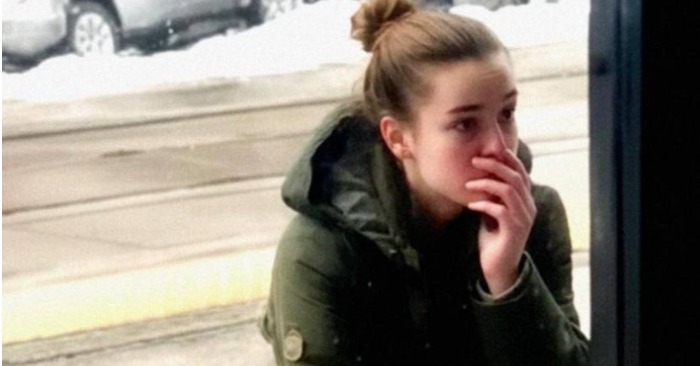
On my eighteenth birthday, the people who had been raising me told me it was time to go. I was handed a deadline instead of a celebration. I had no place lined up, no phone number to dial, no idea what came next. I walked out with a bag of clothes and the weight of knowing I was completely on my own.
Hours later, lost in the noise and movement of a packed train station, someone I had never met stepped close, pressed a key into my hand, and disappeared back into the crowd.
That single moment rewired everything I thought I knew about my life.
I can’t claim my childhood was happy, but I can say it could have been worse. I don’t remember my biological parents at all. My memories don’t start with bedtime stories or family vacations. They start with strangers.
Foster homes. One after another. Different rules, different faces, different couches to sleep on. Until I was ten and I landed with Paul and Karen.
They told me I was their daughter. That I belonged to them. And I believed them with my whole chest. For the first time ever, I had a bedroom that was mine. A door I could close. People who called me family without sounding like it hurt to say it.
They even had a son my age—Ethan.
We didn’t really click, but I still cared about him. I wanted so badly for us to be real siblings that I kept forgiving the things he said.
He could be cruel. He called me “the bonus kid” like I was an extra item somebody didn’t order. But I swallowed it, again and again, because the alternative—admitting I didn’t truly belong—felt unbearable.
Karen used to say, “You’ll always be our daughter.”
Paul would nod along, as if agreeing made it official.
Those words weren’t just comforting. They were everything.
The night before my eighteenth birthday, I couldn’t sleep. The air felt too loud, like something was coming. Close to midnight, I went to the kitchen for a glass of milk.
The light above the stove was on. Paul was sitting there with a mug of coffee, like he’d been waiting for the house to quiet down. When he noticed me, he looked surprised.
“Can’t sleep?” he asked.
“I’m just… nervous about tomorrow.”
He gave me a thin smile. “We’ve got something special planned.”
“Like a surprise?” I asked, suddenly hopeful.
“Something like that,” he said quietly.
That warmed me in a way I didn’t even realize I needed. I drank my milk, told him goodnight, and went back to bed feeling steadier, almost excited.
When I woke up the next morning, the house was silent.
Sunlight lay across the floor, bright and peaceful, but no voices, no movement, no smell of breakfast. Thinking about Paul’s words, I assumed they were out picking something up—balloons, maybe, or a cake, or whatever “special” meant.
But the hours passed, and nothing changed.
No decorations. No laughter. No clatter from the kitchen. I sat by the window watching the driveway, telling myself not to be dramatic.
Finally, I heard the front door.
Paul, Karen, and Ethan walked in carrying grocery bags, laughing about something like it was an ordinary day.
“Happy birthday, sweetheart,” Karen said with her usual polite smile.
Paul repeated it more softly. Ethan tossed out a casual, “Happy birthday,” and wandered into the living room like he’d done his duty.
Then Paul handed me a large duffel bag.
My heart actually lifted. I smiled, expecting a gift—something meaningful, something that proved I mattered.
“Can I open it?” I asked.
“Of course,” Paul said, stepping back.
I pulled the zipper.
My smile vanished.
The bag was empty. Completely empty.
For a second, I thought this had to be some weird joke.
“There’s… nothing in here,” I said with a nervous laugh.
Karen and Paul exchanged a look that didn’t match any kind of celebration.
“Well,” Karen said finally, “that’s because you’re supposed to put your things in it.”
I stared at her. “My things?”
“Yes,” she said, like she was explaining something obvious. “All your things. Clothes. Shoes. Anything that belongs to you.”
My brain tried to make it make sense and failed.
“Why would I be packing?” I asked.
Paul’s voice went gentle, the way adults speak to children when they’ve already decided the outcome. “That’s the surprise, Lily. You’re taking what’s yours and starting your life.”
“Starting my life… where?” I whispered.
Karen exhaled like this was exhausting for her. “Honey, you’re eighteen now. You’re not our responsibility anymore. We gave you a roof, food, what you needed. Now it’s time to be independent.”
My throat tightened so hard I could barely breathe.
“But you said I’d always be your daughter,” I said, the words shaking.
Paul looked away. “That was before we realized how expensive Ethan’s college is,” he admitted quietly. “We can’t afford to support both of you.”
Karen nodded as if this was reasonable. “We’re being more than fair. You can take everything we bought you. Most kids don’t even get that.”
My eyes burned. “You’re kicking me out.”
Karen’s expression didn’t soften. “You have until this afternoon. That’s generous.”
From the couch, Ethan grinned like he’d been waiting for this scene.
“Should’ve studied harder,” he said. “Then maybe they’d pay for you instead of me.”
“I had better grades than you,” I snapped, shocked that anger could still exist inside me through the panic.
He shrugged. “Doesn’t matter. You’re not real family.”
I looked to Paul and Karen, waiting for them to correct him, to defend me, to say he was cruel and wrong.
They didn’t.
My voice dropped to something small. “Can I at least stay until I find a job? Or a place? Just for a little while?”
Karen shook her head. “You’ve had enough time to prepare. You’re an adult. It’s time to move on.”
Something inside me cracked open.
I went to my room and cried until my face felt swollen. Then I packed in silence, folding clothes with shaking hands, wiping my cheeks on my sleeves, barely able to see through tears.
When I dragged the duffel bag to the front door, no one even looked up.
Karen scrolled on her phone. Paul pretended to read the newspaper. Ethan laughed at something on TV.
I hesitated—just for a moment—hoping someone would stop me, say it was a mistake, say I’d misunderstood, say they’d changed their minds.
No one did.
I stepped outside.
The door clicked shut behind me, soft and final.
That sound echoed louder than any scream.
I stood there for a few seconds, duffel strap digging into my shoulder, staring at the street like it was a foreign country. It felt huge and empty. It felt like I had been erased from the world.
Then I started walking.
I didn’t have a destination. I just moved, because staying still felt like dying.
After a long time, I ended up near the train station. I told myself maybe I could sit there overnight. Maybe in the morning I could find a shelter, figure out some kind of plan.
The air was cold enough to sting. My hands trembled. I hugged the bag closer, like it could keep me together.
And then someone slammed into me.
Hard.
My duffel slipped from my grip and fell. I stumbled and turned, ready to shout.
“Hey!” I called.
The man didn’t turn around. He disappeared into the crowd like he’d never existed.
I bent to gather my things. That’s when I noticed something in my palm.
A small metal key on a keychain.
I hadn’t felt it being placed there. I hadn’t even realized anyone touched me.
The key was old, heavy, ice-cold against my skin. And on the keychain was an address—engraved, not written.
I looked around, expecting the man to come back for it.
No one did.
I typed the address into my phone. It was nearby.
I stood there with my bag and the key, staring at the screen, my heart kicking against my ribs.
For a long moment, I didn’t move.
Then I thought, What else do I have to lose?
I shoved the duffel strap higher on my shoulder and started walking.
When I reached the address, I stopped dead.
In front of me was a large white house behind iron gates, surrounded by tall oak trees. The kind of place I’d only ever seen in movies or in neighborhoods I didn’t belong in.
My first thought was that it had to be a mistake.
But the key was in my hand. And the address matched.
I approached the gate slowly.
With a soft metallic click, it opened on its own.
My heart raced. Every instinct told me to run. But something else—curiosity, desperation, hope—I didn’t know—pulled me forward.
I stepped through the gates, followed the stone path to the front door, and stood there trembling.
My hands shook as I slid the key into the lock.
It turned smoothly.
The door opened with a quiet creak, revealing a wide hallway filled with warm, gentle light.
“Hello?” I called.
No answer.
The house didn’t feel abandoned. There was a faint scent of coffee in the air. The furniture looked clean and cared for, not dusty, not staged.
I walked inside carefully, expecting someone to appear at any second.
On the kitchen table, there was a folded note. My name—Lily—was written on the front in elegant handwriting.
I unfolded it.
“I’ll be here tomorrow morning. Make yourself comfortable. Your room is upstairs, third door on the left—or choose any room you like.”
That was it. No signature. No explanation.
I stared at the paper until my eyes blurred.
Slowly, I climbed the stairs.
Third door on the left.
I opened it and froze.
The room was bright and spacious, curtains pale and soft, sunlight spilling across the floor. A large bed sat against the wall like it belonged in a real home.
For a moment, I didn’t dare touch anything.
Then I opened the closet.
My breath caught.
The shelves were filled with brand-new clothes—my size—neatly folded like someone had prepared for me, specifically.
I spent the rest of the afternoon wandering the house like a ghost.
There was food in the kitchen. Towels in the bathroom. A toothbrush waiting by the sink.
I pinched myself more than once, sure I had to be dreaming.
But the dream didn’t break.
By evening, exhaustion hit like a wave.
I showered, found a soft robe in the closet, and climbed into bed, still half expecting someone to burst in and tell me I’d imagined everything.
I fell asleep anyway.
The next morning, I woke to the smell of pancakes and coffee.
Real pancakes. Real coffee.
My stomach twisted with nerves. I threw on clothes and hurried downstairs.
In the kitchen were two women.
One stood at the stove, cooking. The other—older, with silver hair—sat at the table holding a book.
When she saw me, she rose slowly. Tears were already shining in her eyes.
“My sweet child,” she whispered as she stepped toward me. “I can’t believe it’s really you.”
I blinked, my voice barely working. “Do I… do I know you?”
She smiled through tears and wrapped her arms around me.
“I’m your grandmother,” she said. “Margaret.”
“My… grandmother?”
She nodded and guided me to the table.
“Please,” she said, “let me explain.”
She took a breath, like she’d been carrying this story for years.
“My daughter—your mother—left this house when she was nineteen. She ran away with a boy. I searched for her. I tried everything. But she disappeared.”
My throat tightened.
“Much later,” she continued, “I learned she had a baby. A little girl. You.”
My hands went cold. “You knew about me?”
“Not enough,” Margaret said. “The agency doesn’t release information until the child turns eighteen. But a few weeks ago, I got a call.”
She looked at me with something that resembled pain and fury at once.
“From the couple who raised you.”
Paul and Karen.
“They called you?” I whispered.
“Yes,” she said. “They found me through the agency. They demanded money for information about you—and they made me promise I wouldn’t contact you before your eighteenth birthday.”
My head spun. “So… they knew you existed.”
“They did,” Margaret said. “And they used it. They squeezed more money out of me.”
She swallowed hard.
“But they gave me the one thing I truly needed,” she said. “They told me where you were.”
I felt tears slide down my face, hot and unstoppable.
“They made me feel like I belonged nowhere,” I choked out.
Margaret reached for my hand.
“They were wrong,” she said firmly. “You belong here. You always have.”
I wiped my cheeks, trying to breathe, trying to stay upright. Then the thought that had been buzzing in the back of my mind finally sharpened.
“The man at the station,” I said. “The one who gave me the key… who was he?”
Margaret didn’t answer right away.
She looked toward the woman at the stove.
The woman froze. Slowly, she turned around.
Her hands were shaking.
Up close, she looked pale and tired—beautiful in a way that hurt, like someone who had carried regret for too long.
“It was me,” she said quietly.
The room seemed to tilt.
I stared at her, every heartbeat loud.
“M… Mom?” I whispered, the word tasting unreal.
Her eyes filled instantly. She nodded.
“I was so young, Lily,” she said, voice trembling. “So terrified. I thought I was doing the right thing. And then I grew up and realized I had thrown away the only thing that actually mattered.”
She took a step closer, as if afraid I’d vanish.
“Please forgive me,” she whispered.
My chest ached like it was being split open.
I walked toward her without thinking.
When she opened her arms, I didn’t hesitate.
She wrapped herself around me—shaking, desperate, real—and for the first time in my entire life, I didn’t feel like an extra child.
I didn’t feel borrowed.
I didn’t feel temporary.
I felt whole.