Mark locked the back door.
Then he checked it again.
I stood beside the kitchen counter holding the brand-new jar like it might explain everything.
“I bought this yesterday.”
“I heard you.”
“Eric left three days ago.”
“I heard that too.”
“So he couldn’t have touched it.”
Mark didn’t answer.
That frightened me more than anything he could have said.
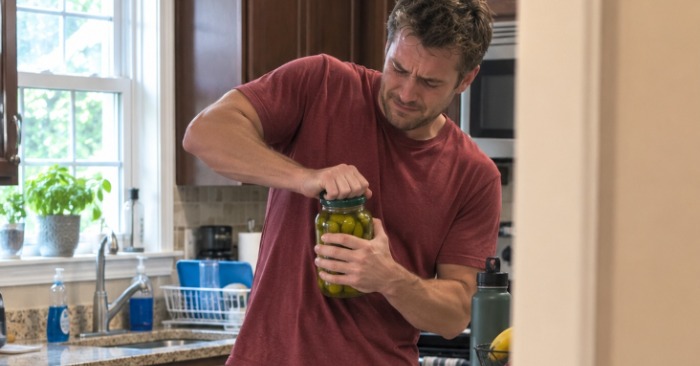
He picked up one of the older jars and turned the lid beneath the light.
“Look.”
Tiny silver scratches circled the rim.
I leaned closer.
Then he showed me the new jar.
The same marks.
“What causes that?”
“Pliers, maybe.”
I stared at him.
“Why would anybody use pliers on jars?”
Mark put both down.
“That’s what we need to figure out.”
I almost laughed.
Not because anything was funny.
Because the alternative was panic.
“This is ridiculous.”
Mark looked at me.
“No, Claire. What’s ridiculous is you spending years thinking you somehow forgot how strong you are.”
That sentence hit me harder than I expected.
For years, Eric had turned this into a joke.
Whenever I couldn’t open something, he would grin.
“Need a man around?”
Sometimes he flexed his arm dramatically.
Sometimes he kissed my forehead and called me “tiny hands.”
Our friends laughed.
I laughed too.
Eventually.
But first I always felt irritated.
Then embarrassed.
Then stupid for being irritated.
That pattern had become so normal that I stopped noticing it.
Mark was still examining the lids.
“Do you have cameras?”
“One outside.”
“Inside?”
I shook my head.
Then I remembered.
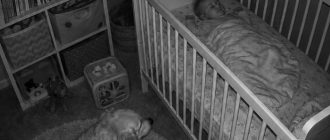
“My daughter has one.”
Mark frowned.
“What?”
“Her old nursery camera. We stopped using it years ago, but I put it in the kitchen last month because she kept sneaking snacks before dinner.”
“You still have access?”
“I think so.”
I grabbed my tablet.
My hands shook while I searched for the app.
The camera was mounted high on a shelf beside the dining room entrance.
I had forgotten it was even there.
Most of the recordings were useless.
Me making coffee.
My daughter Ava doing homework.
Eric standing at the refrigerator.
Then Mark said:
“Go to last night.”
I did.
12:18 a.m.
Empty kitchen.
12:31.
Nothing.
1:04.
The motion indicator appeared.
I tapped the clip.
The kitchen was dark except for the small light over the stove.
The back door opened.
Someone entered.
I stopped breathing.
The figure wore a baseball cap and dark sweatshirt.
He moved confidently.
Not like a burglar.
No hesitation.
No searching.
He walked straight toward the cabinet beside the refrigerator.
The cabinet where I kept the jars.
Mark leaned closer.
The man took something from his pocket.
A small tool.
Then he started opening jars.
One after another.
Not eating anything.
Not stealing anything.
Just opening them.
And closing them again.
Hard.
So hard his shoulder twisted each time.
My stomach turned.
“Why is he doing that?”
Mark said nothing.
The man moved to the refrigerator.
He opened my face cream.
Closed it tightly.
Then the jar of food coloring.
Then my vitamins.
Objects that had nothing to do with food.
Objects Eric didn’t use.
Objects I used.
Then the figure paused.
He looked toward the camera.
My heart stopped.
The cap hid most of his face.
But I knew the movement.
The way he tilted his head.
The slight unevenness in his left shoulder from an old football injury.
“No.”
Mark looked at me.
I whispered:
“That’s Eric.”
The room seemed to shrink.
“No.”
I rewound it.
Watched again.
The walk.
The posture.
The hand.
Then something flashed at his wrist.
His watch.
A large black watch I had bought him for our anniversary.
Mark slowly sat down.
“I thought you said he was at a conference.”
“He is.”
“Where?”
“Denver.”
Mark looked toward the screen.
“That man was in your kitchen last night.”
I called Eric immediately.
He answered on the fourth ring.
“Hey, babe.”
Music echoed faintly behind him.
My throat closed.
“Where are you?”
A pause.
“At the hotel.”
“Which hotel?”
Another pause.
“Why?”
“Tell me.”
“The Marriott.”
“In Denver?”
“Yes.”
I looked at the frozen image of him standing in my kitchen.
“Turn on video.”
Silence.
“Claire, what’s going on?”
“Turn on video.”
“I’m downstairs with coworkers.”
“So?”
“I’m not doing this right now.”
He sounded irritated.
That familiar irritation.
The one he used whenever I asked questions he didn’t like.
I almost apologized automatically.
That scared me.
“Eric, are you in Denver?”
“Yes.”
“Swear to me.”
“What kind of question is that?”
I looked at Mark.
He shook his head slightly.
Don’t tell him what you know.
So I didn’t.
“I’m tired,” I said.
“I’ll call tomorrow.”
Eric exhaled sharply.
“You’re acting weird.”
Then he hung up.
Mark looked at me.
“Do you know where his passport is?”
I stared at him.
“Why?”
“Just check.”
Eric kept important documents in a locked drawer in his office.
Except it wasn’t usually locked.
That night, it was.
I knew the spare key.
Inside were his passport, tax documents, and several folders.
His passport was there.
That proved nothing.
Denver didn’t require one.
But underneath it was something I had never seen.
A small envelope.
Inside was a second key.
Not a house key.
A key card.
And a folded receipt.
A motel.
Twenty minutes from our house.
Check-in date: two days ago.
My chest tightened.
“He’s staying nearby.”
Mark read it.
“Maybe.”
“Why would he lie about Denver?”
“I don’t know.”
Then I noticed another receipt.
Hardware store.
Needle-nose locking pliers.
Bought eight months earlier.
I sat down.
The absurdity of it nearly made me cry.
“This cannot seriously be about jars.”
Mark crouched in front of me.
“It isn’t.”
I looked at him.
“What do you think it is?”
He hesitated.
Then said:
“I had an uncle like this.”
I waited.
“He would hide his wife’s car keys.”
“What?”
“Small things at first. Move her purse. Turn off alarms. Change passwords. Tighten things she couldn’t open.”
I felt cold.
“Why?”
“To make her depend on him.”
I shook my head.
“No. Eric isn’t…”
But I stopped.
Because memories had started arriving.
Eric insisting on driving because I was “terrible with directions.”
Eric changing the online banking password because I “kept forgetting it.”
Eric storing things on high shelves, then laughing when I had to ask him.
Eric replacing lightbulbs so tightly I couldn’t remove them.
Eric resetting the thermostat whenever I changed it.
Eric telling people I was helpless with anything mechanical.
Our friends had heard that story so often they believed it.
Eventually, I had too.
“He liked you needing him,” Mark said.
I hated how quickly the sentence fit.
Still, one thing made no sense.
“Then why sneak into the house while he’s supposed to be away?”
Mark looked toward the jars.
“To make sure you still need him when he’s gone.”
I felt sick.
That night, Ava stayed with my sister.
I told her only that Eric had lied about his trip.
Not the rest.
Not yet.
Mark wanted me to call the police.
I didn’t.
At that moment, I still believed there had to be an explanation.
A terrible misunderstanding.
Something.
Anything.
Instead, I called the motel.
I asked for Eric’s room.
The receptionist transferred me.
Someone answered.
No hello.
Just silence.
Then:
“Claire?”
I hung up.
For ten minutes, I sat without moving.
He knew my number.
Maybe caller ID.
Maybe instinct.
It didn’t matter anymore.
Eric was not in Denver.
He was twenty minutes away.
Lying.
Sneaking into our house at night.
Manipulating objects he knew I needed.
But why?
That answer arrived the next morning.
Not from Eric.
From Ava.
My twelve-year-old daughter called me from my sister’s house.
“Mom?”
Her voice sounded nervous.
“What’s wrong?”
“Is Dad mad?”
I closed my eyes.
“No. Why?”
“Because you found out?”
My whole body went still.
“Found out what?”
Silence.
“Ava?”
“He told me not to tell you.”
My mouth went dry.
“What did Dad tell you not to tell me?”
She started crying.
“That he comes home during trips.”
I gripped the phone.
“How long has this happened?”
“I don’t know.”
“Why didn’t you tell me?”
“He said it was a game.”
My heart broke.
“What game?”
Ava sniffed.
“He called it Mom’s challenge.”
I couldn’t speak.
“He said you got frustrated too easily, so he was teaching you to ask for help.”
Every part of me went numb.
“What did he do?”
“He’d change things.”
“What things?”
“The jars. Your phone charger. The printer.”
I covered my mouth.
“He told me not to fix them because you had to learn.”
Tears filled my eyes.
My daughter had been watching.
Not understanding.
Learning that this was normal.
“Did Dad ever ask you to change anything?”
Ava hesitated.
“Once.”
“What?”
“He told me to put your spare car key in his desk.”
I stood so quickly the chair fell backward.
“When?”
“Last winter.”
I remembered that day.
I had an important job interview.
My keys disappeared.
I searched everywhere.
Eric eventually drove me.
We arrived twenty minutes late.
I didn’t get the job.
That night, he held me while I cried.
He told me:
“You’d fall apart without me.”
I had thought he was comforting me.
Now I understood.
He had engineered the problem.
Then positioned himself as the solution.
I called a lawyer that afternoon.
But I still wanted to hear Eric say it.
Not because I needed closure.
Because after years of being told I imagined everything, I needed to know whether he would continue lying even when there was nowhere left to hide.
He came home that evening.
Not from Denver.
From the motel.
He walked through the door wearing the same sweatshirt from the camera footage.
Then froze.
The jars were lined up across the kitchen island.
Dozens of them.
Beside them sat the pliers.
The motel receipt.
And my tablet.
Eric stared.
“What is this?”
I stood across from him.
“Open the roasted peppers.”
He blinked.
“What?”
“Open them.”
“Claire…”
“Open the jar.”
He did.
Effortlessly.
Of course.
He put it down.
“Are we seriously doing this again?”
“No.”
My voice was calm.
“We’re doing it once.”
I turned the tablet toward him.
His face changed.
Only for a second.
But I saw it.
“What is that?”
“You.”
He laughed.
Too fast.
“That could be anybody.”
“It’s your watch.”
No answer.
“Your limp.”
Nothing.
“Your motel receipt is in your office.”
His jaw tightened.
Then he did something I will never forget.
He smiled.
Not warmly.
Not nervously.
Almost with relief.
“Okay.”
One word.
My stomach turned.
“So it was you.”
“Sometimes.”
“For years?”
He shrugged.
“You exaggerate.”
I stared at him.
“Why?”
He crossed his arms.
“Because you refuse to let anybody help you.”
I almost laughed.
“What?”
“You always have to prove you can do everything yourself.”
“So you deliberately made things harder?”
“You’re twisting it.”
“You hid my keys before an interview.”
His expression changed.
Ava had told me something he hadn’t expected.
“That was different.”
“How?”
“You were stressed. I knew you shouldn’t drive.”
“You made me miss it.”
“You weren’t getting that job anyway.”
The cruelty of that sentence was so casual that it clarified everything.
Not anger.
Not impulse.
Not absentmindedness.
Control.
He wanted to shape the boundaries of my life until everything difficult led back to him.
Then he could call himself necessary.
“You enjoyed it,” I whispered.
Eric rolled his eyes.
“Oh, come on.”
“You enjoyed watching me struggle.”
“I liked being useful.”
“You created problems so you could solve them.”
He stared at me.
And then, finally, he said the sentence that ended our marriage.
“You needed reminding that you’re not as independent as you think.”
Silence.
I looked at the man I had lived with for fourteen years.
Nothing dramatic happened.
I didn’t throw anything.
I didn’t scream.
I simply understood him.
That was worse.
“You need to leave.”
His smile vanished.
“What?”
“I filed for divorce today.”
His face transformed.
“Over jars?”
There it was.
The perfect sentence.
The one he knew would make me sound ridiculous.
I had heard it in my own head for years.
Over jars?
I looked at him.
“No.”
I pointed toward the counter.
“This is not about jars.”
Then I pointed toward the hallway where our daughter’s photographs hung.
“It’s about teaching our child that love means making someone weaker so they need you.”
He went silent.
“And I’m not letting her learn that.”
Eric tried everything afterward.
Apologies.
Anger.
Promises.
He told relatives I had become unstable.
Some believed him.
He told friends I destroyed a marriage because he “closed lids too tightly.”
Some laughed.
Until I showed them the camera footage.
Then nobody laughed.
The divorce was ugly.
Not cinematic.
Not satisfying in the way revenge stories usually are.
There were lawyers.
Custody discussions.
Arguments over money.
Nights when I wondered whether staying would have been easier.
But something strange happened after Eric left.
Little things started working again.
My keys stayed where I put them.
Passwords didn’t mysteriously change.
The thermostat remained where I set it.
My charger was always plugged in.
And jars?
They opened.
Not every time.
Sometimes I still needed a rubber grip.
Sometimes Ava helped me.
Sometimes I laughed because a lid genuinely was just stuck.
But the first time I couldn’t open one after Eric moved out, I didn’t panic.
I didn’t feel stupid.
I didn’t hear his voice saying I needed him.
I simply tapped the lid against the counter, twisted harder, and it opened.
Ava was sitting nearby doing homework.
She looked up.
“Got it?”
“Yep.”
She smiled.
Then she said:
“You know, Mom, you could’ve asked me.”
I looked at her.
“I know.”
And that was the difference.
Real help waits to be asked.
It doesn’t secretly create the problem first.
I thought I left my husband because of jars.
I didn’t.
I left because I finally understood what he had been putting inside every tightened lid for years:
A message.
You can’t do this without me.
And the day I stopped believing it was the day he lost control.