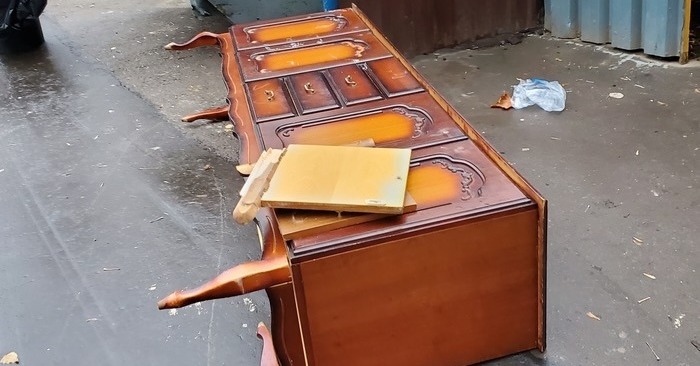
It started with something most people would walk past without a second thought.
Late in the evening, on the way home, her son suddenly stopped and pointed toward a trash container. There, in the dim light, stood an old wooden cabinet.
“Mom, look! It’s carved—just like the ones you love!”
At first, she barely reacted. It had been a long day, and the idea of dragging home discarded furniture didn’t sound appealing. But curiosity won. They stepped closer—and what she saw changed everything.
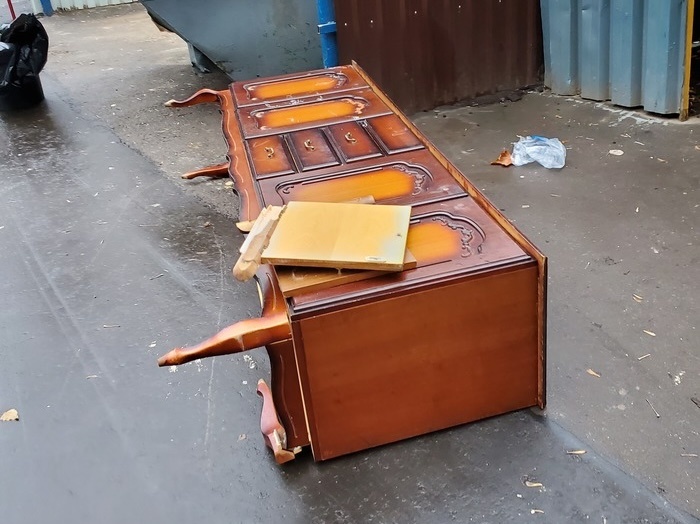
Under the streetlight stood a heavy, solid wooden cabinet. Worn, dusty, but beautifully detailed. The carved patterns were still there, hidden under layers of time. It wasn’t something you could carry alone—but in her mind, a plan had already formed.
By morning, she couldn’t resist.
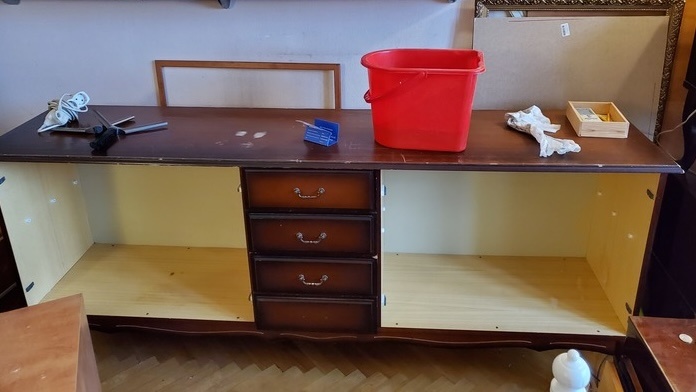
She went back. The cabinet was still there. With the help of a neighbor and a janitor, she brought it home. Once inside, she inspected it carefully. No rot. The legs were intact. Real wood—not cheap board. That was enough. It deserved a second life.
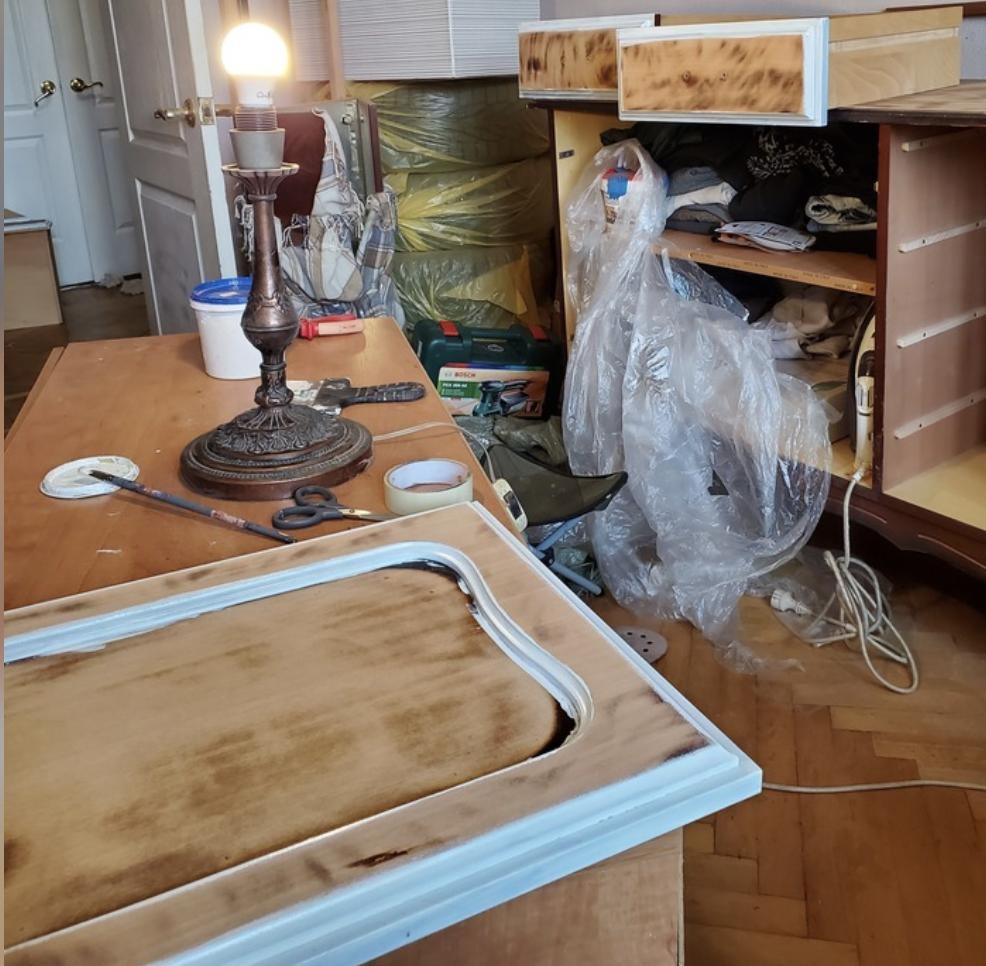
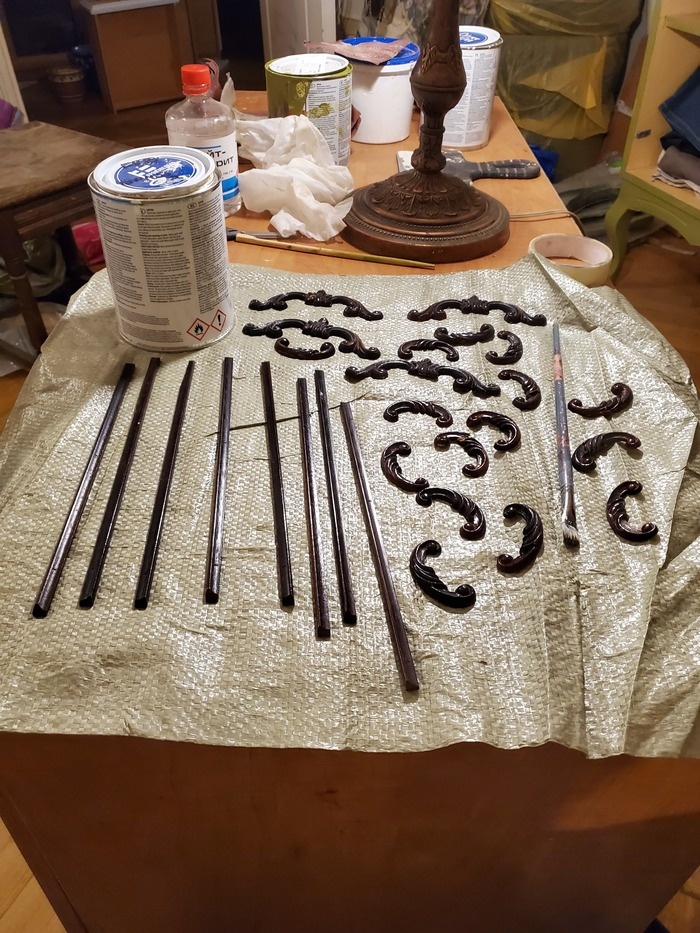
The process began with a full cleanup. She removed the old hardware, sanded the entire surface, and stripped away years of varnish and dirt. The carved details took the most time—dust and cobwebs had settled deep into every curve.
Inside, there was nothing—no shelves at all. But that didn’t stop her. She found an old piece from a child’s bed, cut it down, and shaped new shelves to fit perfectly.
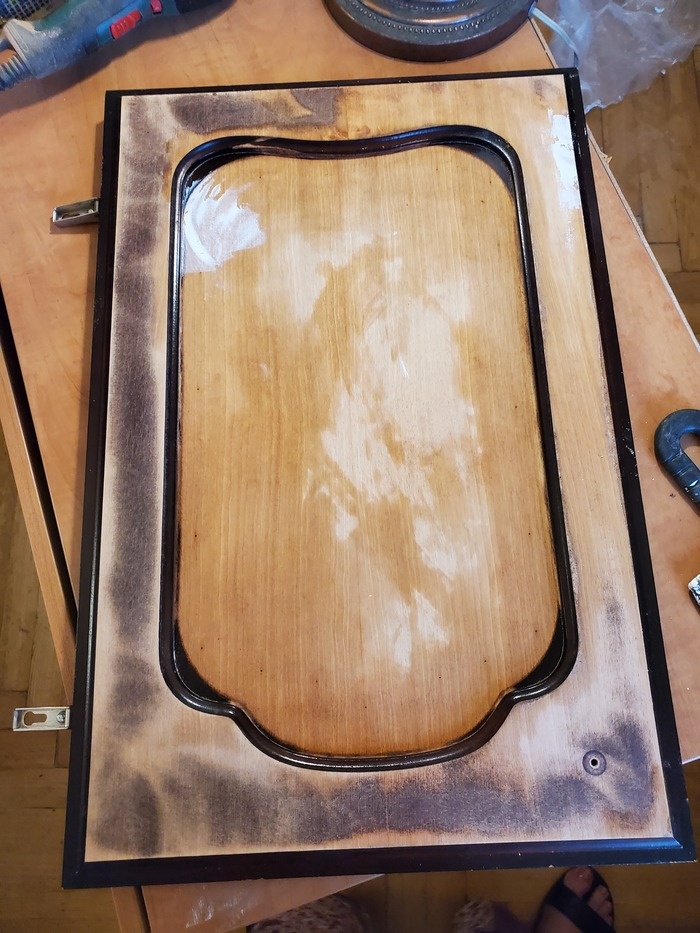
Everything she needed was already at home. Wood filler for cracks. Primer. Acrylic paint. Sandpaper. Tape and fine brushes for details. Even decorative elements were attached using simple adhesive.
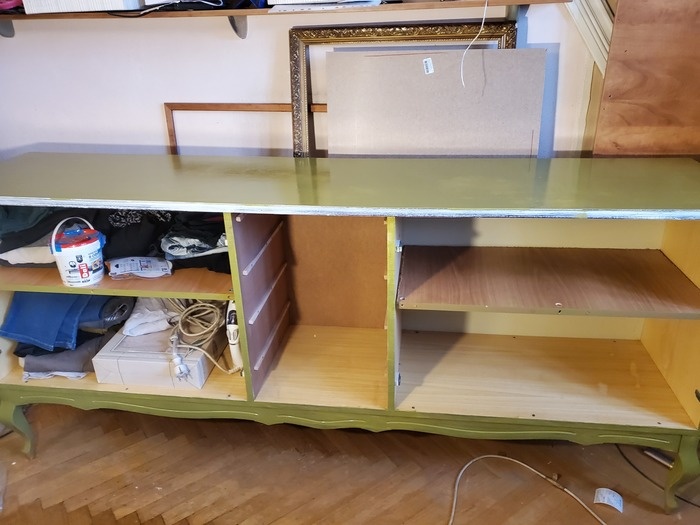
Then came the transformation.
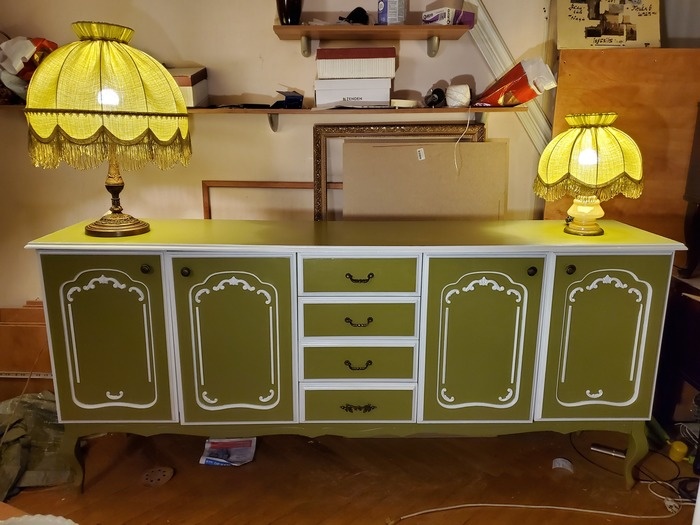
She chose olive green as the main color, pairing it with white accents along the edges and carvings. Layer by layer, the cabinet began to change. Three coats of paint gave it depth and a smooth, even finish. The matte acrylic made it durable and easy to maintain.
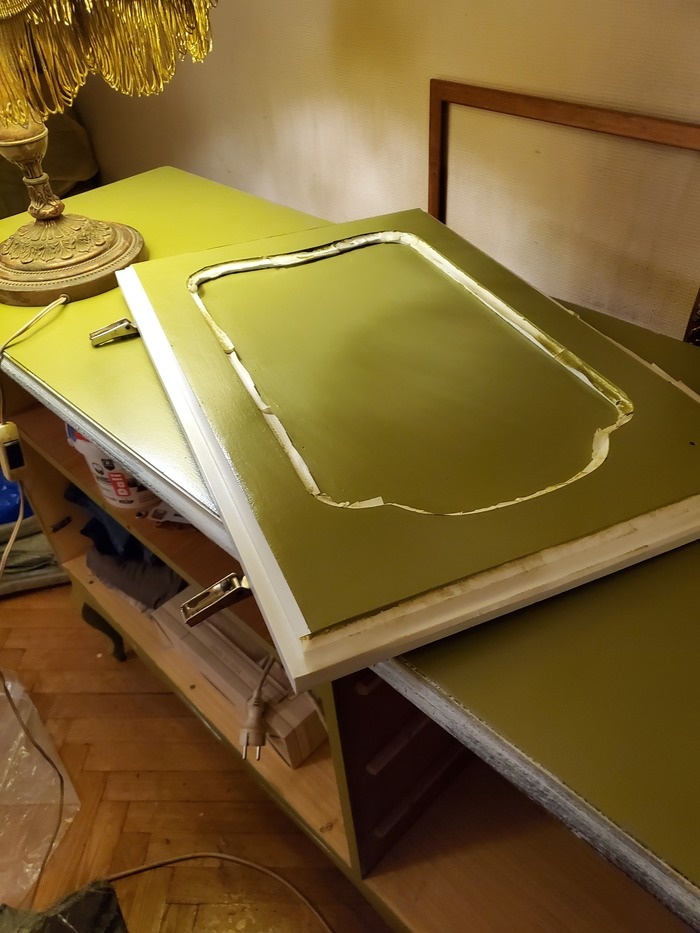
The smallest details required the most patience. Thin decorative lines were painted with a tiny brush. Some areas were so delicate that she had to cut painter’s tape into strips just a few millimeters wide. It was slow, precise work—almost like jewelry-making.
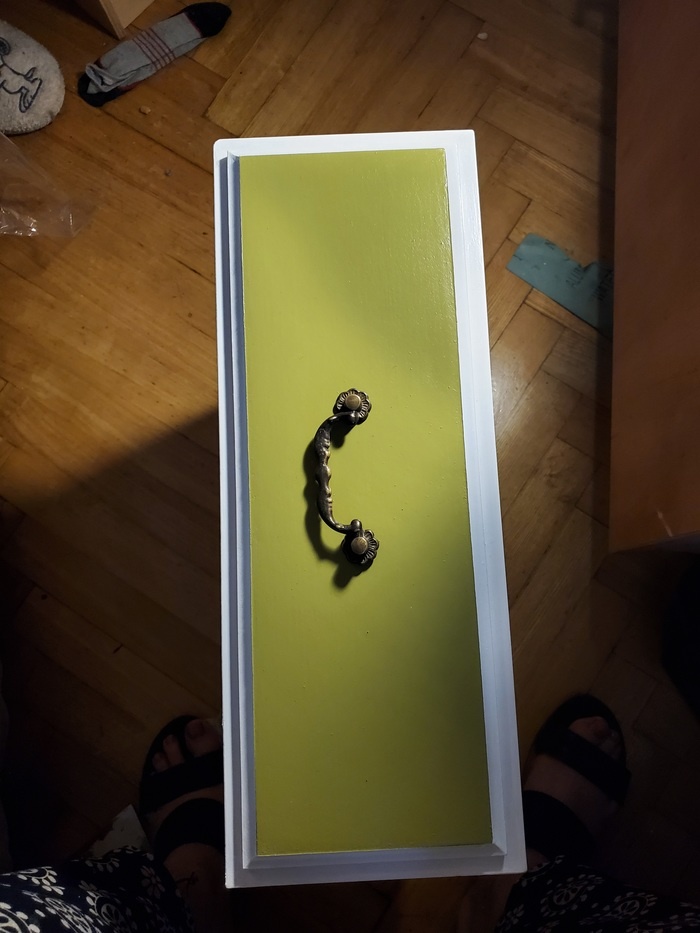
Once everything dried, she assembled it again. New handles, decorative touches, shelves in place, doors aligned.
Seven days later, it was unrecognizable.
What had been left next to a trash container just days before now stood proudly in her hallway—elegant, unique, and full of character. It looked less like rescued furniture and more like something straight out of a designer showroom.
And the lesson?
Sometimes, all it takes is a little vision—and the courage to see potential where others see nothing.