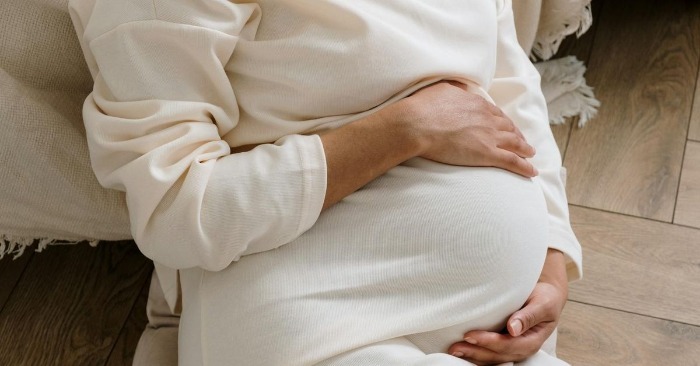
I used to believe that once the baby arrived, everything would finally fall into place. I never imagined that the real breaking point would come before she was even born.
My name is Hannah. I’m thirty-three years old, and until very recently, I thought I was living the life I’d always worked toward with the man I trusted most.
Michael and I had been together nearly nine years. We met as teenagers in high school. He was the quiet, lanky guy who sat behind me in chemistry class, always offering gum and scribbling notes in the margins of his notebook. I was the one constantly asking for help with formulas. Somewhere between homework, school dances, late-night diner runs, and whispered plans in parked cars, we grew up together.
We didn’t rush into marriage. We finished school, built our careers, saved money, and eventually bought a simple two-bedroom house in a peaceful New Jersey neighborhood. I teach third grade. Michael works in IT. We weren’t extravagant people, but we were reliable. Solid. Or at least, I thought we were.
Trying to have a child nearly broke me.
For three years, every month felt like another quiet disappointment. There were days I locked myself in the school bathroom and cried during my lunch break. I watched my students draw pictures of their families—stick figures labeled Mom, Dad, Baby—and smiled through the ache tightening in my chest.
There were doctor visits, tests, injections, and endless cycles of hope followed by grief. And then one morning, when I almost skipped taking the test because I couldn’t face another blank result, I saw it—a faint second line.
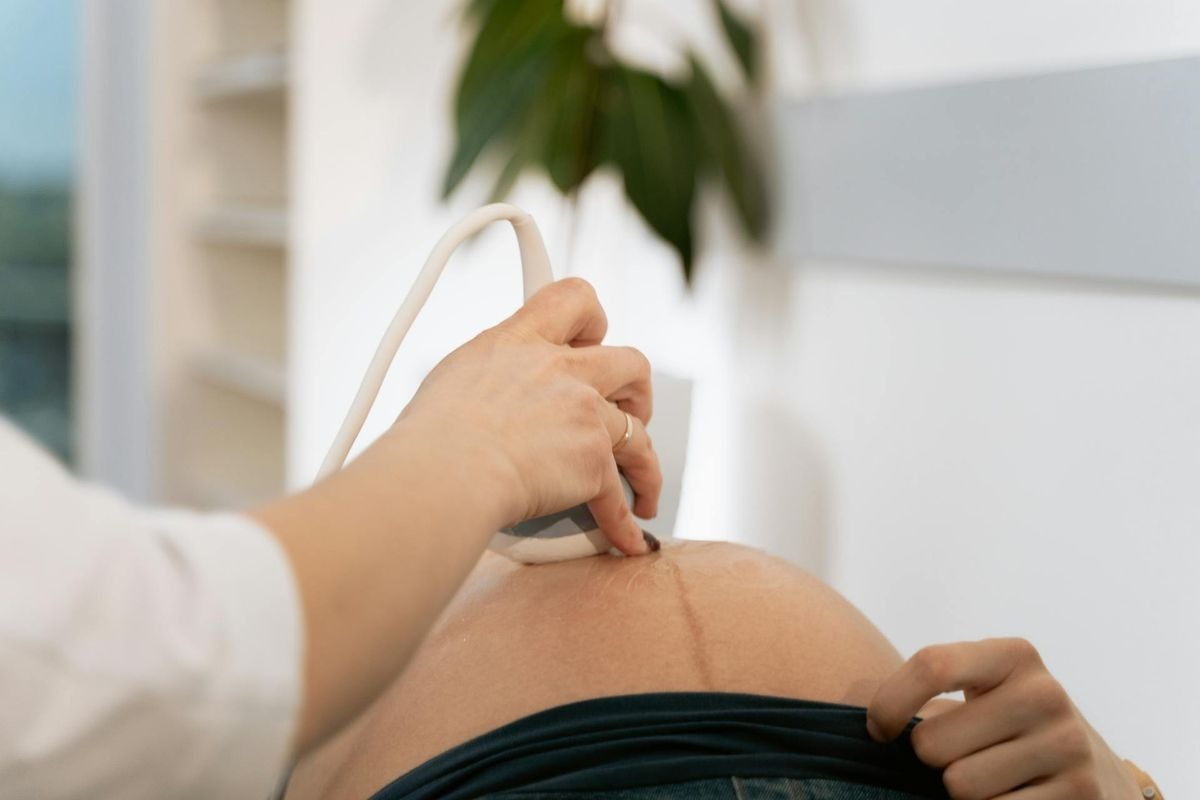
A week later, we sat in a sterile exam room while the doctor smiled and said, “You’re pregnant.”
I dissolved into tears. Michael wrapped his arms around me and whispered, “We did it.”
I carried that moment with me for months like a small flame of joy I was afraid to let go out.
We painted the nursery a soft shade of green. I folded impossibly tiny clothes on the floor and imagined our future—bedtime stories, scraped knees, laughter echoing through the house. We talked about names and wondered which of us she’d look like. It felt like everything we’d waited for was finally happening.
But as my stomach grew rounder, Michael slowly drifted away.
He started staying out more often. “Just meeting the guys for a drink,” he’d say. But he’d come home late, smelling of alcohol and stale smoke. The first time I noticed, I asked gently, “Since when do you smoke?”
He laughed it off. “Secondhand smoke. You’re overthinking it.”
I told myself he was nervous. Becoming a father is overwhelming. That’s normal, right?
But it wasn’t just nerves.
He stopped touching my belly when we sat together. His kisses became brief, distracted. Sometimes it felt like he wasn’t really there at all.
One evening, while we ate takeout on the couch, I tried again.
“Are you okay?” I asked quietly.
He didn’t even look up from his phone. “Yeah. Just work.”
That was the entire conversation.
By the time I reached thirty-five weeks, I was drained—physically, emotionally, completely. My body felt heavy in a way that went far beyond pregnancy. It felt like I was carrying everything alone.
My back ached constantly. My feet swelled until my shoes barely fit. Climbing the stairs left me breathless. My doctor warned me gently that labor could start at any time, so I stayed prepared. My hospital bag waited by the door. Lists were checked and rechecked. Everything was ready—except my marriage.
That night, I sat on the nursery floor again, folding clothes I’d already folded countless times just to stay busy. Stuffed animals stared back at me from the shelves. Pastel walls glowed softly in the lamplight.
Then my phone buzzed.
Michael.
“Hey,” he said, his voice far too upbeat for the time. “Don’t panic, but the guys are coming over tonight. Big game. Didn’t want to deal with a smoky bar, so we’re watching it here.”
I checked the clock. Nearly nine.
“Michael,” I said carefully, exhaustion creeping into my voice, “you know I need rest. And what if something happens? I could go into labor.”
He laughed, dismissive as ever.
“Relax. We’ll be in the living room. You won’t even notice us. I won’t have much time with them once the baby’s here anyway.”
Every instinct in me said no. But I was too tired to argue.
“Fine,” I said quietly. “Just… please keep it down.”
“Promise,” he replied, already distracted. I could hear voices and laughter behind him as the call ended.
“Relax, sweetheart. We’ll be in the living room. You’ll barely notice us. Come on—just one night. When am I even going to have time with the guys after the baby comes?”
I hesitated. Every instinct in me screamed no, but I was too tired to fight.
“Fine,” I muttered. “But please keep it down, okay?”
“Promise,” he said, already distracted. I heard voices and laughter in the background.
When they arrived, the house filled with noise: shouting at the TV, bottles clinking, loud laughter. I retreated to the bedroom, closed the door, and pulled the blanket over my legs. One hand rested on my belly, and I felt gentle kicks.
“It’s okay, sweetheart,” I whispered. “Mom is just tired.”
At some point, exhaustion won. Even with all the noise, I must have fallen asleep.
Then I felt a hand on my shoulder shaking me.
“Hey. Wake up.”
It was Michael. His voice sounded tight—different.
I blinked up at him. Light from the hallway spilled into the room and threw long shadows across the walls. His face was hard, his eyes glassy.
“What’s wrong?” I asked, pushing myself upright. “Did something happen?”
He rubbed his hands together, restless. I noticed a slight tremor in his fingers. He paced at the foot of the bed, jaw clenched.
“No, it’s just… something the guys said tonight. It made me think.”
I frowned, confused and still half asleep.
“Think about what?”
He didn’t answer right away. He kept pacing, then stopped, looked at me for a long moment, and dropped his gaze.
“About the baby.”
My heart missed a beat.
“What about the baby, Michael?”
He exhaled like he’d rehearsed it in his head and still didn’t know how to say it.
“I just want to… be sure it’s mine.”
Silence.
I stared at him. The words didn’t make sense at first.
“What did you just say?”
“That’s not what I mean,” he said quickly, his voice turning sharp. “It’s just—someone brought up the timeline, and it got in my head. I don’t know, okay? Last year you were really stressed, and I was traveling for work a lot, and…”
“You think I cheated on you?”
“I just want certainty!” he snapped. “I want a DNA test before the birth.”
Tears rose in my eyes. Slowly, I shook my head.
“Michael, I’m thirty-five weeks pregnant. You’ve held this baby’s ultrasound pictures in your hands. You helped choose her name. We built her crib together.”
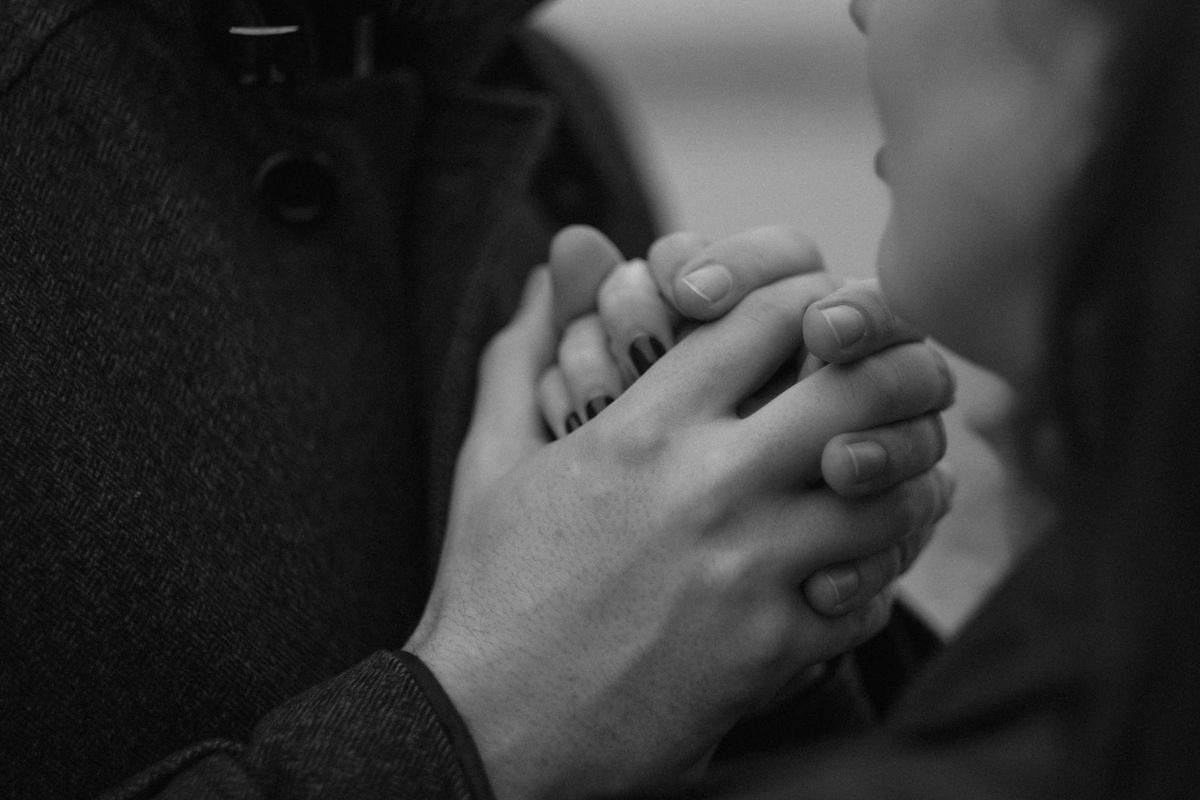
He crossed his arms, unmoved.
“You wouldn’t be so defensive if you had nothing to hide.”
What he said hit me harder than I expected. For a moment, I just stared at him, searching his face for the man I thought I knew. This wasn’t the husband who used to kneel on the floor to massage my swollen feet, or sneak into the kitchen at 2 a.m. to bring me crackers when my cravings woke me up. This wasn’t the man who squeezed my hand at every ultrasound and smiled like he was witnessing a miracle.
That version of Michael was gone.
He turned and left the bedroom without another explanation. A few seconds later, I heard his laughter drift down the hallway, loud and careless, as if nothing had happened at all. Glass bottles clinked together. Someone cheered at the TV. Life, apparently, continued just fine for him.
I stayed sitting on the edge of the bed, unable to move. My stomach felt impossibly heavy—not just from the baby, but from the weight of his suspicion and the sting of his words. I wrapped one hand over my belly, instinctively protective, like I could somehow shield my daughter from all of it.
Hours passed before the noise finally died down. When Michael came back into the bedroom, the house was silent. I was still awake, my face tight and dry from crying too much.
“Michael,” I whispered, my voice shaking despite my effort to keep it steady, “if you don’t believe me… why are you still here?”
He didn’t meet my eyes. He shrugged, like we were arguing about something trivial.
“I just need clarity,” he said. “I deserve to know what’s really going on.”
“Clarity?” I pushed myself upright, anger cutting through the exhaustion. “I’ve spent every single day of this pregnancy praying she’s healthy, worrying about every ache and twinge—while you’ve been disappearing with your friends. And now you’re standing there suggesting I betrayed you?”
He looked away again, jaw tight.
“I don’t know,” he muttered. “Maybe you’re not who I thought you were anymore.”
That was it.
Something inside me snapped—not with drama or shouting, but with a sharp, final certainty.
“Fine,” I said quietly. “If you’re convinced this child isn’t yours—if you can look at me and accuse me of something like that—then we don’t belong together. Maybe the right thing to do is end this. Maybe I should file for divorce.”
The words hung in the air, heavy and irreversible.
For a moment, I expected Michael to protest. I thought he would take it back, fall to his knees, tell me he didn’t mean it. I thought he’d blame the alcohol, say he panicked, apologize.
But he only muttered, “Do what you want. It doesn’t matter anyway.”
That was it. No fight. No apology. Just a shrug, as if I were nothing more than an inconvenience.
Something in me broke—not on the surface, but deep down where all the love had lived. The man I married, the one who used to leave little notes on the bathroom mirror, had vanished. All that was left was a stranger wearing his face.
I turned my back to him and curled inward. The pillow beneath my face grew damp as I wrapped both arms around my stomach. A soft movement answered me from inside—a small, steady flutter, like she was checking in. I pressed my forehead down and murmured, “I’ve got you. I’m here. No one gets to hurt you.”
Sleep never came. The hours dragged by while pale shapes slid across the ceiling, and my mind refused to rest. I replayed our life together in fragments: spinning around the kitchen in bare feet, his hands shaking when that faint pink line appeared, the pride in his eyes as we tightened the last screw in the crib.
And now—this.
Now he was looking at me like a stranger. Questioning my loyalty. Suggesting the child growing inside me wasn’t his.
After everything we had lived through together.
By morning, my decision was made.
The sun wasn’t even up when I sat up and wiped my face. My eyes burned, my body ached from pregnancy and another sleepless night, but something had shifted. The confusion was gone. I wasn’t begging for clarity anymore, and I wasn’t waiting for him to come to his senses.
I was done.
I waited until he left for work. He didn’t even say goodbye. Then, with shaking hands, I grabbed my phone and called my older sister, Sarah.
The moment she answered, I fell apart.
“I can’t do this anymore,” I sobbed. “I’m leaving him.”
She didn’t hesitate. There was no gasp, no questions—just certainty in her voice, solid and unbreakable.
“Grab what you need,” she said. “You and the baby are coming here.”
Sarah lived about an hour away with her husband and their two children. She’d always been my anchor—the person who filled out college forms with me, stood beside me at our mother’s funeral, and never drifted away during the years Michael and I struggled to conceive. I didn’t need to explain everything. She already understood more than I could put into words.
After we hung up, I stood still and took one last look around the house. It felt staged now, like a set built around a story that wasn’t real anymore—the smiling wedding photo on the wall, the nursery half-finished, the unopened baby monitor waiting for a future that suddenly felt uncertain.
I packed quickly. My hospital bag. A few baby items. The ultrasound photos. A small picture of my mom from the nightstand. In the nursery, my eyes landed on a tiny onesie Michael had picked out early on. Daddy’s Little Star. I folded it and took it with me, not knowing why.
Before leaving, I slid my wedding ring off and placed it on the kitchen counter. Next to it, I left a short note.
“Michael, I hope one day you realize what you lost. I’m moving forward with the divorce. Please reach out only regarding the baby.
—Hannah.”
Then I closed the door behind me.
The cold air outside hit my lungs, sharp and honest. I inhaled deeply and realized I could finally breathe without feeling crushed by sorrow.
Sarah was already waiting when I arrived. She didn’t say a word—just wrapped her arms around me and held me while everything I’d been holding in finally spilled out.
For the first time in a long while, I felt protected.
The next few weeks were rough. I won’t pretend otherwise. I cried often. Sleep came in short, broken stretches, filled with bad dreams. Every buzz of my phone made my heart jump, convinced it was him. It never was.
But there were lighter moments, too. Laughing with my niece while we sorted baby clothes. Sitting beside Sarah on the porch with warm tea, watching the season change. Going to doctor appointments alone—but with my shoulders a little straighter.
Then one rainy Tuesday morning, everything changed.
My water broke.
The contractions were relentless, ripping through me in waves that left me shaking—but I stayed focused. Sarah got me to the hospital, and with each surge I repeated the same mantra in my head: You’re strong. You’re safe. You can do this.
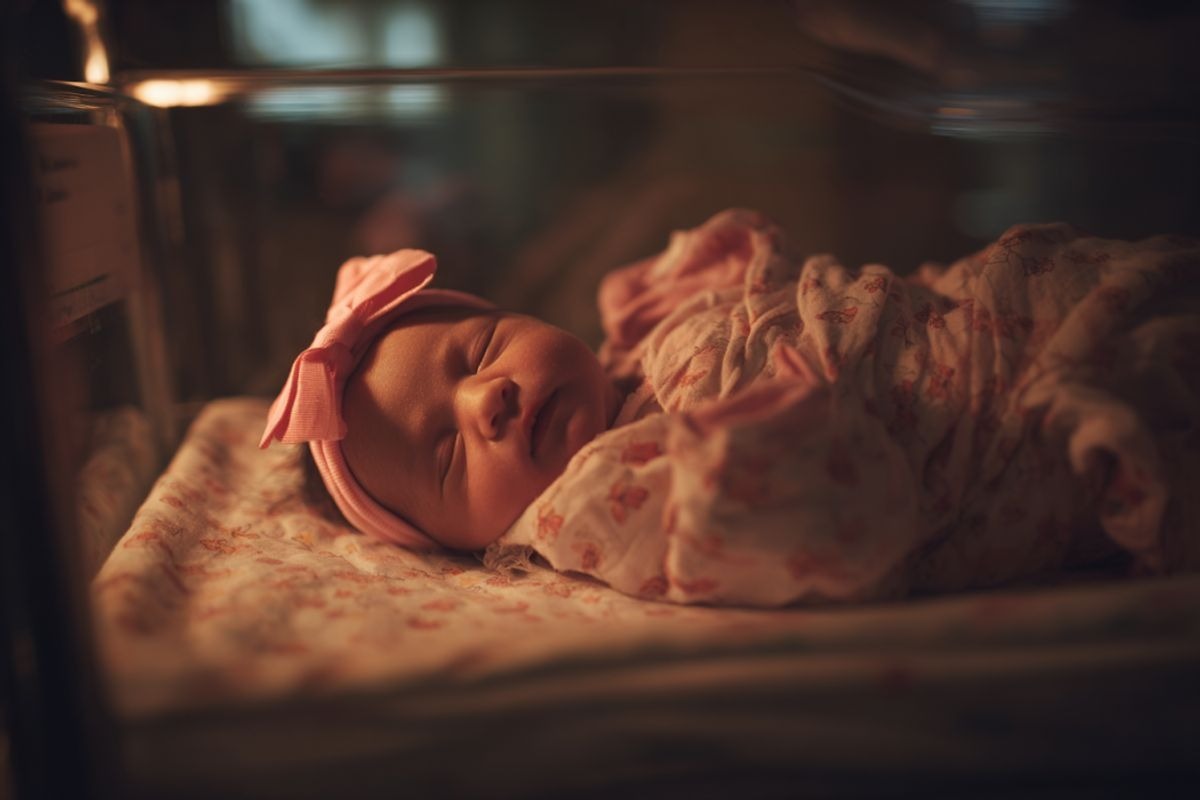
After hours that blurred together, a nurse placed something warm and impossibly small against my chest. I looked down at a tiny face so perfect it stole the air from my lungs.
“She’s beautiful,” the nurse whispered.
She was more than beautiful. She was mine. My miracle. I named her Lily, after the flowers my mother used to tend every spring.
Her eyes were a vivid blue—just like his.

And yet, I felt no resentment. Only clarity. Somewhere along the way, I’d realized something important: he had never earned the right to see the strongest version of me.
Three days later, I was still in the hospital, slowly learning what motherhood felt like. Lily slept beside me, her small fingers wrapped around mine as if she were holding on to the world through me.
I had just finished feeding her when there was a gentle knock.
I looked up.
Michael was standing in the doorway.
My heart jumped painfully. He looked nothing like the man who had dismissed me weeks earlier. His hair was unkempt, his face drained of color, his eyes red and exhausted—like he hadn’t slept at all.
“May I come in?” he asked, his voice barely there.
I froze for a moment, unsure of what I felt—tension, warmth, fear all at once. Then I nodded.
He stepped inside, his gaze immediately finding Lily. His breath caught.
“She looks just like me,” he whispered.
I tightened my hold on her but said nothing.
He stayed near the foot of the bed, keeping his distance. Tears filled his eyes.
“I was stupid,” he said quietly. “My friends got into my head. They said things—made me question everything. They told me you were too perfect, that maybe the baby wasn’t mine. And I listened. I let fear win. I hate myself for it.”
I met his eyes, my voice steady.
“You shattered me, Michael. You made me question my own worth. I begged you to trust me, and you chose suspicion instead. Do you have any idea how deeply that cut?”
He wiped his face with his sleeve, nodding.
“I do. And I’ll regret it forever. But please—don’t finish the divorce. Let me prove I can be better. Let me show you.”
I studied him in silence, everything we’d been through pressing down between us.
Finally, I said, “Then show me. Not with promises—with what you do.”
He nodded instantly. “I will. Every single day.”
He pulled a chair close and asked softly, “May I hold her?”

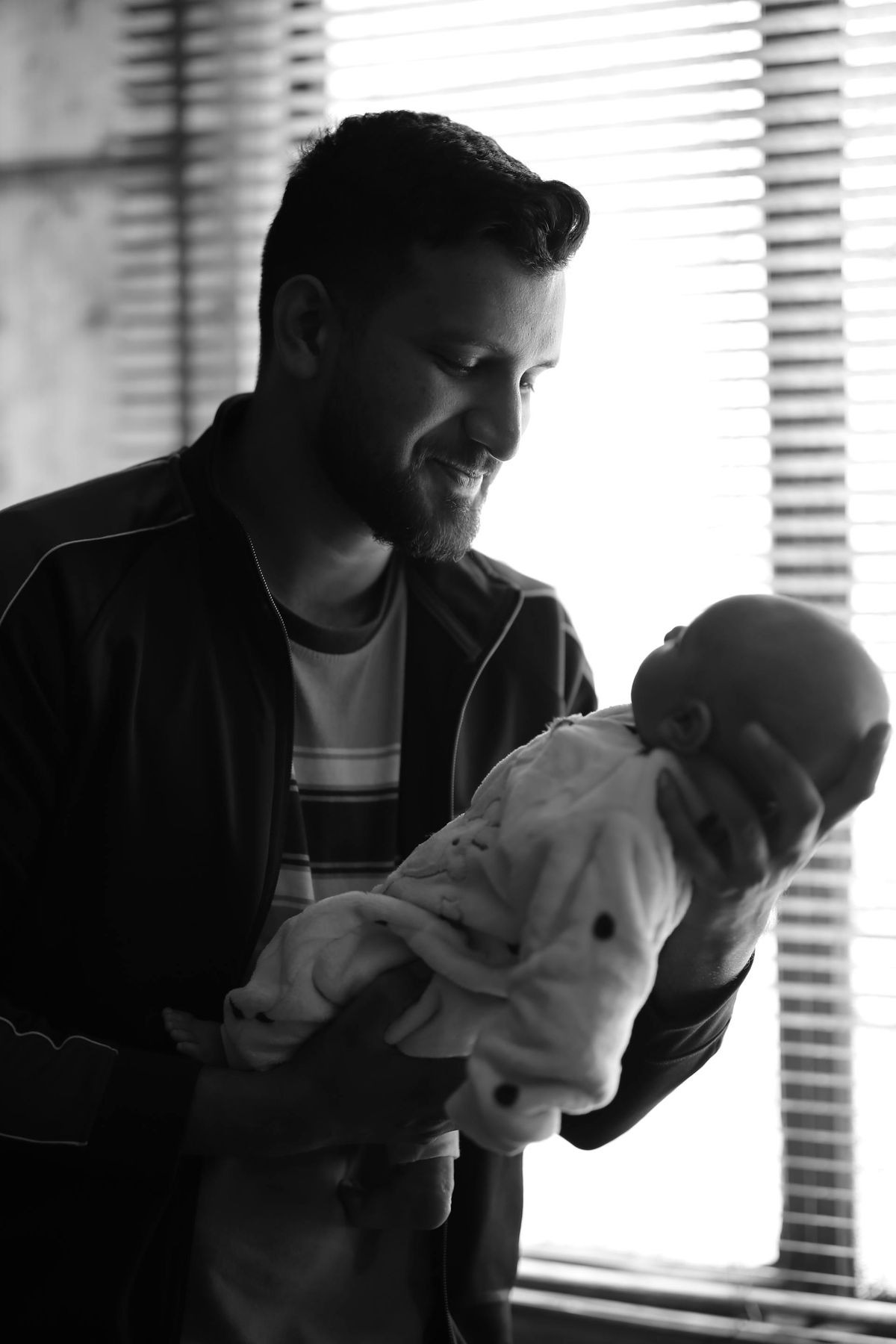
I watched as he cradled Lily. She settled against him easily, like she belonged there. Tears dropped onto her blanket as he stared at her.
“Hello,” he whispered. “I’m your dad. I’m sorry I failed your mom. But I swear I’ll spend my life making it right.”
He didn’t leave that night. He stayed—changing diapers, pacing the halls with her when she cried, helping me walk when the pain returned.
When we were discharged, he drove us to Sarah’s house. He didn’t ask to move back in. He didn’t push for explanations or forgiveness. He just showed up—every day. Groceries. Cleaning. Holding Lily while I slept. Slowly, I noticed the difference. Not just in what he said, but in who he was becoming. There was no arrogance left—only humility.
Weeks later, I walked into the living room and found him asleep on the couch, Lily curled against his chest, her tiny hand gripping his shirt like it was her entire universe.
That was the moment I understood.
Forgiveness doesn’t always arrive in one dramatic instant. Sometimes it grows quietly—in small, tender moments. In the sound of a baby breathing. In watching someone who hurt you learn how to change.
We didn’t rush anything. We went to counseling. We talked—honestly, painfully. He listened without defending himself. He apologized again and again, and this time, it mattered.
Three months after Lily was born, we chose to live together again—not to return to what we were, but to build something new. Not two people pretending nothing broke, but two people willing to rebuild from the ground up.
Now, every night after Lily’s bath and lullaby, I watch him kiss her forehead and whisper, “Daddy’s here.”
And something inside me finally rests.
The storm didn’t end us. It stripped away what was fragile.
What remains is stronger. Real.
Because love isn’t proven in the easy days—it reveals itself in how you fight for each other when everything falls apart.
And we’re still here.
We keep fighting—and choosing love, again and again, every single day.