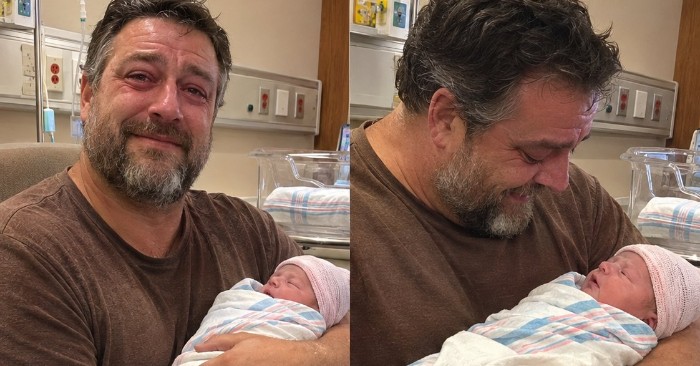
After doctors told me that another pregnancy could be fatal, I had to let go of my dream of having a daughter. We already had three wonderful sons, and I was trying to make peace with the family we had. But years later, my husband suddenly called me from a hospital. A newborn baby girl was waiting for me there, along with a confession I never could have anticipated.
My husband called me from a hospital on a Tuesday afternoon.
“You need to come here. There’s a baby.”
I stopped wiping down the kitchen counter.
“James, whose baby?”
“Please. Just come.”
Some sentences change the entire atmosphere of a room.
That was one of them.
I glanced at the clock.
It was 2:27 p.m.
Our youngest wouldn’t be home from preschool for another hour. Our two older boys were still at school.
“Which hospital are you at?”
He told me its name.
“Why are you even there?”
“I’ll explain everything when you get here.”
“James.”
“Please.”
There was something strange about his voice.
He didn’t sound exactly guilty.
But he didn’t sound particularly frightened either.
It was something in between.
I left immediately, still wearing the shirt I’d had on while cleaning the kitchen.
To understand what happened next, you need to understand what the word “baby” meant in our family.
James and I have three sons.
They’re nine, seven, and four years old.
Loud, constantly covered in dirt, and absolutely wonderful.
Our house is filled with muddy shoes, plastic dinosaurs, baseball gloves, and arguments over who gets to sit closest to the television.
I love our boys more than anything in the world.
But we’d always dreamed of having a daughter.
Goodness, how desperately we’d wanted a little girl.
After the birth of our third son, my doctor asked us to come in for a serious conversation.
She sat across from us with my medical records and had specifically asked James to attend because she wanted him to hear her assessment directly from her, rather than learning about it afterward through me.
At first, I thought that was unusual.
Then I saw her expression.
She used the word “probably.”
Not “might.”
Not “there’s a certain amount of risk.”
But “probably.”
A fourth pregnancy would probably kill me.
And even if I survived, I’d likely have to spend much of the pregnancy hospitalized, separated from the three children I already had.
My last pregnancy had nearly ended in disaster.
There had been severe blood pressure complications, bleeding, emergency monitoring, and finally a delivery during which everything had threatened to spiral out of control within minutes.
The doctor wasn’t trying to make the situation sound more dramatic than it was.
That was exactly what made her words so terrifying.
I asked whether there was any way to make another pregnancy reasonably safe.
She said no.
I asked the same question again.
Using different words.
But her answer didn’t change.
Over the following two years, I brought it up twice more during medical appointments.
Every time, the answer was the same.
No.
Eventually, James stopped accompanying me to those conversations because there was never anything new to hear.
We’d even chosen a name already.
Well, more accurately, I’d chosen it.
I’d carried that name in my heart since I was nineteen years old.
Clara.
James always pretended he wasn’t particularly attached to it.
But several years earlier, I’d found a grocery list on which he’d written “Clara” and experimented with different possible middle names beside it.
When I asked him about it, he claimed he’d simply been testing a pen.
That liar.
After my doctor’s warning, I finally packed away all the baby things.
Most had belonged to our sons, but there were also a few gender-neutral onesies, tiny blankets, bottles, and a bassinet sheet my mother had lovingly embroidered.
I suggested donating everything.
James said, “Next month.”
Next month became six months.
Then an entire year.
The box remained in our garage.
Whenever I suggested we finally give it away, James answered:
“Not today.”
Eventually, I stopped bringing it up.
That’s what it looks like when you’re trying to put an issue behind you even though your heart hasn’t truly accepted it.
You simply stop talking about it.
The last time I’d allowed myself to talk about another baby, I’d cried.
Not because I was unhappy with our life.
But because I loved that life so deeply, and I knew there was one version of it we would never experience.
James took my hand.
“Our boys need their mother more than we need a daughter.”
He meant every word.
And I believed him.
I thought that chapter of our lives had been closed forever.
But eleven years after our wedding, my husband was suddenly standing at the end of a hallway in a hospital maternity ward.
He was still wearing his jacket.
His eyes were red.
I’d never seen that man cry before.
Behind him was a room containing a clear plastic baby bassinet.
Through the glass, I could make out part of it.
Something tiny moved beneath a pink blanket.
I stopped dead in my tracks.
“James.”
He looked at me.
“You should probably sit down.”
“Tell me why I’m here.”
“Please.”
“No.”
I didn’t sit.
I simply couldn’t.
James stared at the floor for a long moment.
“Because I need to ask you something,” he finally said. “And I want you to hear everything before you answer.”
My thoughts immediately went somewhere terrible.
I wish I could say otherwise.
I wish my trust in my husband had been so unshakable that seeing a newborn girl through a hospital room window hadn’t instantly triggered one very specific thought.
His baby.
A baby he’d had with another woman.
I looked through the glass again.
The pink blanket.
A tiny hand.
My stomach tightened painfully.
“Is she your daughter?”
James stared at me in complete horror.
“What?”
“Don’t make me ask that question again.”
“No.”
His answer came immediately.
“No. Good God, no.”
I stared back at him.
“Then whose baby is she?”
He dragged both hands down his face.
“Do you remember me telling you about Anna?”
The name sounded familiar.
Barely.
James had mentioned her perhaps once or twice, many years earlier.
Before my time.
Before our story together began.
His first great love.
They’d both been twenty-two back then.
They’d talked about buying a house together, having children, and all those things young people discuss when they believe they’ve already planned their entire futures.
But life had taken them in different directions.
They’d broken up.
Anna had married another man.
And eventually, James had met me.
That was all I knew.
“I remember.”
“I haven’t spoken to her in eleven years.”
I said nothing.
“Eleven years,” he repeated. “No calls, no messages, absolutely nothing. You need to understand that before I tell you the rest.”
My heart began racing.
“Why is she here?”
James looked toward the hospital room.
“She was here.”
Was.
I heard that single word very clearly.
“Was?”
He nodded.
Then he tried to explain what had happened.
Not particularly well.
Not in the right order.
The way people tell a story when they themselves can barely comprehend what they’re saying.
Anna had been pregnant.
Her husband had left her when she was seven months along.
Apparently, it had happened completely unexpectedly.
There had been no reconciliation.
He’d simply moved away.
Anna’s mother had died the previous year.
She’d lost her father when she was a teenager.
She had no brothers or sisters.
And there were no other close relatives living nearby.
At four in the morning, she’d gone into labor.
Initially, she’d tried to drive herself to the hospital.
But the pain became so intense that she had to pull into a gas station and call an ambulance.
Later that morning, she gave birth.
A little girl.
Weighing slightly more than five and a half pounds.
The baby was healthy.
But Anna wasn’t.
Complications developed after the delivery.
Bleeding.
Then more severe bleeding.
And finally, a series of medical emergencies that the doctors had apparently explained to James, although he couldn’t properly repeat the details.
Her condition had deteriorated dramatically in a very short time.
“How did the doctors know to call you?” I asked.
That was the part I couldn’t understand.
James swallowed.
“At first, they didn’t.”
While he was still speaking, a nurse emerged from the room.
She held a clipboard against her chest and looked at both of us.
“Are you his wife?”
“Yes.”
She nodded kindly.
“Perhaps I can help you understand the situation a little better.”
Understand what? I almost wanted to ask.
But I waited.
“When it became clear that she probably wasn’t going to survive, we asked whether there was anyone she wanted us to contact.”
My chest suddenly felt unbearably tight.
“She was barely conscious by then,” the nurse continued. “Not really aware of what was happening. But she kept repeating the same name.”
She tilted her head slightly toward James.
“His.”
I looked at my husband.
James lowered his eyes.
“Over and over,” the nurse said. “She could barely say anything else.”
Eleven years.
Anna had married someone else.
She’d built an entirely different life.
And then she’d been abandoned within that life.
Yet at the very end, the only name she could still manage to say belonged to the young man she’d once imagined spending her future with.
Maybe I should have felt jealous at that moment.
But I didn’t.
I thought about her fear.
About a woman dying alone in a hospital bed.
About her newborn baby lying only a few rooms away.
Without a mother.
Without a husband.
Without any family waiting outside in the hallway.
And somewhere in her fading consciousness, one familiar name had remained.
“How did you find James?” I asked.
The nurse answered:
“Before she lost consciousness, she managed to give us part of his last name. The social worker then reviewed her records and personal belongings. Eventually, they found an old emergency contact document containing his full name.”
James nodded.
“They called me about an hour ago.”
I stared at him.
“And you came straight here?”
“Yes.”
“Did you get to see her?”
He shook his head.
“She was already gone when I arrived.”
For a moment, that sentence made everything else seem insignificant.
A faint sound came from the room behind us.
The baby had made a tiny noise.
All three of us turned at once.
The nurse smiled gently.
“The little girl is doing well.”
I looked at James.
He was terrified.
Not of the hospital.
But of how I might react.
And finally, I understood that what he was about to ask had nothing to do with whether Anna had wanted him back.
Anna was gone.
This was about the little girl.
James took a deep breath.
Then another.
“She has nobody.”
I remained motionless.
“Her father isn’t coming. The social worker contacted him. He’s already signed a statement saying he doesn’t want to take custody.”
My mouth went dry.
“Already?”
“He left months ago. Apparently, he wants absolutely nothing to do with the child.”
Anger surged through me.
James continued.
“The social worker explained what happens next.”
“And what happens?”
“First, the baby will be placed in temporary care. Meanwhile, they’ll look for relatives and determine who can legally take responsibility for her.”
He looked through the glass.
“They don’t think there are any close relatives.”
By then, I had an idea of what was coming.
Still, his next words hit me with tremendous force.
“I want us to apply to become her foster parents.”
I stared at him.
“For whom?”
He looked directly into my eyes.
“For this little girl.”
My eyes immediately filled with tears.
“James…”
“I know.”
His voice cracked.
“I know how this sounds.”
“No, you don’t.”
“Maybe I do.”
He started reaching for my hand but stopped halfway.
“I’ve already told the social worker that I’m married. And that I would never make a decision like this without you. I explained that I can’t promise something this important on my own.”
I looked through the glass again.
The little bassinet had been moved closer.
A nurse had repositioned it.
Now I could see the baby’s tiny face.
Dark hair.
Closed eyes.
“I want us to apply to care for her,” James said. “Whatever that process involves. Foster care, guardianship, or perhaps eventually adoption, if that’s possible. I want to bring her home with us.”
By now, he was almost whispering.
“If it’s too much for you, just tell me. I promise I’ll never bring it up again.”
I let out a single laugh through my tears.
Not because any of this was funny.
But because I suddenly understood what he’d been afraid of all along.
“You think I’m jealous?”
He didn’t answer.
“You thought I’d hear Anna’s name and assume this was about your history with her?”
“I didn’t know what you’d think.”
I wiped my cheeks.
“I thought the baby was yours.”
His eyes widened.
“Okay. That’s even worse.”
Despite everything, I laughed again.
Then I began crying even harder.
This time, James held out his arms.
And I let him embrace me.
My thoughts kept returning to Anna.
Not the woman James had almost married.
Not some shadow from his past.
But a woman who had been lying alone in a hospital bed.
A woman who had used her final clear thoughts to make sure her daughter wasn’t left in this world without someone knowing she existed.
She’d managed to say only one name.
And she’d used that name for her child.
“Could I hold her?” I asked.
James stared at me in disbelief.
The nurse smiled.
“I’ll ask.”
Ten minutes later, I was sitting in a chair.
A newborn baby girl was nestled against my chest.
She weighed just over five and a half pounds.
She was barely twelve hours old.
Her hands were so tiny that I could hardly believe they were real.
At one point, her little fingers opened and brushed against my shirt.
I instinctively held my breath.
James knelt beside me.
“Are you really sure?”
I looked at him.
“Because if you’re not certain…”
“For years, we’ve dreamed of our boys having a little sister.”
He froze.
I looked down at the baby.
“Maybe we’ve just been waiting for the wrong kind of miracle.”
James covered his face with his hands.
It was the second time in my life I’d seen him cry.
What followed was anything but simple.
The legal process alone took nine months.
Nine unbelievably long months.
Home visits.
Background checks.
Interviews with the relevant authorities.
Court hearings.
Temporary foster care arrangements while our application was reviewed.
Just because Anna had spoken James’s name while she was dying didn’t mean we automatically had the right to take her child home.
That distinction mattered.
Anna had been able to express her trust in him.
But that didn’t give her the power to override the legal procedures.
Eventually, the baby’s biological father formally relinquished his parental rights.
Social workers searched for relatives.
They located a distant cousin, but she explained that she wasn’t able to take the child in.
At one point, a caseworker warned us that we needed to prepare ourselves for the possibility of another family being chosen.
The thought was excruciating.
I drove home and cried in our garage.
Right beside that old box of baby supplies we’d never managed to give away.
At first, we didn’t tell the boys everything.
We simply explained that there was a baby who might need a family and that we were trying to help her.
Our oldest asked whether the little girl would live with us forever.
“We don’t know yet.”
Our seven-year-old wanted to know whether she’d someday be allowed to come into his bedroom.
“Maybe later.”
He thought about it for a while.
Then he started crying when we said yes.
Our four-year-old only wanted to know whether babies could eat chicken nuggets.
His feelings were considerably less complicated.
Eventually, we were allowed to take the little girl into our home as foster parents.
Several months later, the adoption was approved as well.
In the spring, she officially became part of our family.
The day before the final court hearing, James and I sat at the kitchen table discussing her full name.
From the very beginning, she had been Anna’s daughter.
And her birth certificate already listed a first name.
Clara.
When I first learned that name, I was completely speechless.
Of all the names in the world, it was the very one I’d carried in my heart since I was nineteen.
Nobody had known.
Not Anna.
Not anyone else.
Sometimes, a coincidence feels almost impossibly bold.
We decided to keep the name Clara.
But I had one more wish.
James started crying when I told him what it was.
And he said yes before I’d even finished speaking.
I wanted Anna to be part of her name, too.
Not hidden away somewhere in a file.
Not reduced to a small footnote that nobody would ever read again.
Our daughter would always carry her birth mother’s name with her.
So her full name became Clara Anna.
Anna would be spoken aloud.
Written down.
Called through the hallways of our home.
Printed on school forms.
And sung at every birthday celebration.
Our boys immediately started practicing the name.
“Clara Anna!”
They shouted it down the hallway so many times that they startled the baby awake twice.
I didn’t stop them.
Because I know that one day, my daughter will sit across from me and ask questions about the woman who gave birth to her.
She’ll want to know who Anna was.
She’ll ask whether her mother wanted her.
Whether she loved her.
Whether she was frightened.
And I won’t have to sugarcoat anything.
I won’t invent a kinder version of the story.
I’ll tell her exactly what happened.
That her mother was alone.
That she was dying.
That she was afraid.
And that she had almost no control left over what happened in her life.
But she didn’t use her final clear thought to ask for comfort.
Or to beg someone to save her.
She used it to find a family for her daughter.
Anna spoke only one name.
And that name eventually brought her little Clara home to us.