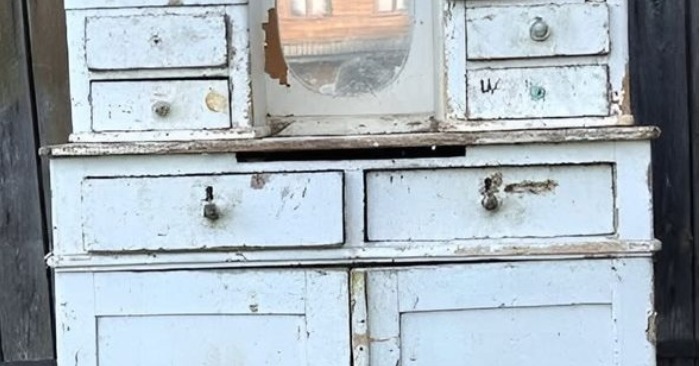
Most of us are quick to get rid of old furniture, thinking it’s nothing more than junk. But beneath chipped paint, cracks, and worn-out hardware, there’s often solid wood and real character waiting to be revealed. I decided to prove it myself by transforming a neglected old wardrobe into a stylish, eye-catching piece.
Here’s my personal experience and a step-by-step guide to giving old furniture a second life. Before picking up a brush, it’s important to understand what you’re working with.
Start by disassembling the wardrobe. Remove mirrors, glass panels, shelves, and all hardware. Carefully inspect the structure—look for signs of rot, mold, or woodworm damage. If any joints are loose, re-glue them with wood adhesive and secure them with clamps.
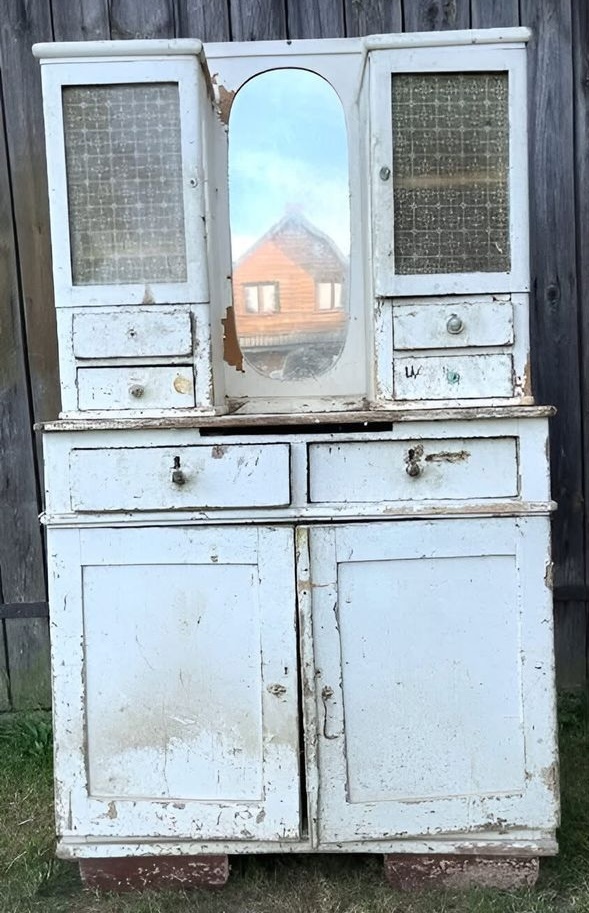
Next comes removing the old finish, which is often the most time-consuming step. You can use a scraper, a heat gun, or chemical paint removers.
Tip: If the paint is stubborn, don’t try to force it off dry—you could damage the wood fibers. Once the old layers are gone, it’s time to bring the wood back to life.
Sand all surfaces using a sander, starting with coarse grit (P80) and finishing with fine grit (P180–240). The goal is a smooth, silky texture.
Fill deep scratches and chips with wood filler. Pro tip: Match the filler color to your final finish. If you plan to stain or varnish, choose a tone close to the natural wood.
To avoid a “plastic” look, leave some elements—like shelves or drawer fronts—unstained and treat them with wood stain instead. This enhances the natural grain and adds depth.
Choosing the right materials will determine how long your restoration lasts. Priming is essential. It blocks tannins and resins from bleeding through and ensures the paint adheres properly.
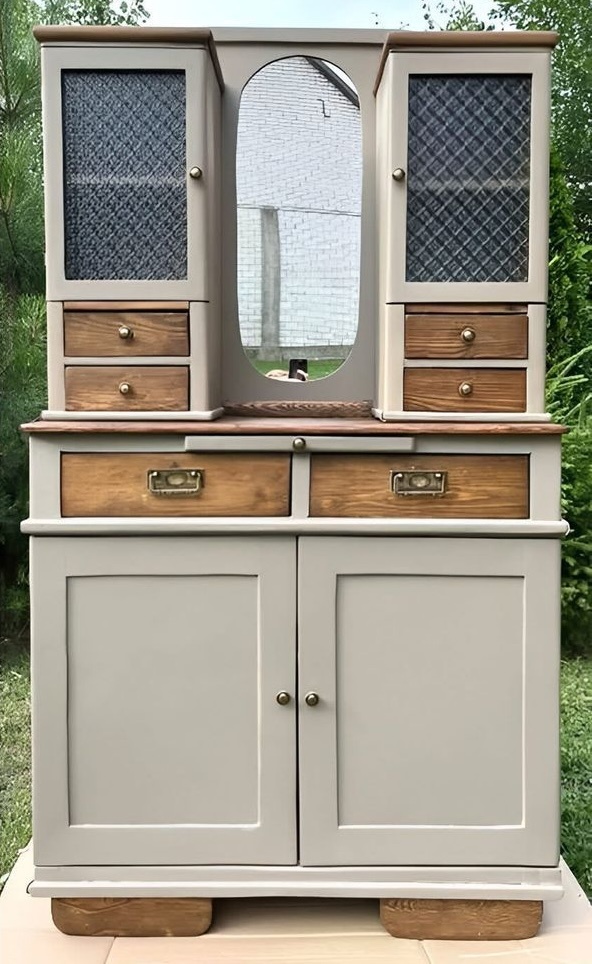
For painting, acrylic or chalk paints are ideal. They’re easy to work with, low-odor, and provide a smooth finish. I chose a soft light-gray shade to visually lighten the wardrobe’s heavy structure. Apply 2–3 thin coats, letting each layer dry in between.
For natural wood elements, use furniture oil or wax. It penetrates the fibers and creates a soft, natural glow. Details make all the difference—they’re what turn an old piece into a modern statement.
Replace outdated handles with new ones. I opted for vintage-style metal handles to add elegance and character.
If your wardrobe has mirrors or decorative inserts, clean them thoroughly with appropriate products. You can paint the frames to match the main color or create contrast for a bold look.
Finally, reassemble everything and adjust the hinges so the doors open smoothly.
The transformation exceeded all expectations. What once looked like a forgotten, worn-out piece is now a durable and beautiful wardrobe full of personality.
Why Restoration Is Worth It
Save money: Solid wood furniture is expensive today
Eco-friendly: You reduce waste by reusing what you already have
Creative freedom: You end up with a one-of-a-kind piece
If you have an old cabinet, dresser, or wardrobe collecting dust—don’t rush to throw it away. With a bit of patience, some paint, and a touch of imagination, you can create something truly special.