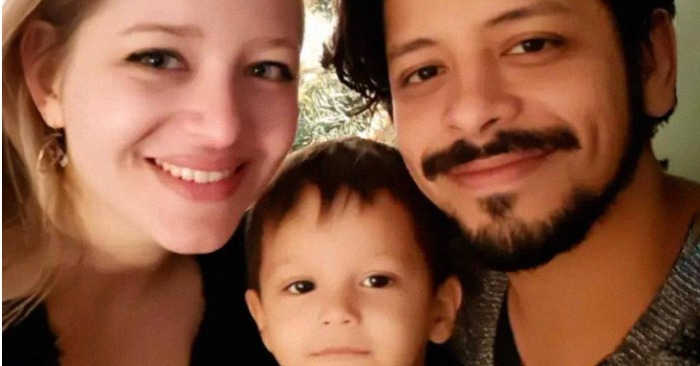
For a long time, I let my husband’s family assume I couldn’t understand a word of Spanish. That silence meant I heard everything—every jab about my food, every remark about my appearance, every judgment about how I raised my child. I never reacted. I never corrected them.
Until last Christmas.
That afternoon, I caught my mother-in-law murmuring in a low voice,
“She still has no idea, does she? Especially because of the baby.”
My stomach dropped. Whatever they had done without my knowledge wasn’t small—it was something that rattled me to the core.
I was frozen at the top of the staircase, gripping my son Mateo’s baby monitor, when her words sliced through the quiet house. The calm of the afternoon vanished in an instant, replaced by the unmistakable feeling that something precious had been handled behind my back.
She was speaking Spanish. Clear and confident. Completely certain I wouldn’t understand her.
“She still doesn’t know, right? Because of the baby.”
My heart stopped.
My father-in-law laughed softly.
“No! And Luis promised he wouldn’t tell her.”
I leaned against the wall, the baby monitor nearly slipping from my damp hand. Mateo was sleeping peacefully behind me in his crib—completely unaware that his grandparents were talking about him as if he were a problem that needed solving.
“She mustn’t know the truth yet,” my mother-in-law continued, lowering her voice into that careful tone she always used when she thought she was being discreet. “And I’m sure this won’t be considered a crime.”
I stopped breathing.
For three years, I had let Luis’s family believe I didn’t understand Spanish. I sat through family dinners while they talked about my post-pregnancy weight, my supposedly terrible pronunciation when I used a few Spanish words, and how I “didn’t season food properly.”
I smiled, nodded, and pretended I heard nothing.
But this?
This wasn’t about my cooking. Or my accent.
This was about my son.
I need to explain how it ever came to this.
I met Luis when I was twenty-eight at a friend’s wedding. He spoke about his family with so much warmth it made my chest ache. A year later, we were married—in a small ceremony attended by his entire extended family.
His parents were polite. But there was always a distance. A careful, guarded way they spoke to me.
When I was pregnant with Mateo, my mother-in-law came to stay with us for a month. Every morning she walked into my kitchen and rearranged my cabinets without asking.
One afternoon, I heard her say to Luis in Spanish that American women didn’t raise children properly—that we were too soft. Luis defended me, but quietly. Almost fearfully.
I had learned Spanish in high school and college. But I never corrected them when they assumed I didn’t understand.
At first, it felt strategic.
Over time, it just felt exhausting.
Standing at the top of the stairs that day, listening to them talk, I realized something: they had never trusted me. Not once.
Luis came home from work at 6:30, whistling as usual. He stopped short when he saw my face.
“What’s wrong, love?”
I stood in the kitchen, arms crossed.
“We need to talk. Now.”
His parents were in the living room watching TV. I led Luis upstairs to the bedroom and closed the door.
“Sandra, you’re scaring me. What happened?”
I looked at him and said the words that had been echoing in my head for hours.
“What are you hiding from me? What are you keeping from me about our son?”
His face drained of color.
“What are you talking about?”
“Don’t pretend you don’t know. I heard your parents today. I heard them talking about Mateo.”
I saw panic flash across his face.
“Sandra…?”
“What are you hiding from me, Luis? What is this secret about our child that you promised them you wouldn’t tell me?”
“How did you—” He stopped. “Wait. You understood them?”
“I’ve always understood them. Every word. Every comment about my body, my food, my parenting. I speak Spanish, Luis. I always have.”
He sank onto the edge of the bed as if his legs had suddenly given out.
“What are you hiding from me?”
He buried his face in his hands. When he looked up again, his eyes were filled with tears.
“They had a DNA test done.”
The words didn’t make sense at first. They just hung there between us.
“What?” I whispered.
“My parents,” Luis confessed, his voice breaking. “They weren’t sure Mateo was really my son.”
The room tilted—not dramatically, but enough that I had to sit down because my knees wouldn’t hold me.
“Explain this to me,” I said quietly. “Explain how your parents tested our child’s DNA without my knowledge or consent.”
Luis’s hands were shaking.
“When they visited last summer, they took hair. From Mateo’s brush. From mine. They sent it to a lab.”
“And no one thought to tell me?”
“They told me at Thanksgiving,” he added. “With the results. Official paperwork. It confirmed Mateo is my son.”
I let out a bitter laugh.
““How kind of them,” I said flatly. “They verified that the baby I carried and gave birth to actually belongs to you. What a comfort.”
“Sandra, please—”
“Why?” I cut him off. “Why would that even cross their minds?” I paused, the answer settling like a bruise. “Because Mateo looks like me, doesn’t he?”
Luis lowered his head and nodded.
“Because he has fair hair and blue eyes like mine,” I continued, my voice sharpening, “and not the darker coloring they expected from your side. So in their minds, I must’ve been unfaithful. Deceitful. Someone trying to trap you with another man’s child.”
“They claimed they were looking out for me,” he said quietly.
“Looking out for you?” I shot back. “From what exactly? Your own wife? Your own son?”
His composure collapsed. “I know. It was unforgivable. I was angry when they told me.”
“Then explain this,” I said, barely holding myself together. “Why didn’t you tell me? Why did you let me sit across from them, week after week, sharing meals, while they smiled at me knowing what they’d done?”
“They begged me not to,” he said, his voice small. “They said the results proved Mateo was mine, so there was no point in upsetting you. That telling you would only create tension.”
“And you went along with that.”
“I froze,” he admitted. “I was embarrassed—by them, by myself, by the fact that I didn’t speak up immediately. And the longer I waited, the worse it felt. So I said nothing.”
I stared at him—the man I had chosen, the man I loved—and felt something deep inside me realign. Not break exactly.
“Do you know what you showed me?” I asked. “That when it really matters, you choose them over me.”
“That’s not true—”
“Yes, it is,” I interrupted. “They doubted me. They went behind my back and tested our child. They treated me like I was guilty of something unforgivable—and you stayed silent.”
Luis moved closer, his hands reaching for mine. I stepped back before he could touch me.
“Then tell me,” he said, voice tight. “Tell me what you need from me.”
I inhaled slowly, steadying myself.
“I’m not asking you to pick sides,” I said evenly. “That decision already happened. And when it mattered, you didn’t stand with me.”
His face crumpled. “Sandra… I’m sorry.”
“Here’s how things change,” I continued. “From now on, I am your priority. Not your parents. Not their comfort. Not their beliefs. Me. Mateo. The family we created together.”
Tears slid down his face as he nodded. “Yes. I understand. I promise.”
“I don’t know if that promise fixes anything yet,” I said quietly. “But I needed to hear it out loud.”
We stayed there without speaking, the air heavy but strangely calm. After a while, he asked softly,
“What are you going to do about my parents?”
I looked toward the front door, picturing them downstairs, unaware of everything that had shifted.
“Nothing,” I said. “At least not right now.”
They left two days later.
I hugged them the way I always did. Polite. Warm. Familiar.
They never knew I’d understood every word they said.
They never knew Luis had told me the truth.
And I didn’t confront them—not out of fear, but because confrontation would have given them a power they didn’t deserve.
The following week, my mother-in-law suddenly started calling more often. Asking about Mateo. Sending gifts. Being warmer—almost as if she were trying to make amends.
I took her calls. I thanked her.
And every time, I wondered if she knew that I knew.
One evening, Mateo asleep in my arms, Luis sat beside me.
“I talked to my parents today.”
I waited.
“I told them they crossed a line. That they are no longer welcome if they ever question you or Mateo again.”
I looked at him.
“And what did they say?”
My mom broke down. My dad put his walls up right away. Still—eventually—they admitted fault in the only way they knew how.
“That counts for something,” I told him. “Not enough to erase it. But it’s a start.”
Luis slipped an arm around my shoulders, and for the first time in a long while, I didn’t pull away. I let myself rest there.
“I really am sorry,” he said.
“I know,” I answered. “But an apology doesn’t automatically rebuild trust. Not with them. And not with you—not yet.”
He nodded. “That’s fair.”
We stayed like that, quiet. I replayed all the moments I’d chosen not to speak, convincing myself that staying quiet was safer.
It wasn’t. Silence doesn’t keep you safe—it erases you.
I’m not sure I’ll ever tell Luis’s parents that I understood every single word they said that day. Maybe that truth will stay mine forever.
What matters is this: my son will grow up never doubting that he belongs. That he is loved—not because paperwork or results say so, but because I choose him, every day.
And Luis is learning something too—that being married means standing with your partner, especially when it’s awkward, tense, or hard.
And I’ve learned that the deepest betrayal isn’t hatred.
It’s distrust.
His parents doubted me. Luis hesitated. And for a while, I doubted whether I truly belonged.
I don’t anymore.
I didn’t marry Luis to be accepted by his family. I married him because I love him. And I’m raising Mateo because he is my son.
And the next time someone speaks Spanish thinking I won’t understand?
I won’t just listen.
I’ll decide.
What I forgive.
What I forget.
And what I fight for.
And no one will ever take that power from me again.