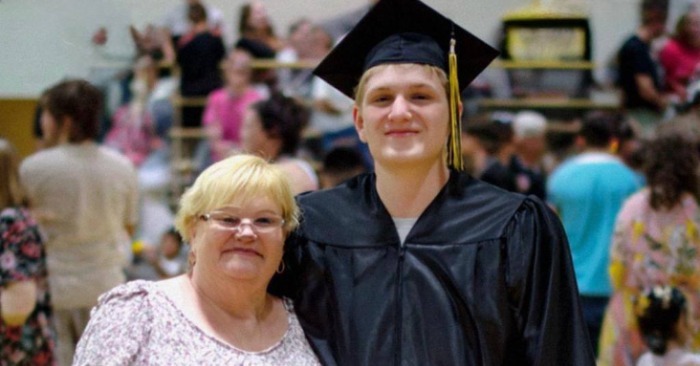
My name is Liam. I’m eighteen years old. And for as long as I can remember, my life has carried the scent of diesel fuel, industrial soap, and food that sat too long inside plastic bags.
My mother never dreamed of dragging trash bins through dark streets at four in the morning. She wanted to be a nurse. She was enrolled in a nursing program once — married, living in a small apartment, building a future with my father, who worked construction.
Then one day, a safety harness failed.
He fell from a site and died before the ambulance even arrived.
After that, everything collapsed at once: hospital bills, funeral costs, tuition debt, and a child to raise alone. Overnight, my mother went from “nursing student” to “widowed dropout with a kid.”
Employers weren’t lining up to help.
The city sanitation department didn’t care about unfinished degrees or personal tragedy. They wanted reliability. Someone who would show up before sunrise. Every day. No excuses.
So my mother put on a reflective vest, climbed onto the back of a garbage truck, and became “the trash lady.”
And I became “her kid.”
In elementary school, children leaned away from me when I sat down.
“You smell like garbage trucks,” they said.
“Careful, he might bite.”
By middle school, it was routine.
When I walked past, kids exaggerated gagging noises.
During group assignments, I was always the leftover chair — the one nobody chose.
I memorized every hallway in the building because I was constantly hunting for places to eat lunch alone. My favorite spot was behind the vending machines near the old auditorium.
Quiet. Dusty. Safe.
At home, though, I played a different role.
“How was school today, my love?” my mother would ask as she peeled off her rubber gloves, her hands swollen and red from chemicals and cold.
I’d kick off my shoes and lean against the counter.
“Good. We’re working on a project. I sat with friends. The teacher says I’m doing really well.”
Her face lit up every time.
“I knew it. You’re the smartest boy in the world.”
I never told her the truth.
That some days I didn’t speak more than a handful of words out loud at school.
That I ate lunch by myself.
That I pretended not to see her when her truck turned onto our street and other kids were around — even when she waved at me.
She already carried my father’s death. The debt. The double shifts.
I refused to add “my kid is miserable” to that load.
So I made a promise to myself: if she was destroying her body to keep me afloat, I was going to make it worth something.
School became my escape route.
We couldn’t afford tutors or prep courses. I had a library card, a beat-up laptop my mom bought using bottle-return money, and a lot of stubbornness.
I stayed at the library until closing. Algebra. Physics. Anything I could get my hands on.
At night, my mom dumped bags of cans onto the kitchen floor to sort.
I did homework at the table while she worked beside me.
Sometimes she nodded toward my notebooks.
“You understand all that?”
“Mostly,” I said.
“You’re going further than I ever could,” she replied — like it was already settled.
High school didn’t stop the cruelty. It just refined it.
Nobody shouted insults anymore.
Instead, they slid their chairs slightly away when I sat down.
They gagged under their breath.
They sent each other photos of the garbage truck outside school and laughed while glancing at me.
If there were group chats making fun of my mother, I never saw them.
I could’ve told a counselor.
But that would’ve meant a phone call home.
And I couldn’t let her know.
So I swallowed it and chased grades instead.
Then Mr. Anderson showed up.
He was my eleventh-grade math teacher. Late thirties. Messy hair. Tie always loose. Coffee permanently attached to his hand.
One day he stopped by my desk.
I was solving extra problems — college-level ones I’d printed myself.
“These aren’t from the textbook,” he said.
I flinched, like I’d been caught cheating.
“I… I just like this stuff.”
He pulled up a chair and sat beside me.
“You like it?”
“It makes sense. Numbers don’t care what my mom does for a living.”
He stared at me for a moment.
“Have you ever thought about engineering? Or computer science?”
I laughed.
“Those schools are for rich kids. We can’t even pay application fees.”
“There are fee waivers,” he said calmly. “Financial aid. Scholarships. And brilliant kids without money. You’re one of them.”
I shrugged, embarrassed.
From that day on, he became my unofficial mentor.
He gave me old competition problems “just for fun.”
Let me eat lunch in his classroom because he “needed help grading.”
Talked about algorithms like gossip.
He showed me college websites I’d only seen on TV.
“They’d want you,” he said.
“Not when they see my address,” I muttered.
“Your ZIP code isn’t a life sentence,” he replied.
By senior year, I had the highest GPA in the class.
People started calling me “the math genius.” Sometimes respectfully. Sometimes like it was something contagious.
“Of course he’s got perfect grades. He has no life.”
“The teachers feel sorry for him.”
Meanwhile, my mom worked extra routes to pay off the last hospital bills.
One afternoon, Mr. Anderson asked me to stay after class.
He placed a brochure on my desk.
A university logo I recognized instantly — one of the top engineering schools in the country.
“I want you to apply,” he said.
I stared at it.
“Funny.”
“I’m serious. They offer full scholarships for students like you. I checked.”
“I can’t leave my mom alone. She cleans offices at night. I help.”
“I’m not saying it’ll be easy,” he said. “I’m saying you deserve the choice. Let them say no. Don’t do it for them.”
So we worked in secret.
After school, I wrote essays in his classroom.
The first draft was garbage — generic lines about loving math and helping people.
He shook his head.
“That could be anyone. Where are you?”
So I started over.
I wrote about 4 a.m. alarms and orange vests.
About my father’s empty boots by the door.
About a woman who once studied medication dosages and now hauled medical waste.
About lying to her face when she asked if I had friends.
When I finished, Mr. Anderson read in silence. Then cleared his throat.
“That’s the one.”
I told my mom I was applying to “a few schools out east.” I didn’t say where.
If rejection came, it would be mine alone.
The email arrived on a Tuesday morning.
I was half-awake, eating stale cereal.
My phone buzzed.
Admissions Decision.
My hands shook.
“Dear Liam, congratulations…”
I read it three times.
Full scholarship.
Housing.
Work-study.
Everything.
I laughed — then clapped a hand over my mouth.
My mom was in the shower.
When she came out, I handed her the printed letter.
“All I’ll say is — it’s good news.”
She read slowly.
Her hand flew to her mouth.
“Is this… real?”
“Real.”
“You’re going to college,” she whispered. “You’re really going.”
“I told your father,” she cried into my shoulder. “I told him you’d make it.”
We celebrated with a five-dollar cake and a plastic banner that said CONGRATS.
She kept repeating, “My son is going to college on the East Coast.”
I saved the full truth — the school name, the scholarship — for graduation.
The gym was packed. Caps, gowns, cheering families.
I saw my mom high in the bleachers, sitting as straight as she could, phone ready.
Mr. Anderson leaned against the wall near the stage and nodded at me.
Then my name was called.
Valedictorian.
The applause was… hesitant.
I stepped to the microphone.
“My mom has spent years collecting your garbage,” I said.
The room went still.
“I’m Liam. Many of you know me as ‘the sanitation worker’s kid.’”
Nervous laughter died quickly.
“What you don’t know,” I continued, “is that before my father died in a construction accident, my mom was training to be a nurse. She left school so I could eat.”
I swallowed.
“For years, ‘trash’ followed me through this building.”
I listed the insults calmly.
Then I looked at my mother.
“There’s one person I never told,” I said. “My mom. Every day she asked how school was — and every day I lied. Because I didn’t want her to think she failed me.”
She covered her face.
“I’m telling the truth today so she knows what she fought against. And because one teacher looked past my hoodie and my last name.”
I thanked Mr. Anderson.
Then I pulled out the acceptance letter.
“This fall, I’ll be attending one of the top engineering institutes in the country. On a full scholarship.”
Silence.
Then chaos.
My mother screamed, crying, shouting my name.
I finished with one last thought.
“Your parents’ jobs don’t define your worth. Respect the people who clean up after you. Their children might be the next ones standing here.”
When I stepped down, the entire gym was on its feet.
That night, at our small kitchen table, my report card and acceptance letter lay between us.
The faint smell of bleach still clung to her uniform.
For the first time, it didn’t feel like something that made me small.
It felt like I was standing on her shoulders.
I will always be the son of a sanitation worker.
And now, it sounds like a title I earned.