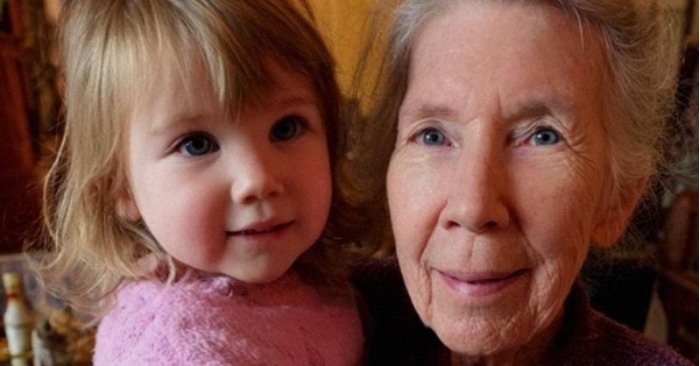
To my neighbor, my mother was just a pleasant elderly woman with too much free time. But when that same kindness was taken for granted, I made sure the truth didn’t stay quiet.
My mother is seventy-three years old.
She wakes up every morning at six, just like she did when she still worked at the library. She applies her face cream carefully, irons a blouse even if she has nowhere to go, and brews her coffee in the same chipped white pot she refuses to replace.
Then she sits at the kitchen table, opens her small black notebook, and writes down every single thing she spent money on the day before. Four dollars for milk. Thirty-eight cents for a stick of gum.
She writes everything down — groceries, prescriptions, small necessities.
She never complains. She never has.
And that, I think, is why some people assume they can take advantage of her.
Our neighbor Claire lives across the street.
She’s thirty-six and works for a marketing agency that always seems to schedule “client lunches” and “strategy meetings” at the exact hours everyone else clocks out. She has a three-year-old daughter named Lily, who is either screaming, sleeping, or climbing something she absolutely shouldn’t be.
One morning, Claire stopped me while I was watering the plants on our porch.
She was holding Lily on her hip. Lily had grape juice down the front of her shirt and was chewing on a Barbie shoe.
“Hey,” Claire said. “Totally random, but… would your mom maybe want to watch Lily a few afternoons a week?”
I paused. “You mean babysitting?”
“Yeah,” she said quickly, waving it off like it was nothing. “Just a few hours here and there. Lily’s daycare is short-staffed and it’s been a nightmare.”
I told her she’d need to ask my mother directly, but that I’d mention it.
That night at dinner, I brought it up.
“She asked what?” my mother said, raising an eyebrow.
“She asked if you’d babysit. A few afternoons.”
My mother sat quietly for a moment, considering.
She took a sip of her tea. “I don’t need much,” she said finally. “Just fairness.”
The next day, Claire came over with a wide, practiced smile and glossy hair twisted into a high knot that looked straight out of reality TV. She sat across from my mother and said, “How about eighty dollars a day? Cash. No taxes, no paperwork, no hassle.”
My mother agreed.
She even wrote “Claire — babysitting” and the amount into her notebook. She was genuinely excited.
She went out and bought crayons, fruit snacks, and even a child-safe mirror from the dollar store so Lily could play with it.
The first week went smoothly.
My mother arrived early every day, always bringing a snack bag and water bottle for Lily from our own kitchen. She texted me updates like, “We’re coloring now,” and, “She ate all her lunch.” She even cleaned up Lily’s toys before leaving.
On Friday, Claire handed her the full amount, smiled, and said, “Thanks again — this really helped.”
The second week, Claire smiled again and said, “My paycheck is delayed. I’ll give it to you next week.”
My mother told me she nodded politely. She said she trusted her.
The third week, the same thing happened.
“Next week, I promise,” Claire said — this time without even sounding apologetic. My mother told me Claire said it while scrolling through her phone, Lily perched on her hip like an accessory.
By the fourth week, when there was still no payment, my mother finally spoke up.
She told me she did it gently, quietly, almost apologetically. “Claire, I just wanted to ask about the payment.”
According to my mother, Claire looked up from her laptop and sighed, like she was the one being inconvenienced.
“Well,” she said, “this is actually a good lesson for you.”
My mother blinked. “A lesson?”
“At your age,” Claire continued, typing again, “you really shouldn’t take jobs without a contract. That’s just common sense.”
Then she looked up and actually smiled. “Besides, it’s not like you have anything better to do. You’re just sitting at home anyway.”
My mother didn’t argue.
That evening, she came home, sat at the kitchen table, and opened her notebook.
I was washing dishes when I heard the scratch of her pen. I watched her cross out four full weeks of expected pay — one line at a time.
Then she closed the notebook and said softly, “I should have planned better.”
That was when she told me everything.
Something cold settled in my chest. That kind of shame didn’t belong to a woman who had worked her entire life, raised three children, paid off a mortgage on her own, and still agreed to babysit out of kindness.
Claire thought she was clever.
She thought she could manipulate a quiet older woman and walk away with a month of free childcare. She thought politeness meant weakness.
She was wrong.
That evening, I backed my car out of the garage and parked it directly in front of Claire’s driveway.
Then I walked across the street and knocked on her door.
She answered wearing yoga pants and a smug smile.
“Hi!” she said, like we were best friends.
I didn’t smile back. “Are you really refusing to pay my mother for the work she did?”
Claire tilted her head. “What work?” she asked, blinking like I’d just asked her to explain quantum physics. “Your mom didn’t work. She just helped out.”
I stared at her.
She truly believed it. Claire had convinced herself that my mother’s time and effort were worthless because she wasn’t twenty-five and didn’t have a LinkedIn profile.
I nodded, said nothing, and walked away.
But I had a plan.
I drove to see my daughter.
Her name is Erin. She’s twenty-eight and has a close friend named Riley who runs a fairly popular YouTube channel. Riley covers local stories — not pranks or viral stunts, but real people, real situations, real receipts.
Her videos get shared, especially in our area.
I told them what happened. Erin’s jaw tightened, and Riley looked like she was ready to grab a microphone on the spot.
“Do you have proof?” Riley asked.
“Yes,” I said. “Mom sent me photos and updates while she was babysitting.”
I showed her one. Lily asleep on the couch, a small blanket tucked around her. Under it, my mother had written: “Finally asleep. She had a big day.”
Riley leaned back and nodded. “Would your mom be willing to talk on camera?”
I hesitated. “She doesn’t like attention.”
“Then we keep it simple,” Riley said. “No drama. Just the truth.”
The next morning took some convincing, but my mother agreed.
She sat in Riley’s living room with her notebook in her lap and explained everything. Her voice didn’t shake. She didn’t cry. She simply said, “I trusted her. I believed we had an agreement. Now I feel foolish.”
The video went up the next day with the title: “Local Woman Says She Was Never Paid for Babysitting — Here’s Her Story.”
The comments exploded.
Neighbors recognized Claire.
One person said she’d skipped out on a carpool before. Another claimed she’d “borrowed” a slow cooker and never returned it. Parents from Lily’s former daycare chimed in with stories — none of them flattering.
By the second day, the video had over eighty thousand views.
On the third day, Claire showed up at our door.
She was crying.
Mascara streaked down her face. Her hair was a mess. In one hand she held a crumpled envelope; in the other, her phone, like it was the only thing keeping her upright.
“I didn’t know it would get this big,” she said, voice cracking. “People at work are talking. My boss saw the video. Strangers are messaging me. You don’t understand — this is ruining my life.”
I said nothing. I stepped aside and let my mother speak for herself.
My mother stood there in her slippers, a cardigan over her blouse, calm but exhausted. She didn’t flinch when Claire shoved the envelope toward her.
“That’s the money,” Claire said desperately. “Please… tell that girl to take the video down. I’ll pay extra. Whatever you want.”
My mother looked at the envelope, then at Claire.
“I’ll take only what I earned,” she said. “No more. No less.”
Claire’s chin trembled. “Don’t you see what’s happening? Everyone’s turning against me.”
My mother tilted her head slightly. “Then maybe next time you won’t treat someone’s time like it’s disposable.”
“I didn’t mean for this to happen,” Claire said, hands outstretched. “It just… got out of control. I thought we were neighbors. I thought we had an understanding.”
“We did,” my mother replied calmly. “You just didn’t keep it.”
I stepped forward then.
“She logged every hour she spent with Lily,” I said. “Every snack. Every diaper. Every tantrum she calmed. She did that because she believed you would honor your word.”
“I didn’t think—” Claire started.
“No,” I interrupted. “You didn’t.”
Claire dropped the envelope on our entry table and turned to leave. Her face was flushed, her breathing shallow. For a second, I almost felt sorry for her.
Almost.
We counted the money. It was exact — not a dollar more. No guilt bonus. No attempt to buy forgiveness. But it was enough.
Later that evening, I called Riley and told her my mother had been paid in full. Riley pinned an update under the video:
Update: The babysitter has now been fully paid. Thank you for the support.
We didn’t ask for the video to be removed. We didn’t threaten Claire. We didn’t comment on the neighborhood gossip that followed. We simply let the truth stand.
Some lessons don’t come through shouting or revenge. Sometimes they come from being seen — fully and honestly — for what you did, or failed to do.
Claire called it “just helping.”
But we all know caring for a toddler isn’t “just” anything.
You don’t ask someone to spend four afternoons a week in your home, feeding your child, cleaning up after them, keeping them safe — and then pretend it was a favor you never agreed to pay for.
You don’t tell someone who wakes up every morning with dignity and purpose — someone who has already given decades of her life to others — that her time has no value.
You just don’t.
Not my mother. Not anyone.
A few days later, I came home and saw my mother at the kitchen table again with her notebook.
She had taped a small slip of paper onto one page. Written in neat block letters were the words: “PAID IN FULL.”
I smiled. “Keeping that as a trophy?”
She chuckled softly. “No. Just a reminder.”
“Of what?”
“That I’m not as invisible as some people think.”
We never talked about Claire again.
Sometimes I’d see her across the street dragging out trash bins or buckling Lily into her car. She avoided eye contact. I couldn’t even blame her.
She looked like someone who had finally realized the world can see past pretty words and a polished smile.
Erin later told me Riley’s video caught the attention of a parenting blog. Then a morning show called and asked if my mother wanted to appear live. She declined. She said she wasn’t interested in fifteen minutes of fame.
She had already received what she deserved.
One evening, Lily spotted my mother from across the street. She tugged on Claire’s arm and waved wildly.
“Nana!” she yelled. “Hi, Nana!”
Claire froze like the ground had disappeared beneath her. My mother waved gently back and went inside.
She didn’t need to say anything. The respect she’d earned had already spoken for her.
And I still think about something Claire said: “It’s not like she has anything better to do.”
That sentence stayed with me for weeks. And eventually, I understood why it bothered me so deeply.
It wasn’t just the cruelty. It was the assumption — the quiet belief that a person’s value is measured by how busy they look. That retirement means free labor. That quiet people are disposable.
My mother spent thirty-five years as a librarian. She raised three children while working full time. She cared for her own mother until the end. She volunteered at our community center every Saturday for over a decade.
And still, Claire looked at a woman sitting on her porch and decided her time was free.
I don’t think so.
I learned this from my mother: silence can be powerful — but only when you choose when and how to break it.
This time, she did. On camera. In her own words. With proof — both written and human.
She didn’t shout. She didn’t threaten. She didn’t seek revenge.
She simply told the truth.
And the world listened.
If you could give one person in this story a single piece of advice, who would it be — and what would you say? Let’s talk about it in the Facebook comments.