My name is Rachel, and a year ago my life unraveled so fast I barely had time to understand what was happening. After twelve years of marriage, my husband announced he wanted to “start over” — and he’d already chosen someone younger to do it with. A week after the divorce was finalized, my employer announced a corporate takeover. By the end of the day, my job was gone. No goodbye meeting. No safety net. Just a generic thank-you email and a box for my desk.
It felt like everything that made me me had been stripped away at once. My friends tried to help at first, but sympathy has an expiration date. Calls slowed. Messages stopped. My savings drained faster than I expected. Every morning I woke up asking myself the same hollow question: Why bother getting out of bed at all?
So I did something completely out of character.
I disappeared.
I rented a tiny cedar cabin in a Vermont town so quiet it felt detached from the rest of the world — the kind of place where people notice unfamiliar faces and time seems to move at its own pace. My plan was simple: stay hidden for a few months, read until my eyes hurt, cry when I needed to, and figure out who I was without the life I’d lost.
I hadn’t even finished unpacking when there was a knock at the door.
A woman named Evelyn stood outside, her husband George just behind her. They looked to be in their seventies. Evelyn’s white hair was pinned neatly into a bun, and her smile etched soft lines around her eyes. George had a calm, gentle presence that made him seem immediately trustworthy. Evelyn was holding a casserole dish wrapped in a towel, warmth still seeping through the fabric.
“Well, hello there,” she said cheerfully. “You don’t look like someone who should be eating alone.”
I thanked her and accepted the dish — refusing didn’t feel like an option.
Later that evening, when I finally lifted the lid, my heart sank.
The lasagna had somehow imploded, leaving a sunken crater in the middle. The smell was… confusing — oregano mixed with something unfamiliar and definitely out of place. I took one cautious bite and instantly regretted it. The texture defied logic: both mushy and tough. It was aggressively salty, yet somehow flavorless, and the cheese had an elasticity that felt vaguely unnatural.
Still, Evelyn had looked so proud when she handed it to me.
So the next morning, when she returned and asked with hopeful eyes how I’d liked it, I smiled and told her it was delicious.
And just like that, my first lie in Vermont was born.
“It was delicious. Thank you so much.”
Her whole face lit up like I’d given her the best news of her life. In that moment, I sealed my fate.
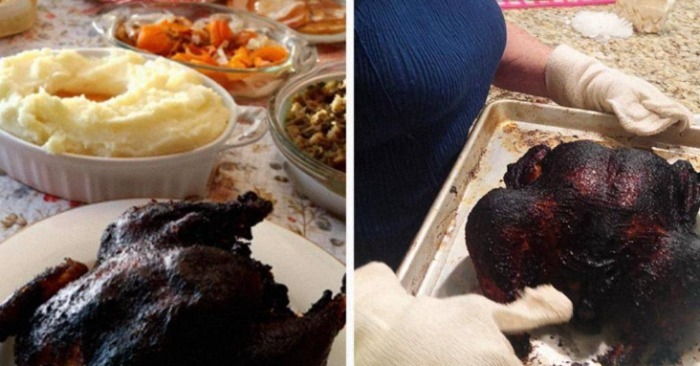
One lasagna turned into a thick beige soup with mysterious lumps the following week. Then came a roast so dry I needed three glasses of water to swallow it. Chicken that somehow tasted like fish. Cookies burned on the outside and raw in the middle. Evelyn came by at least three times a week, always with something new to try.
“You remind me so much of our daughter,” she said quietly one day, sitting at my kitchen table while I forced myself to chew. “Of our Emily.”
For nearly three months, I swallowed every dish Evelyn showed up with. I smiled through undercooked noodles, complimented flavors that made no sense together, and even asked for more when forcing down the first few bites already felt like a chore. I genuinely disliked the food. But I never disliked her. Somewhere along the way, I realized I was waiting for the knock at my door — just not for what was in her hands.
It stopped being about eating and started being about not being alone.
Evelyn would settle into a chair at my kitchen table and talk endlessly while I chewed, nodded, and pretended. George usually lingered nearby, leaning against the doorframe with a quiet smile, never stepping in, never contradicting her, just listening.
Then one warm afternoon in late spring, my tolerance finally snapped.
That day’s offering was chicken with a texture that managed to be both springy and dry, dusted with spices that tasted like cinnamon had gotten lost and collided with black pepper. I forced down three bites before my stomach made it clear it was done negotiating.
As soon as I heard Evelyn’s door shut across the yard, I grabbed the plate and stepped onto my back porch. I lifted the lid, ready to dump the whole thing into the trash.
That’s when a voice behind me stopped me cold.
“Rachel.”
I turned and found George standing behind me. His face was set in a way I’d never seen before — not angry, not harsh, but intense enough to make my pulse spike.
He moved closer and spoke in a low, urgent tone. “Put it down. Now.”
I froze, clutching the plate. “George, I’m sorry, I just—”
“You don’t know what you’re stepping into,” he interrupted, and for a brief moment, genuine fear shot through me.
Then his expression collapsed. His shoulders sagged, and I understood all at once — he wasn’t confronting me.
He was pleading.
“Please,” he whispered, his voice cracking. “Please don’t say anything to her. She believes you enjoy her cooking. She believes she’s finally improving.”
My hands trembled as I lowered the plate to the ground. “George… I don’t understand.”
He eased himself down onto the porch steps, suddenly looking much older.
“After Emily passed away, Evelyn lost the ability to cook,” he said quietly. “She couldn’t even step into the kitchen. For eighteen years, I handled every meal — because even seeing a mixing bowl would trigger a panic attack.”
He dragged his hands down his face. “Then one day, she walked in there and made Emily’s favorite casserole. It was terrible. But for the first time in nearly twenty years… she smiled.”
I sat beside him, tears already blurring my vision.
“She started coming back to life,” George said softly. The sorrow in his eyes was so profound it put my own heartbreak into perspective. “You don’t realize what you’ve given us. Every time you say you like her food, every time you ask her how she made it, every time you let her care for you like you’re her own child — you’re returning pieces of her we thought were lost forever.”
I couldn’t speak. My throat was tight, completely closed. George placed a hand over mine.
“So please, keep playing along. Let her believe she’s taking care of you. Because honestly, Rachel — you’re the one taking care of her.”
From that day on, everything changed. I no longer saw Evelyn’s visits as an obligation, but as the gift they truly were. I asked for recipes I’d never cook, praised combinations that shouldn’t exist, and ate every single dish with real gratitude. George was right — I was keeping her alive.
That summer, we fell into a routine. Evelyn brought food on Tuesdays and Fridays. George came by on Thursdays to help me with gardening I didn’t actually need help with. They told me about Emily, about their 53 years of marriage, about the life they’d built in that small town. And without planning it, we became a family.
Then, last month, everything suddenly stopped.
Three days went by without seeing either of them. On the fourth day, I knocked on their door. George opened it, and I barely recognized him. He’d lost weight, looked pale, and moved like every step hurt.
“George, what happened?”
“Stroke,” he said calmly. “A mild one, they say. But the doctor put me on a very strict diet.”
My stomach dropped. “And Evelyn?”
His eyes told me everything before he answered. “She’s scared. Terrified she’ll cook something that hurts me. So she stopped cooking altogether.”
I visited every day, but the house that had once been so warm felt empty. Evelyn barely spoke, just sat by the window staring outside. After three weeks, I couldn’t take it anymore.
One Friday night, I found myself standing in my kitchen, tears dripping onto the plastic tray of a microwave dinner. I stared at it for a moment, then did something unexpected. I wiped my face, opened my laptop, and trusted every cooking tip I’d ever absorbed online.
I made lemon chicken that was tender instead of dry. Potatoes whipped smooth with garlic and butter. A crisp salad with real dressing. And a chocolate cake — because comfort should always end on a sweet note.
Before I could talk myself out of it, I packed everything up and walked across the yard.
When Evelyn opened the door and saw the containers in my hands, she gasped, pressing her fingers to her lips.
“Oh sweetheart,” she said. “Is all this for us?”
“Someone once told me that feeding people is its own kind of affection,” I replied. “I figured it was my turn.”
We sat around their small circular table, and for the first time in weeks, something in the room felt lighter — familiar. Evelyn reached across and squeezed my hand.
“You know what our Emily used to say?” she whispered. “The best dinners have nothing to do with recipes. They’re about who’s sitting with you.”
George blinked hard, his voice thick when he spoke. “We lost our daughter,” he said. “But somehow, we were given another.”
Now Sundays belong to the three of us. Some weeks I cook. Some weeks Evelyn insists on taking her turn. Her meals are still… questionable — but now we laugh as we eat them.
I came to this town hoping to vanish.
Instead, I was welcomed back into the world.
And that turned out to be worth far more than everything I thought I’d lost.