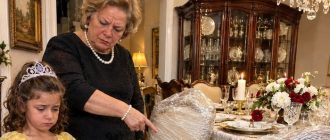
For two years, our elderly neighbor Walter had shared meals at our dining table, played with our five children, and answered to the name “Grandpa” as though it were the most natural thing in the world. He had long since become part of our family. But when we decided to make our special bond official in the eyes of the law, his reaction was nothing like we expected. What he confessed that evening made me question how well we truly knew him.
When Walter saw the adoption documents, every trace of color drained from his face.
He didn’t look touched.
He didn’t even look merely surprised.
He looked frightened.
He placed the folder on our dining table so carefully that, for one strange moment, I wondered whether it contained something dangerous.
“There’s something I need to tell you,” he said. “I should have told you a long time ago. I’ve waited far too long.”
Then he glanced toward my five children, who were still happily eating his birthday cake.
“Could the children perhaps finish their cake in the other room?”
That was the moment I knew something was wrong.
Two years earlier, Walter had moved into the little house next door.
He was 86 at the time and had recently lost his wife.
He was so lonely that he once confessed the silence in his new house was worse than the quiet in the home he’d shared with his wife for 41 years.
Silence was certainly not a problem in our house.
My husband and I have five children.
There’s always a missing shoe somewhere.
Someone is constantly shouting from upstairs.
Something sticky is permanently attached to the kitchen counter.
And our grocery bills regularly make me wonder whether everyone in the family really needs to eat every single day.
Walter started dropping by occasionally when the children were playing outside.
Before long, he was throwing balls with them, fixing loose bicycle chains, and drinking coffee at our kitchen table.
Eventually, I stopped formally inviting him to dinner.
He had become such a natural part of our everyday routine that we simply expected him to be there.
The children began calling him Grandpa.
Nobody suggested it.
It just happened.
In the spring, Walter became ill.
It wasn’t anything especially serious.
But as I sat in the hospital waiting area, repeatedly being asked what my relationship to him was, I became painfully aware of something.
I wasn’t his daughter.
Legally speaking, I wasn’t related to him at all.
So my husband and I began researching adult adoption.
For Walter’s 88th birthday, we wanted to suggest that he legally adopt me as his daughter.
That way, the father-daughter relationship that had already developed between us would finally receive official recognition.
But instead of being delighted by our proposal, Walter asked my children to leave the room.
My husband sat down beside me.
Walter stared at the folder.
“I can’t let you do this without first explaining why I moved here in the first place.”
I frowned.
“Why you moved here?”
He gestured toward the wall separating our house from the neighboring property.
“When I bought that house, I already knew you lived next door.”
A short, disbelieving laugh escaped me.
I thought I must have misunderstood him.
“What?”
“It wasn’t a coincidence that I became your neighbor, Abby.”
My husband reached for my hand.
I pulled it away.
Not because I was angry with him.
I just suddenly felt the need to have both hands free.
“How did you know who I was?”
Walter looked older than I’d ever seen him.
“After Margaret died, I took one of those ancestry DNA tests.”
That didn’t answer my question.
“Okay.”
“I wasn’t interested in finding out whether I was twelve percent this or twenty percent that.”
He swallowed.
“I was looking for someone.”
“Who?”
“My granddaughter.”
I stared at him.
He looked straight into my eyes.
“Her name was Abby.”
I felt my husband turn toward me.
But Walter continued before I could say anything.
“My daughter was named Kate. She had a baby when she was nineteen. A little girl she placed for adoption.”
Suddenly, the room seemed to shrink around us.
“No,” I said.
Tears filled Walter’s eyes.
“Kate was your mother.”
I jumped to my feet so quickly that my chair scraped across the floor.
“No.”
“Abby…”
“No! You can’t just sit here and make a claim like that!”
“I know.”
“Do you really?”
I’d spent my entire childhood not knowing where I came from.
As a baby, I had been taken in by a family.
But that placement didn’t last long.
Afterward came a succession of foster homes.
Some families were kind.
Others weren’t.
But none of them became my permanent home.
By adulthood, I’d long since stopped imagining a beautiful reunion where a woman with my eyes would suddenly appear and explain everything.
Several years earlier, I’d taken a DNA ancestry test myself.
At first, I checked my results almost obsessively.
But most of the matches were distant relatives.
Nobody who could answer the questions that truly mattered to me.
Eventually, I stopped logging into the website.
I looked at Walter.
“Show me.”
He nodded immediately.
I fetched my laptop.
I tried three times to remember my password.
Finally, I had to reset it before I could access my account again.
Several unread notifications were waiting for me.
And then I saw it.
A match with a close family member.
Walter.
I stared at the screen until the letters blurred before my eyes.
My husband softly said my name.
I didn’t respond.
“When?” I asked Walter.
“When did you get your results?”
“Two years ago.”
“Before you moved here?”
“Yes.”
“Before you’d even spoken to me for the first time?”
His answer was barely audible.
“Yes.”
I pushed the laptop away.
In an instant, every memory from the previous two years changed.
Walter appearing beside the garden fence while my children played.
Walter accepting his first cup of coffee in our kitchen.
Walter sitting at my table while I complained about mountains of homework and endless piles of laundry.
Walter smiling when my youngest child called him Grandpa for the first time.
“You knew.”
“Yes.”
“You sat here in my house all this time knowing who you really were?”
“Yes.”
“My children called you Grandpa.”
His face twisted with pain.
“I know.”
“And you never said a word.”
“I’m sorry.”
I stood up again.
My husband asked gently:
“Abby, do you need a moment?”
“No.”
Because there was a question that mattered more to me than anything else.
I looked Walter directly in the eyes.
“Where were you when I was eight years old?”
For a moment, he held his breath.
“Where were you when they moved me into yet another foster home?” I asked.
“Where were you when all my belongings were stuffed into garbage bags? And where was Kate?”
Walter closed his eyes.
“We didn’t know.”
I laughed again.
But there was nothing funny about it this time.
“You knew I existed.”
“Yes. But we believed you were with your family.”
“I didn’t have a family.”
“We thought you did.”
Then Walter began telling me about Kate.
My biological mother was nineteen when she became pregnant.
My biological father disappeared before I was born.
Kate never heard from him again.
Walter and Margaret had begged their daughter to reconsider the adoption.
They offered to help her raise me.
They had even been willing to bring me up themselves if Kate felt unable to take on the responsibility.
But Kate was convinced I would have a better life with adoptive parents who genuinely wanted a baby and were prepared to raise one.
So she chose adoption.
“She believed she was giving you something she couldn’t provide herself,” Walter explained.
“Two parents. A home. Security.”
“Well, that worked out wonderfully.”
Walter flinched.
I regretted the words almost immediately.
But I didn’t take them back.
“She didn’t know,” he said. “Neither did we. We were certain you’d gone home with the family who would raise you.”
I stared at him.
“You never found out that I ended up in foster care?”
“No.”
At that moment, something shifted inside me.
It didn’t make my childhood any less painful.
But the story I’d told myself throughout my entire life had always been the same:
Someone had given me away.
And nobody had ever come back for me.
Now Walter was telling me a different version.
“Did she ever try to find me?”
Walter nodded.
“Yes.”
“When?”
“More than once.”
“Then why couldn’t she find me?”
“It was a closed adoption. We didn’t know what name you’d been given or where your adoptive family lived.”
He took a deep breath.
“Kate tried again when you were older. Margaret searched for you later as well. They made phone calls, wrote letters, and followed every possible lead.”
He lowered his eyes.
“But none of them led anywhere.”
Then I asked the next question.
“Where is Kate now?”
The question nearly broke his heart.
Walter looked down at his hands.
“She died nine years ago.”
I sat down.
For more than forty years, I’d had a biological mother somewhere in the world.
A woman who might have been alive or long dead.
Who might have been happy or unhappy.
Who might have wondered what had become of me.
Or perhaps never thought about me again.
Now that woman suddenly had a name.
Kate.
And she’d already been dead for nine years.
“So you expect me to believe she searched for me?”
Walter shook his head.
“No. I expect you to ask for proof.”
I looked up.
He stood.
“I have something at my house.”
“I’m coming with you.”
My husband started to rise as well.
But I shook my head.
“I need to do this alone.”
Walter and I walked silently to the house next door.
I’d been inside hundreds of times.
Yet suddenly, it felt as though I were entering the place for the very first time.
Walter disappeared into his bedroom.
When he returned, he was carrying an old, faded cardboard box.
He placed it on the coffee table.
Inside were documents, old photographs, envelopes, and a tiny hospital identification bracelet.
First, he handed me a photograph.
A young woman was holding a newborn baby in her arms.
I knew who she was before Walter said a word.
Kate had my chin.
Or rather, I had hers.
“That’s you,” Walter said softly, pointing to the baby.
I gently touched one corner of the photograph.
Then I noticed the letters.
Some of the envelopes simply said:
“To my daughter.”
“She couldn’t send them,” Walter explained. “But for a while, she kept writing anyway.”
“Have you read them?”
“Not all of them.”
I opened one of the letters.
Kate had written it when I was six years old.
In it, she wondered whether I enjoyed reading books.
She wanted to know what color my bedroom was and whether I slept with a little night-light beside my bed.
She hoped my adoptive parents made a big celebration of my birthdays.
That my family already had little traditions that had become a natural part of my life.
And most of all, she hoped someone was always waiting for me whenever I came home.
I couldn’t keep reading.
By the time I was six, I’d already been forced to leave the home that was supposed to be mine forever.
At eight, I packed my belongings more carefully than most children.
Not because I was particularly tidy.
But because I’d learned that sometimes you could be sent away without any warning.
Kate had known nothing about that.
In her imagination, I had been safe.
It didn’t erase the decision she’d made.
But for the first time in my life, the words given away and unwanted no longer meant exactly the same thing.
“Margaret searched for you, too,” Walter said.
He showed me several pages written in my grandmother’s handwriting.
Names.
Dates.
Phone numbers.
Crossed-out addresses.
Notes beside leads that had gone nowhere.
“After Kate died, Margaret kept saying that surely someone had to be able to find you.”
His voice grew quieter.
“Then she became ill herself.”
“And eventually, she died, too.”
Walter nodded.
“So you took that DNA test.”
“Yes.”
I looked around his small living room.
“Why did you move right next door to me?”
“I didn’t know how to contact you.”
“You could have called.”
“I know.”
“You could have written to me.”
“I know.”
“You could have simply knocked on my door and said, ‘Hello, I’m your grandfather.'”
“I know.”
The fact that he didn’t even attempt to defend himself made me angrier.
“Then why didn’t you?”
Walter sat across from me.
“I intended to. Before I moved here, I kept rehearsing what I would say.”
“And what happened?”
“Then I met you.”
I stared at him.
“That sounds ridiculous.”
“It is.”
He rubbed his hands together.
“During that first week, you casually mentioned something about growing up in foster care.”
I remembered the conversation.
I’d been pulling weeds in the garden.
Walter had been standing beside the fence.
“You explained why it was so important to you that your children always have a home they can return to,” he continued.
“Afterward, I went home and realized that everything we’d believed for years had been wrong.”
His voice began trembling.
“Kate thought she’d given you a stable home. Margaret believed you were growing up somewhere with loving parents.”
He looked at me.
“And then there you were, standing in front of me, explaining how you’d spent your entire childhood being moved from one foster family to another.”
He swallowed.
“I didn’t know how to tell you that I belonged to the family that had lost you.”
“So you stayed silent.”
“That first day, yes. Afterward, I promised myself I’d tell you the following day.”
“And then?”
“Then your children came over.”
I looked away.
“Then you invited me for coffee. Later, for dinner. And eventually, your youngest started calling me Grandpa.”
For a brief moment, he smiled.
But the smile disappeared almost immediately.
“That should have been the exact moment I confessed everything. Instead, I became frightened.”
“Of what?”
“That I might lose all of you again.”
I stood and walked toward the window.
From there, I could see our house.
Two houses.
One shared fence.
Two years.
“You found me,” I said.
“Do you even understand what that means? I spent my entire childhood wondering why nobody ever came looking for me.”
My voice grew louder.
“And when you finally found me, you left me in the dark for another two years.”
“I know.”
“No. I don’t think you really understand.”
“I do, Abby.”
His voice was quiet.
“Finding you so late wasn’t my choice. But keeping the truth from you afterward was.”
Those words silenced me.
“I was a coward,” Walter said.
“Every week that passed made it harder to tell you the truth. And every week, I grew more attached to you and your family. That only made me more afraid.”
He looked at me sadly.
“There’s no excuse for what I did.”
I looked down at Kate’s letter in my hand.
“Why were you finally going to tell me now?”
“After I got sick, I decided I had to tell you.”
“But you still didn’t.”
“No.”
“And then we gave you the adoption papers.”
Walter let out a sad laugh.
“There you were, standing in front of me, asking whether I’d like to become your family.”
He slowly shook his head.
“While I’d been lying to you all along about the fact that I already was.”
I took the box home with me.
I didn’t forgive Walter that evening.
But I didn’t tell him to disappear from our lives, either.
Over the following days, I read Kate’s letters.
She had written about perfectly ordinary things.
Songs she’d heard on the radio.
Jobs she couldn’t stand.
Birthdays when she wondered what kind of cake I liked best.
None of those letters could give me back the childhood I’d lost.
But they gave me something I hadn’t even realized I was still searching for.
Proof that somewhere, someone had been thinking about me.
That I hadn’t simply disappeared from everyone’s memories.
On the fourth evening, I found Walter sitting alone on his porch.
I sat down beside him.
“I wish I could have met her,” I said.
“I know.”
“It makes me angry that I never can.”
“I know.”
“And I’m still angry with you.”
“You have every right to be.”
I looked at him.
“But I’m glad you found me.”
Walter covered his face with both hands.
And for the first time since his confession, he truly began to cry.
The following day, we told the children the truth.
For approximately four seconds, everyone sat in stunned silence.
Then my eight-year-old son triumphantly announced that he’d been right to call Walter Grandpa from the very beginning.
“Actually,” my husband explained, “Walter is your great-grandpa.”
Walter groaned in exaggerated horror.
“Absolutely not! I’ve only just turned eighty-eight. There’s no need to make me sound even older!”
The children thought that was absolutely hilarious.
Later, I came across the adoption folder again.
It was still lying exactly where Walter had left it on his birthday.
I picked it up and carried it into the kitchen.
Walter was already sitting at the table, helping my youngest child with homework.
When he saw the folder, he fell silent.
“We’ll find out whether any of this paperwork still makes sense,” I said.
“But that’s not the most important thing anymore.”
He nodded.
I put the folder aside.
For most of my life, I’d believed there were only two possibilities.
Either someone kept you.
Or they didn’t want you.
Kate’s letters didn’t make my childhood any less painful.
Discovering that Walter was my grandfather didn’t erase all the foster homes I’d passed through.
And the fact that we shared the same blood didn’t excuse his decision to lie to me for two years.
But I finally understood something I’d never been able to grasp before.
I hadn’t been forgotten.
I’d been lost.
My family had spent years searching for me without being able to reach me.
And eventually, one stubborn old man had actually managed to find me.
That evening, Walter remained standing beside the dining table even though dinner was already ready.
For two years, he’d pulled out the same chair and sat down without giving it a second thought.
But now, for the first time, he seemed unsure whether that seat still belonged to him.
I placed a plate in front of the chair.
“Sit down, Grandpa,” I said. “Your dinner’s getting cold.”
Walter looked at me.
Then he glanced at the chair.
Afterward, he looked at my five children, who were loudly arguing over who would get the last dinner roll.
Finally, he sat down.
Our house was noisy.
Nobody was bored.
And this time, every one of us knew exactly why Walter belonged at our table.