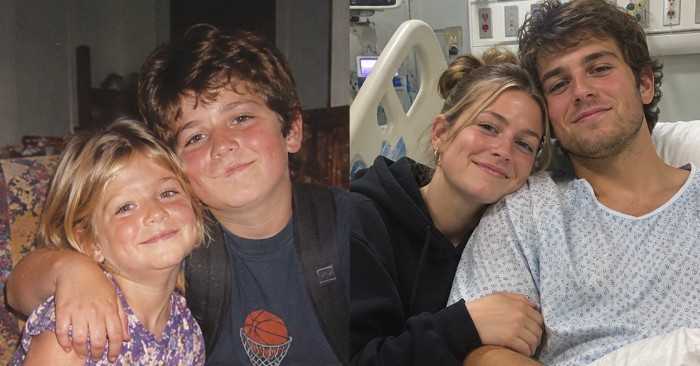
She had slept beside his hospital bed, missed university classes and dance lessons, and supported him through the most difficult weeks of his life. To me, Emma had long since become like a daughter of my own. When she finally walked away from my son in tears, I initially believed she was abandoning him at the very moment he needed her most. But once I discovered the real reason behind her decision, everything I thought I knew about the previous two months changed completely.
“I’m sorry. I just can’t keep pretending everything is okay.”
Emma was sobbing so hard she could barely get the words out.
We were standing beside the hospital elevators. She had buried her face in her hands and was desperately trying to regain control of herself.
Behind us, the door to my son’s room remained open.
I could hear the television playing.
Nothing else.
I reached toward her arm.
“Emma, what happened?”
She pulled away.
Not because she was angry with me.
But because she seemed absolutely terrified of revealing something she wasn’t supposed to say.
“Let him tell you.”
“Tell me what?”
She shook her head.
“He needs to tell you himself. You can’t hear it from me.”
At that exact moment, the elevator doors slid open.
Emma stepped inside.
And I stood there helplessly, watching her disappear.
For two months, that girl had barely left my son’s side.
Now she was walking away as though she couldn’t bear to spend another minute near him.
My name is Laura. My husband, Mark, and I have a son named Daniel.
He’s 23 years old.
Emma is 22.
Or perhaps I should say that, until that day, she had been Daniel’s girlfriend.
They started dating when they were both sixteen.
Seven years.
Somewhere along the way, we’d stopped thinking of Emma as the girl Daniel brought home.
She had simply become part of our family.
At Christmas, she had her own stocking hanging in our house.
She knew exactly where we kept the spare towels.
She helped me prepare Thanksgiving dinner.
Her parents came to our summer barbecues every year.
When Daniel’s grandmother died, Emma sat beside him throughout the funeral, holding his hand.
And when Emma was accepted into the university’s dance program, Daniel bought her flowers and seemed almost more excited than she was.
I was convinced they would eventually get married.
Actually, everyone thought so.
Then Daniel had his motorcycle accident.
He had wanted that motorcycle since he was a teenager.
I absolutely hated it.
Of course I did.
I’m his mother, after all.
The first time he pulled up outside our house on it, I said:
“Wonderful. So you’ve spent thousands of dollars on something that might eventually get your name in the newspaper.”
Daniel laughed.
Emma didn’t.
She hated that motorcycle, too.
And that detail matters to this story.
The accident happened on a Tuesday evening.
A passing driver discovered Daniel on a country road about fifteen minutes outside our town.
His motorcycle had crashed through a guardrail.
Daniel suffered multiple fractures in his left leg, severe damage to his knee, a broken wrist, and a concussion.
He was lucky.
At least, that’s what everyone kept telling us.
Lucky.
It’s a strange feeling to hear people repeatedly describe your child as lucky while you’re staring at him in a hospital bed, connected to a collection of monitoring machines.
Daniel underwent two operations.
Another procedure followed later.
After several weeks, the doctors began expressing cautious optimism.
He would most likely be able to walk again.
Possibly with a limp.
Possibly without one.
Nobody could predict how long his recovery would take.
But one thing was certain:
Daniel’s days of riding motorcycles needed to be over.
His orthopedic specialist warned him very clearly that another serious injury to that leg could leave him with permanent mobility problems.
Daniel heard the words:
“You’ll probably be able to walk again.”
But what registered in his mind was something entirely different.
“You’ll never be allowed to ride a motorcycle again.”
He had dreamed about owning that bike for years.
I couldn’t understand his passion for it.
But I knew what losing something important felt like.
So when he became increasingly withdrawn, I gave him space.
When he snapped at the nurses, I blamed the pain.
When he refused physical therapy twice, I assumed he was frightened.
And throughout all of it, Emma was there.
Every single day.
She came straight from university.
Her dance bag was usually still hanging from her shoulder, and her hair was often pinned up from rehearsals.
Some evenings, she stayed until visiting hours ended.
Sometimes the nursing staff even allowed her to remain longer because Daniel became calmer whenever she was nearby.
During his rehabilitation, there was a visitor’s chair beside his bed that had practically become Emma’s permanent seat.
I’ve seen more comfortable furniture in airports.
Yet she slept in it anyway.
One morning, I arrived at the hospital at seven and found her curled up beneath Daniel’s spare blanket.
“Emma,” I whispered. “Go home.”
She opened one eye.
“I’m fine.”
“You’re sleeping sitting upright.”
“I’m young.”
“You’re twenty-two, not supernatural.”
She smiled.
But she didn’t leave.
Eventually, Emma began missing her dance classes.
That worried me.
Dancing wasn’t just some casual hobby for her.
It was her future.
She had trained since she was four years old.
Her dream was to teach dance professionally and eventually open a small studio of her own.
Her final year at university was crucial.
Attendance mattered.
Rehearsals mattered.
One afternoon, I brought it up.
“You can’t keep missing your classes.”
She was sitting beside Daniel’s bed, peeling an orange for him.
“I’ll catch up on everything.”
“And your instructors are understanding about it?”
Emma glanced at Daniel.
He was asleep.
Then she answered quietly:
“They’re taking it very seriously.”
Something about the way she said those words stayed with me.
But I didn’t ask any more questions.
I should have.
Instead, I wrapped my arms around her.
“You’re taking such wonderful care of him.”
For a fraction of a second, her body stiffened.
Then she returned my embrace.
“He’s going through a really difficult time.”
Back then, I interpreted those words as an expression of her love.
Now I believe they meant something entirely different.
During the second month, Daniel was transferred from the hospital to an inpatient rehabilitation facility.
That was where the breakup finally happened.
Mark and I had gone downstairs that day to get some coffee.
When we returned, we could already hear raised voices coming from Daniel’s room.
Emma.
I could hardly remember ever hearing her shout before.
“Stop saying things like that!”
Then Daniel’s voice:
“Then leave! Nobody’s stopping you!”
“You know perfectly well that’s not true!”
“Then at least admit what this is really about!”
“What this is about? Daniel, do you even hear yourself?”
Something crashed onto the floor.
It didn’t sound like glass.
It was probably the plastic cup he’d been drinking water from.
A moment later, Emma stormed out of the room.
Her face was completely distraught.
She nearly collided with me.
“Emma?”
She looked at me and began crying even harder.
Then came our conversation beside the elevators.
“I can’t keep pretending everything is okay.”
“Let him tell you.”
“He needs to tell you himself.”
And then she was gone.
I immediately returned to Daniel’s room.
He was staring at the wall.
The plastic cup lay on the floor.
I picked it up.
“What happened?”
“Nothing.”
“Emma just ran out of here crying.”
“We broke up.”
I waited.
Daniel said:
“I don’t want to see anyone.”
“That’s unfortunate, because I’m already here.”
He closed his eyes.
“Mom.”
“What did Emma mean when she said you needed to tell me something?”
His eyes opened.
For the first time since the accident, I saw something other than anger or exhaustion on his face.
Fear.
“She said that?”
“Yes.”
He looked away.
I pulled the visitor’s chair closer to his bed.
“What am I supposed to find out?”
“Nothing.”
“Daniel.”
“Can you please just leave?”
“No.”
He grabbed a fistful of the blanket.
“Mom, please.”
That one word made me stop.
Please.
Suddenly, he sounded like a ten-year-old boy again.
I softened my voice.
“Did you cheat on her?”
His head snapped toward me.
“No!”
“Did she cheat on you?”
“No.”
“Then what happened?”
He remained silent for a long time.
Finally, he said:
“The accident wasn’t really an accident.”
A wave of cold swept through me.
“What does that mean?”
“Nobody hit me.”
“I know that. The police said no other vehicle was involved.”
“I mean I didn’t simply lose control.”
I stared at my son.
Daniel rubbed both hands over his face.
Then he said:
“Emma broke up with me.”
I couldn’t make sense of what he was telling me.
“What?”
“On the night of the accident.”
A short, disbelieving laugh escaped me.
His words made absolutely no sense.
“Emma has been here every single day.”
“I know.”
“You’ve been together this entire time.”
“No.”
Suddenly, the hospital room felt unbearably small.
Daniel explained that their relationship had already been struggling for months before the accident.
At first, the arguments hadn’t seemed particularly serious.
Emma was spending more and more time on dance training.
Daniel’s job was becoming increasingly stressful.
They saw less of each other.
He resented it.
She grew frustrated with his constant complaints.
Daniel wanted them to move in together.
Emma preferred to wait until she’d finished university.
Eventually, he began accusing her of caring more about dancing than their relationship.
I interrupted him.
“But you always supported her dancing.”
He gave me a look I didn’t like.
“When you were around.”
That hurt.
Apparently, a very different relationship had been developing behind closed doors.
Daniel complained about her rehearsals.
About performances.
About her male dance partners.
If Emma didn’t respond to his messages quickly enough, he sent more and more.
Where are you?
Who are you with?
Why aren’t you answering?
Eventually, Emma began switching off her phone during classes.
That only made him angrier.
On the evening of the accident, she finally ended their relationship.
Not because she’d stopped loving him.
But because she couldn’t bear having to prove her love over and over again whenever she did something without him.
I sat there listening to my own son describe behavior I would have called controlling if it had come from any other man.
“What does any of this have to do with the motorcycle?” I asked.
He stared down at his blanket.
“After she left, I called her.”
“Okay.”
“She didn’t pick up.”
My stomach tightened.
“Daniel.”
“I rode my motorcycle to her apartment.”
“Even though she’d told you not to come?”
He didn’t answer.
But his silence told me everything.
Emma hadn’t been home.
She had gone to her friend Maya’s house because she didn’t want to be alone that night.
Daniel knew where Maya lived.
So he rode there.
Emma spotted him through the window.
She sent him a message:
“Please go home. I’m not discussing this anymore tonight.”
But he didn’t leave.
He called her.
She blocked his number.
So he contacted her through another account.
My mouth went dry.
“What did you write to her?”
Daniel’s face twisted with anguish.
“I told her that if she really wanted to get rid of me, she wouldn’t have to worry about me much longer.”
I stared at him.
Suddenly, the entire room seemed to spin.
“Daniel.”
“I wasn’t trying to kill myself.”
“Then what were you trying to accomplish?”
“I don’t know.”
He was crying now.
“I was just angry.”
Then he rode away.
Far too fast.
Emma watched his motorcycle disappear.
Ten minutes later, the accident happened.
She found out because she was listed as his emergency contact on his phone.
I covered my mouth with my hand.
“Oh my God.”
“She blamed herself.”
That was when I began to understand.
Emma had come to the hospital because she believed ending their relationship had caused the accident.
Daniel told me he’d initially reassured her that it wasn’t her fault.
At least in the beginning.
But during those first days in the hospital, when he was frightened, taking strong medication, and facing another surgery, he’d eventually said something different.
“You abandoned me when I needed you most.”
And Emma stayed.
Whenever she tried to go home, Daniel panicked.
When she mentioned her dance classes, he suddenly became quiet.
When she missed rehearsals, he never encouraged her to attend.
Sometimes he said:
“Well, now I know what matters more to you.”
My own son was telling me all of this.
I felt sick.
I remembered Emma sitting there peeling that orange.
“He’s going through a really difficult time.”
I thought about the uncomfortable chair.
The classes she’d missed.
Her exhausted eyes.
Then I whispered:
“You made her feel that if she left you, you might hurt yourself again.”
Daniel began sobbing harder.
“I never said that.”
“You didn’t have to.”
“I didn’t mean to…”
“Did she believe it?”
He fell silent.
“Daniel.”
“Yes.”
I stood up.
My entire body was trembling.
Not because I wanted to scream.
But because the previous two months had suddenly taken on an entirely different meaning.
Emma hadn’t been sitting beside my son purely out of love.
Guilt had been keeping her there, too.
Perhaps she still loved him.
She probably did.
But she was terrified that if she walked away, he would fall apart completely.
Or that something even worse might happen.
I thought about how often I’d praised her.
You’re taking such wonderful care of him.
I remembered urging her to go home without ever asking why she looked so frightened at the thought.
Then another question occurred to me.
“Why today?”
Daniel wiped his face.
“What?”
“Why did she finally leave today?”
He looked ashamed.
Emma’s dance instructor had called.
An important qualification exam for future dance teachers was coming up.
Emma had already missed far too many rehearsals.
If she missed this examination as well, she risked having to delay her graduation.
She had explained to Daniel that she absolutely needed to attend.
He’d said:
“Fine.”
But when she started packing her bag, he added:
“Then don’t bother coming back.”
Emma responded that they needed to stop pretending they were still a couple.
Daniel accused her of abandoning him simply because he couldn’t walk.
And eventually, Emma exploded.
Those were the raised voices Mark and I had heard from the hallway.
I sat down again.
Neither of us spoke for a long time.
Then I broke the silence.
“You need help.”
Daniel nodded.
“No, I’m not talking about physical rehabilitation.”
“I know.”
“You need to speak with someone about the way you’ve treated Emma.”
“I know.”
“And Emma has ended the relationship.”
His face crumpled.
“Mom…”
“No.”
It was one of the hardest words I’d ever had to say to my son.
“You cannot use what happened to you as a way to keep her with you.”
“I love her.”
“Then let her go.”
He cried.
And I cried with him.
Nobody prepares you for something like this.
You can love your child with every part of your heart and still be horrified by something they’ve done.
Both feelings can exist at the same time.
The following day, I contacted Emma.
Not from the hospital.
I sent her a message.
“You don’t have to reply, but Daniel told me everything.”
Twenty minutes later, she called me.
At first, neither of us spoke.
Then I said:
“I’m sorry.”
She answered immediately:
“You couldn’t have known.”
“I should have noticed something.”
“Laura.”
“You were completely exhausted.”
“So were you.”
“I kept telling you how wonderful you were for staying beside him.”
Emma began to cry.
“I wanted to stay with him.”
I believed her.
Then she added:
“At first.”
That was the heartbreaking part.
Emma loved Daniel.
She had loved him since she was sixteen.
When the accident happened, she genuinely wanted to support him.
But after several weeks, she realized she was no longer staying because she freely chose to.
Every time she considered returning to regular dance training, she pictured the wrecked motorcycle lying beside the road.
Whenever Daniel said, “Do whatever you want,” she heard an unspoken threat.
Even though he never expressed it directly.
“Eventually, I started thinking that if I left and something happened to him, it would be my fault.”
“It wouldn’t be.”
“I know that now.”
Then she said:
“I missed my exam yesterday.”
My heart sank.
“Emma.”
“But they’re giving me another chance.”
Her instructor now knew enough about the situation to arrange a later examination.
But Emma couldn’t keep missing classes indefinitely.
“So I ended the relationship again,” she said.
Again.
Those two words stayed with me.
Emma hadn’t broken up with my son for the first time yesterday.
She had repeated a breakup that Daniel had refused to accept two months earlier.
Daniel remained in rehabilitation for another six weeks.
During that time, he began seeing a psychologist regularly.
At first, he only attended because I insisted.
Later, he started going voluntarily.
He had to confront things he’d previously dismissed as stress or love.
Jealousy.
Fear of abandonment.
Controlling behavior.
The habit of using guilt to influence other people instead of openly expressing his feelings.
The accident hadn’t created those problems.
It had merely exposed them.
Emma didn’t come back.
I think part of Daniel continued waiting for her for a long time.
But she never returned to the relationship.
When Daniel managed to take his first few steps again using parallel bars, she sent him one message.
“I’m glad you’re getting stronger again. I genuinely mean that. Please keep going.”
That was all.
No heart emoji.
No promise.
Nothing suggesting she might reconsider her decision.
Daniel cried after reading it.
Then he went to his next therapy appointment.
A few months later, Daniel apologized to Emma.
This time, he truly meant it.
He didn’t ask her for another chance.
He didn’t add, “But I was hurting.”
He didn’t accuse her by saying, “You frightened me.”
He wrote that he’d made her responsible for managing his emotions and had then used his accident to keep her tied to him.
Emma replied:
“Thank you for telling me that. I hope you continue making progress.”
They haven’t spoken to each other since.
Daniel can walk again now.
Not without difficulties.
He still experiences pain.
Cold mornings are particularly hard for him.
A long scar runs across much of his leg.
Another is visible near his knee.
He sold what remained of his motorcycle for spare parts.
Emma completed her degree.
She now teaches dance at a studio on the other side of town.
I know because she still sends me a Christmas card every year.
During the first year after their breakup, I hadn’t been sure whether she would.
When her card arrived, I stood in the kitchen and began to cry.
Mark asked:
“Who’s it from?”
I showed him.
In the photograph, Emma was standing inside a dance studio.
Around her were little girls wearing purple leotards.
On the back, she’d written:
“I’m still standing. And I’m still dancing.”
I still keep that card.
Not because I’m hoping Emma will someday return to our family.
She doesn’t owe us that.
I keep it because, for years, I had considered Emma almost another daughter.
And then, for two months, I treated her as though she were responsible for holding my son together emotionally.
That had never been my intention.
But good intentions don’t erase the pressure we place on other people.
Sometimes someone is labeled “the strong one.”
And eventually, everyone around that person gets used to placing more and more responsibility on their shoulders.
Daniel’s accident taught me many things I never wanted to learn.
How to gently wash someone’s hair when their scalp is covered in wounds and stitches.
How to argue with insurance companies.
How to smile inside a hospital room and then break down beside your car afterward.
But the most difficult lesson had nothing to do with Daniel’s injured leg.
I had to understand that I could love my son without automatically assuming that he was always the one being wronged.
Sometimes the person we love most is the one causing someone else pain.
When Emma rushed out of that hospital room in tears, I thought she was abandoning Daniel during the darkest moment of his life.
But the truth was far more difficult to accept.
She had already stayed much longer than was healthy for her.
Leaving wasn’t an act of cruelty.
It was the first decision in two months that she was finally able to make entirely for herself.