“Tell her why you made everyone believe I was gone.”
Rose’s voice wasn’t loud.
It didn’t need to be.
The entire reception had gone silent.
My grandfather stood beside the overturned gift box, one hand gripping the chair so tightly his knuckles had turned white.
I looked at him.
Then at Rose.
Then at the photograph inside the locket.
It was me.
Six years old.
Missing one front tooth.
Wearing the yellow raincoat I had almost forgotten existed.
I looked down at the locket around my own neck.
My grandmother had given it to me when I was seven.
She told me it had belonged to my mother.
Rose’s locket was almost identical.
My throat tightened.
“Who are you?”
Rose looked at me.
For the first time since I had met her outside the church, the warmth disappeared from her face.
What replaced it was fear.
“Your name is Caroline.”
I stared at her.
Everyone at the wedding knew my name.
That proved nothing.
Then she continued.
“When you were little, you couldn’t say Caroline. You called yourself ‘Carly-Lion.’”
My knees nearly gave out.
Nobody knew that.
Nobody except my grandparents.
And my mother.
I turned toward Grandpa.
He shook his head.
“Caroline, don’t.”
“Don’t what?”
“Not here.”
I almost laughed.
“Not here?”
My voice echoed through the room.
“You just told a woman I met yesterday that she was dead.”
My fiancé, Ethan, appeared beside me.
He gently touched my arm.
“Do you want everyone to leave?”
I looked around.
Two hundred guests were staring at us.
My wedding photographer had lowered her camera.
The band had stopped playing.
Even the waiters were motionless.
“Yes.”
Within minutes, Ethan’s family began moving people toward the garden.
My maid of honor closed the ballroom doors behind the last guest.
Only six of us remained.
Me.
Ethan.
Rose.
Grandpa.
My grandmother, Margaret.
And my younger uncle, David.
Grandma hadn’t said a word.
She was sitting at one of the tables staring at Rose.
Then Rose looked at her.
“Hello, Margaret.”
Grandma began crying.
Not confused crying.
Not shocked crying.
Recognition.
I felt sick.
“You know her too.”
Grandma covered her mouth.
“Caroline…”
“No.”
I stepped backward.
“No one says my name until somebody tells me who she is.”
Grandpa finally sat down.
He suddenly looked much older than he had that morning.
Rose remained standing.
She didn’t move closer to me.
She didn’t try to touch me.
Then she said:
“My name isn’t Rose.”
The room seemed to tilt.
“My name is Elaine.”
That was my mother’s name.
I stared at her.
“No.”
She nodded once.
“No.”
My voice came out louder.
“My mother disappeared twenty years ago.”
“I know.”
“My mother was thirty-one.”
“I was thirty-one.”
I shook my head.
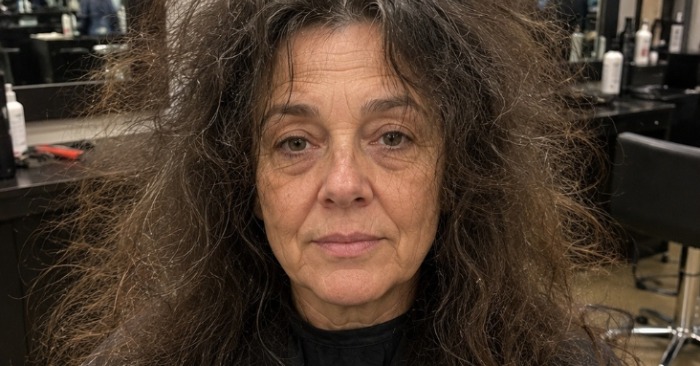
This woman looked older than fifty-one.
Life on the street had aged her.
Deep lines framed her eyes.
Her hands were rough.
Her hair was mostly gray.
But once she said it, I started seeing details.
The shape of her mouth.
The small indentation above her left eyebrow.
The way one side of her smile rose before the other.
My features.
Not exactly.
But enough.
I turned toward my grandparents.
“Tell me she’s lying.”
Neither spoke.
That silence hurt more than any answer could have.
I looked back at Elaine.
“If you’re my mother, prove it.”
Her eyes filled.
“You had a stuffed rabbit named Captain.”
My breathing changed.
“You hated peas but would eat them if I called them green candy.”
My hands began trembling.
“When you were frightened during thunderstorms, you hid under the kitchen table instead of your bed.”
“Stop.”
“You broke your wrist falling from the swing when you were four.”
“Stop.”
“And after the doctor put the cast on, you made me draw a purple dinosaur on it because you said pink dinosaurs were boring.”
I covered my mouth.
I remembered that dinosaur.
Not clearly.
Just fragments.
Purple marker.
My mother laughing.
A hand holding mine.
Then Grandpa slammed his palm against the table.
“That’s enough.”
Elaine turned toward him.
“No.”
His face hardened.
“You don’t walk back into her life after twenty years and do this.”
“I didn’t walk back into anything.”
Elaine pointed toward me.
“She found me.”
That silenced him.
I thought about the church.
The woman sitting on the steps.
The eyes that had stopped me.
The irrational feeling that I should sit beside her.
“Did you know who I was yesterday?”
Elaine hesitated.
That hesitation terrified me.
“Did you know?”
“Yes.”
I stepped away from her.
Ethan moved beside me.
“You knew me.”
Elaine nodded.
“From the moment you walked toward the church.”
“And you said nothing.”
“I was afraid.”
“You let me ask you to pretend to be my mother.”
Her face crumpled.
“I know.”
“Why?”
Her answer came almost as a whisper.
“Because I thought it might be the only day I ever got to be one again.”
I started crying.
Anger came with the tears.
“You had twenty years.”
Elaine lowered her head.
“I know.”
Grandpa muttered:
“Don’t fall for this.”
Elaine looked at him.
“You’re still doing it.”
“Doing what?”
“Making yourself the judge of what she’s allowed to know.”
Grandpa stood.
“I protected her.”
“From me?”
“Yes!”
The answer exploded out of him.
Everyone froze.
Grandpa pointed at Elaine.
“You abandoned your daughter.”
Elaine stared back.
“No.”
“Yes, you did.”
“No.”
“You disappeared.”
“Because you made sure I couldn’t come back.”
My grandmother suddenly whispered:
“Frank…”
Grandpa turned toward her.
“Not now.”
Grandma stood.
“No.”
Her voice was shaking.
“We have done ‘not now’ for twenty years.”
I looked at her.
Grandma seemed unable to meet my eyes.
Then she said:
“Caroline, your mother did leave.”
Elaine looked devastated.
Grandma immediately continued.
“But not because she wanted to leave you.”
My chest tightened.
“What happened?”
Grandma sat beside me.
Twenty years earlier, my mother had been struggling.
Not with drugs.
Not with crime.
Not with another man.
With money.
After my father left us when I was three, Mom worked two jobs.
She fell behind on rent.
Then she borrowed money from my grandfather.
At first, he helped gladly.
Then he began controlling everything.
Her bills.
Her bank account.
Where we lived.
Even who she spent time with.
Grandpa interrupted.
“She was irresponsible.”
Grandma ignored him.
Mom eventually met someone.
Not romantically.
A woman named Julia who ran a restaurant where Mom worked.
Julia offered her a full-time management job in another state.
Better pay.
Health insurance.
An apartment above the restaurant.
Mom decided we would move.
Grandpa refused.
I stared at him.
“What do you mean, refused?”
He looked at me.
“You were six.”
“That wasn’t my question.”
His jaw tightened.
He believed Mom was unstable.
He believed taking me away from my grandparents would ruin my life.
So when Mom announced she was moving, he threatened to seek custody.
Elaine continued the story.
“I told him he could try.”
She looked toward Grandpa.
“He told me he had enough money to make sure I never saw you again.”
Grandpa said nothing.
Elaine began crying.
“Then, three nights before we were supposed to leave, I got arrested.”
I stared at her.
“For what?”
“Theft.”
Ethan frowned.
“Did you steal something?”
“No.”
She looked at Grandpa.
“He said I stole five thousand dollars from his business.”
My grandfather’s face changed.
My stomach dropped.
“You reported her?”
He stared at the floor.
“The money was missing.”
“Did she take it?”
He said nothing.
Grandma answered.
“No.”
I turned toward her.
Grandma looked sick.
“The money was never missing.”
Silence.
Grandpa closed his eyes.
I felt something inside me fracture.
“You framed my mother?”
Grandpa immediately shook his head.
“It wasn’t supposed to go that far.”
Elaine laughed once.
It was a broken sound.
“I spent three months in jail.”
My heart stopped.
Grandma began sobbing.
The charges were eventually dropped.
But while Elaine was incarcerated, Grandpa petitioned for emergency guardianship.
He argued that my father was gone and my mother was facing criminal charges.
The court granted temporary custody.
When Elaine was released, she had no job.
No apartment.
No money.
And no daughter.
“I came to the house,” she said.
A memory flashed through me.
Someone shouting outside.
Grandpa closing curtains.
Me sitting on the stairs.
I had always believed it was a dream.
Elaine continued.
“I begged them to let me see you.”
I looked at Grandma.
She nodded through tears.
“You were upstairs.”
“Did you know she was there?”
Grandma couldn’t answer.
“Did you know?”
“Yes.”
I stood so quickly my chair fell backward.
“You told me she had left!”
Grandma cried harder.
“I was afraid of losing you too.”
“You weren’t losing me!”
I pointed toward Elaine.
“She was my mother!”
Grandpa stepped forward.
“She had nothing.”
Elaine turned on him.
“Because you took everything.”
“I gave Caroline stability.”
“You gave her a lie.”
Grandpa’s face reddened.
“You were in no condition to raise a child.”
Elaine stared at him.
“Then why didn’t you help me get back on my feet?”
He didn’t answer.
“Why didn’t you let her see me?”
Nothing.
“Why did you return every letter?”
My head snapped toward him.
“What letters?”
Elaine looked at me.
“I wrote to you.”
“How many?”
“I stopped counting after seventy.”
The room went completely silent.
Seventy.
Birthday cards.
Christmas letters.
School years.
Apologies.
Photographs.
She had mailed them to my grandparents’ house.
None reached me.
I turned toward Grandpa.
“What did you do with them?”
He looked away.
“What did you do?”
“I kept some.”
“Where?”
“In the basement.”
I couldn’t breathe.
Twenty years of believing my mother didn’t care.
Twenty years of imagining her somewhere living happily without me.
Twenty years of asking what I had done wrong.
And beneath my grandparents’ house were letters proving she had never stopped trying.
But one question remained.
“Why did you stop coming?”
Elaine closed her eyes.
“Because your grandfather got a restraining order.”
Grandpa immediately protested.
“She frightened you.”
“I was trying to see my child!”
I looked at Grandma.
Again, she nodded.
The order prevented Elaine from approaching our home or contacting me directly for a period of time.
Then life got worse.
She lost the restaurant opportunity.
She moved between temporary jobs.
Eventually, her mental health collapsed.
She began drinking.
Then living in motels.
Then shelters.
She still sent letters.
But less often.
Years passed.
Shame replaced anger.
“I kept telling myself I’d come back when I had somewhere to bring you.”
Her voice cracked.
“Then you were twelve.”
She wiped her eyes.
“Then sixteen.”
Another breath.
“Then eighteen.”
She looked at me.
“And suddenly you were grown.”
“Why not contact me then?”
“I did.”
I stared at her.
“What?”
“Social media. Email. Everywhere.”
“I never got anything.”
Grandpa looked toward the floor.
Then my uncle David spoke for the first time.
“Dad.”
Grandpa ignored him.
David stepped closer.
“You told us those messages were scams.”
I looked at him.
“What messages?”
David explained.
Years earlier, messages had arrived claiming to be from Elaine.
Grandpa told everyone they were fake.
He had blocked the accounts.
Reported them.
Deleted them.
My anger became something colder.
“You didn’t protect me.”
Grandpa looked up sharply.
“Yes, I did.”
“No.”
My voice barely rose.
“You protected your decision.”
He recoiled as if I had hit him.
“You decided she was unfit when I was six, and then you spent twenty years making sure nothing could prove you wrong.”
Grandma covered her face.
Grandpa looked around the room.
For the first time, he seemed to realize nobody was standing beside him.
But then he said something I didn’t expect.
“I was afraid.”
The anger in his voice disappeared.
Just like that.
He sat down.
“I had already lost my daughter.”
Elaine stared at him.
He continued.
“Yes, Elaine. You were still alive. But every time I saw you, you were drowning.”
He began crying.
“I thought Caroline would drown with you.”
Elaine’s expression softened slightly.
Grandpa looked at me.
“So I chose.”
“You chose for everyone.”
“Yes.”
That one word was devastating.
“I thought I could fix it later.”
He laughed bitterly.
“But every year made the truth uglier.”
Elaine whispered:
“So you buried it.”
“Yes.”
There was no grand excuse.
No secret villain behind him.
Just fear.
Control.
Pride.
And one decision followed by twenty years of lies designed to protect it.
I looked at my mother.
“Why were you outside that church?”
She hesitated.
“I knew your wedding was this weekend.”
“How?”
“Your engagement announcement was public.”
My chest tightened.
“I came to see you.”
“Why didn’t you?”
“I planned to stand across the street from the church.”
She smiled sadly.
“Just see you in your dress.”
Then her eyes filled again.
“But I lost my room at the shelter two nights ago.”
That was why she had been sitting outside the church.
Not waiting for me.
Just surviving close to the place where she hoped to glimpse me.
“And then I walked up.”
“Yes.”
She laughed through tears.
“You sat beside me and complained that your wedding flowers were the wrong shade of ivory.”
Despite everything, I laughed.
I remembered.
“I was having a terrible morning.”
“You were.”
She smiled.
“You sounded exactly like me when I was nervous.”
Then came the strangest part.
The wedding continued.
Not immediately.
It took almost two hours before I could face anyone.
My makeup had to be redone.
The ballroom had to be reset.
Guests knew something extraordinary had happened, but nobody knew exactly what.
Before we went back inside, I stood alone with Elaine.
My mother.
Even thinking that word felt dangerous.
She didn’t ask me to forgive her.
She didn’t ask to walk me down the aisle.
She said:
“I can leave.”
I looked at her.
“You came here to see me get married.”
“Yes.”
“Then stay.”
Her lips trembled.
“But don’t pretend.”
She stared at me.
“If anyone asks who you are, tell them the truth.”
Elaine began crying.
“So what am I?”
I didn’t know.
Mom felt too big.
Stranger felt too small.
I took a breath.
“You’re Elaine.”
She nodded.
“For today, that’s enough.”
The reception resumed.
Grandpa didn’t make his planned speech.
He sat quietly beside Grandma.
Elaine stayed near the back of the room.
Later, during the mother-daughter dance that I had originally planned to skip, I walked over to her.
She looked terrified.
I held out my hand.
“This is not forgiveness.”
“I know.”
“This doesn’t fix anything.”
“I know.”
“But I don’t want another empty chair.”
She took my hand.
We danced.
Awkwardly.
Both crying.
Half the room cried with us even though most people still had no idea what they were watching.
After the wedding, I went to my grandparents’ house.
Grandpa led me to the basement.
Behind old Christmas decorations was a plastic storage container.
Inside were letters.
Dozens.
Some unopened.
Some torn.
Some stained.
Every envelope had my name on it.
The oldest was addressed in neat handwriting.
The newest shook across the page.
I didn’t read them all at once.
That took months.
The first letter began:
“My sweet Carly-Lion, I don’t know what they have told you, but please believe one thing: I did not stop loving you.”
That sentence destroyed me.
It also gave something back.
Not a childhood.
Nothing could do that.
But truth.
Elaine entered a transitional housing program shortly after the wedding.
Not because I rescued her.
I offered help.
She accepted some and refused some.
She wanted to rebuild her life herself.
We started meeting once a week.
Coffee first.
Then lunches.
Then longer afternoons.
Some were beautiful.
Some were awful.
I asked questions she hated.
She told me truths I didn’t want.
She admitted that after losing me, she had made terrible choices.
She drank heavily.
She disappeared from people who tried to help.
There were years when, even if Grandpa had opened the door, she wasn’t sure she could have been the mother I needed.
That mattered too.
Because the real story wasn’t that my mother was perfect and my grandfather evil.
It was worse.
Everyone had failed.
In different ways.
Grandpa manipulated the truth.
Grandma allowed it.
Elaine became too broken to keep fighting.
And I grew up inside the silence they created.
Grandpa and I didn’t speak for almost four months.
Then one afternoon, he appeared outside my house.
No excuses.
No dramatic plea.
He carried one final envelope.
“This one never made it into the box.”
It was from Elaine.
Written on my seventh birthday.
Inside was a drawing.
A little girl holding hands with a woman.
Above them was a crooked yellow sun.
On the bottom, Elaine had written:
“Someday I hope she remembers my face.”
I looked at Grandpa.
He was crying.
“I’m sorry.”
I wanted to say it wasn’t enough.
Because it wasn’t.
But sometimes an apology can be insufficient and still matter.
“I know.”
That was all I gave him.
For then.
A year later, my wedding photograph hangs in our living room.
Not the formal one.
Not the perfect kiss beneath the flowers.
My favorite photograph was taken accidentally.
I’m standing between two older people.
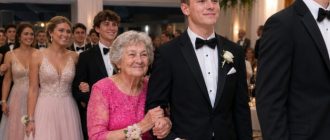
Grandpa is on one side.
Elaine is on the other.
Neither is touching me.
Nobody is smiling.
We all look exhausted.
Confused.
A little terrified.
But we’re there.
Together.
People sometimes ask why that picture means so much to me.
I never give them the whole story.
I simply say:
“Because that was the day my family stopped pretending.”
I invited a homeless stranger to my wedding because I couldn’t bear having an empty chair where my mother should have been.
I thought I was hiring someone to play a role for one afternoon.
Instead, I brought the truth through the front door.
And I learned something I wish every family understood before silence becomes permanent:
A painful truth can destroy the story you grew up believing.
But sometimes that story needs to break before you finally have a chance to know the people inside it.