I married the boy I grew up with in the shelter, and the day after our wedding, a stranger knocked on our door and revealed something about my husband I had never known.
My name is Claire, and I’m 28 years old. I spent most of my childhood hopping from one foster home to the next, never staying long enough to make a connection.
By the time I turned eight, I had lived in more homes than I could remember, and I learned one rule to survive: don’t get attached.
People like to say that kids are “resilient,” but the truth is, we just learn to pack our bags quickly and never ask too many questions.
When I was dropped off at my final orphanage, I stuck to my rule: don’t get attached.
That’s when I met Noah.
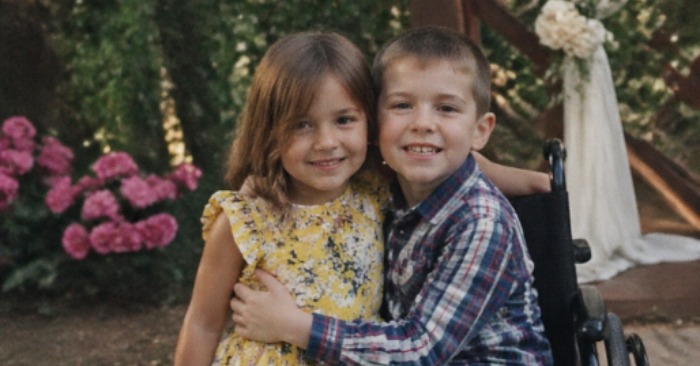
Noah was nine years old—quiet, serious, and always in his wheelchair, a constant reminder to others that he was different. It made people uneasy.
“If you’re going to guard the window, you should at least share the view,” I told him one afternoon when I saw him staring out at the empty yard.
The other kids weren’t cruel to him, but they didn’t know how to treat him. They would shout “hey” from across the room and then run off to play, leaving him alone.
The staff at the orphanage spoke about him like he was just another part of the system—something they had to manage.
But one day, during free time, I plopped down on the floor next to him, book in hand.
“If you’re going to guard the window, you should at least share the view,” I said again.
He glanced up, raising an eyebrow. “You’re new.”
“More like returned,” I replied. “Claire.”
He nodded once. “Noah.”
That was it. From that moment, we were in each other’s lives.
We grew up together, saw each other at our best and worst, during the good times and the angry ones. We knew each other better than anyone else ever could, because we both understood that nobody wanted us—too much baggage, too many complications.
Whenever another child was taken away with a suitcase or a trash bag, Noah and I would do our little ritual.
“If you get adopted, I get your headphones,” I’d say.
“If you get adopted, I get your hoodie,” he’d reply.
We clung to each other, joking, but both of us knew the truth—no one was coming for us.
At 18, we were told we had aged out of the system. We were handed a stack of papers and told, “Sign here. You’re adults now.”
We walked out of that office with nothing but plastic bags holding our belongings. No celebration. No farewell. Just a folder, a bus pass, and a half-hearted “good luck out there.”
On the sidewalk, Noah spun the wheels of his chair absentmindedly. “Well, at least no one can tell us where to go anymore.”
“Unless it’s jail,” I added.
He snorted. “Then we better not get caught doing anything illegal.”
We enrolled in community college and found a tiny apartment above a laundromat. The rent was cheap, and the landlord never asked questions. The place smelled of soap and burnt lint, but it was ours. The stairs were terrible, but we didn’t care.
We furnished it with whatever we could find on the curb—three plates, one good pan, and a couch that tried to stab you with its springs.
Somehow, it became home.
In the midst of the grind, our friendship shifted into something more. There were no big confessions, no romantic gestures—just the small moments. He started texting me, “Message me when you get there,” every time I walked home after dark. I realized that I always felt better once I heard the sound of his wheels in the hallway.
We’d put on a movie “just for background,” but somehow always ended up falling asleep, my head resting on his shoulder, his hand gently placed on my knee.
One night, after a long study session, I said, “We’re kind of already together, aren’t we?”
He didn’t even look up from the screen. “Oh, good. I thought that was just me.”
That was it. We started calling each other boyfriend and girlfriend, but everything that mattered had already been there for years.
Two orphans, finally with paperwork.
We graduated one tough semester at a time. When the diplomas arrived, we stared at them for a while, as if afraid they’d vanish.
“Look at us,” Noah said with a grin. “Two orphans with paperwork.”
A year later, he proposed—no restaurant, no crowd.
I was making pasta in the kitchen when he rolled in, holding a tiny ring box beside the sauce pot. “So, do you want to keep doing this with me? Legally, I mean?”
I laughed, cried, and said yes before he could take it back.
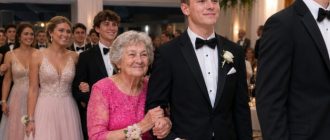
Our wedding was small, modest, but perfect. A few friends, two caring staff members from the orphanage, fold-out chairs, a Bluetooth speaker, and way too many cupcakes.
Then came the knock.
The next morning, a man in a dark coat stood at our door. He looked to be in his late 40s or early 50s, his hair neat, his eyes calm.
“I’ve been trying to find your husband for a long time,” he said.
“Good morning,” he added, as though it were just another visit.
I pulled on a hoodie and opened the door. “Are you Claire?” he asked.
I nodded, my heart suddenly pounding.
“My name’s Thomas,” he said. “I know we don’t know each other, but I’ve been trying to find your husband for a long time.”
My chest tightened.
“There’s something you don’t know about your husband,” he added.
“Why?” I asked, my voice shaking.
Thomas glanced past me, his gaze taking in the humble life we’d built, then met my eyes again. “You need to read the letter in this envelope,” he said, handing me a thick envelope.
Behind me, I heard Noah rolling into the room, still wearing his wedding ring.
“Claire?” he murmured.
Thomas’s face softened when he saw him. “Hello, Noah,” he said gently. “You probably don’t remember me, but I’m here because of a man named Harold Peters.”
“I don’t know any Harold,” Noah frowned.
So we let Thomas in.
He placed the envelope on the coffee table, like it might explode. He sat down in the worn chair while Noah and I settled on the couch. My knee pressed against Noah’s wheelchair, his hand finding mine and staying there.
“I’m an attorney,” Thomas began. “I represented Mr. Peters. Before he passed, he gave me clear instructions about you.”
Noah opened the letter, his hands trembling as he read aloud.
“Dear Noah, You probably don’t remember me. That’s alright. I remember you.”
The letter explained how, years ago, Harold had slipped and dropped his groceries. Noah had stopped, helped him, and stayed with him until he was steady again.
Noah hadn’t recognized him, but Harold had never forgotten.
“I hope this doesn’t feel like a burden,” Noah read aloud, his voice shaking. “I hope it feels like what it is: a thank you, for seeing me.”
I turned to Thomas. “What does this mean exactly? What did he leave?”
Thomas explained that Harold had set up a trust before he passed—his house, his savings, his accounts—all of it left to Noah.
Enough for a down payment, some breathing room, and a future we never thought we’d have.
“And the house,” Thomas added. “Single-story, already has a ramp. It’s about an hour from here. The key’s in the envelope.”
He slid a smaller envelope toward us.
Noah stared at it, wide-eyed.
“My whole life,” Noah said slowly, “people in suits showed up to take things from me. Are you really here to tell me I’ve gained something?
Thomas smiled faintly. “Yes.”
He left his card and told us to find our own lawyer if we needed one. Then, just as quietly, he walked out.
For a long while, there was silence between us. The door clicked shut, and the apartment felt strangely still.
Our entire lives had been built around the idea that nothing good ever stayed.
This felt like a glitch in the universe.
“I helped him pick up groceries,” Noah whispered after a while. “That’s it.”
A few weeks later, we visited the house. It was small but sturdy, smelling faintly of dust and old coffee. There was a ramp up to the front door, and a scraggly tree in the yard.
Noah rolled into the living room, slowly spinning in a circle, taking it all in.
“Everyone else walked around him,” I said softly. “He noticed.”
Noah looked down at the letter in his hands, then back at our peeling walls and crooked blinds. “He really did mean it,” he whispered.
We sat there in the quiet, for the first time realizing that we were wanted.
That, more than anything else, felt like the start of a new life.