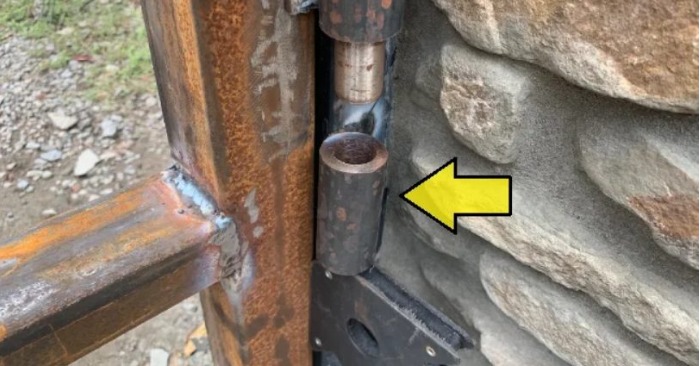
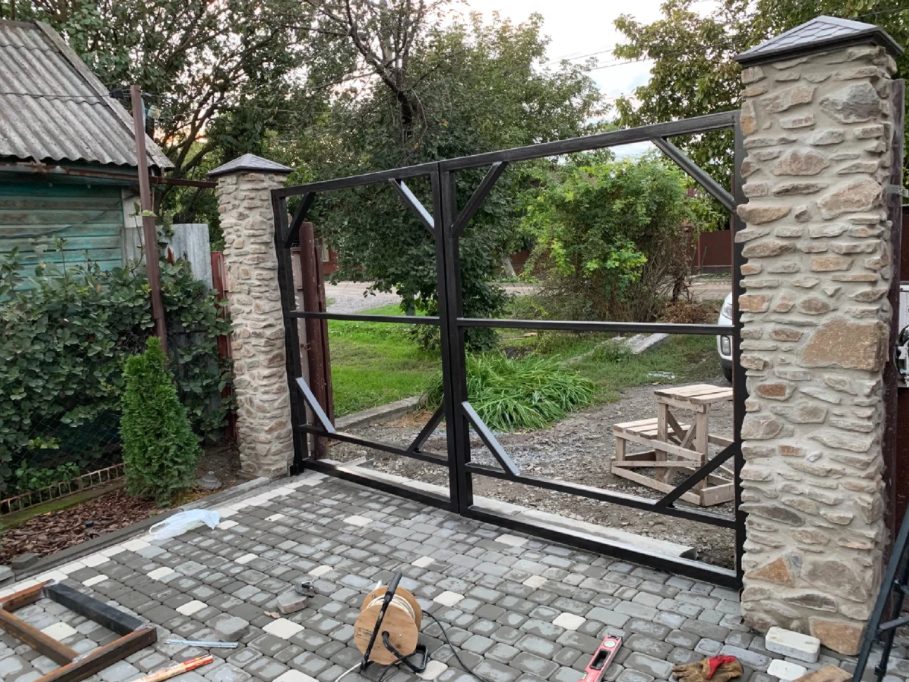
A man recently finished welding a metal gate frame by himself and was getting ready to install the outer panels when an experienced craftsman noticed a serious mistake.
The master looked at the hinges and immediately said:
— Cut them off and turn them around!
At first, the homeowner was confused. The hinges looked completely normal to him. But then the craftsman revealed an important detail that many people never think about when installing gates.
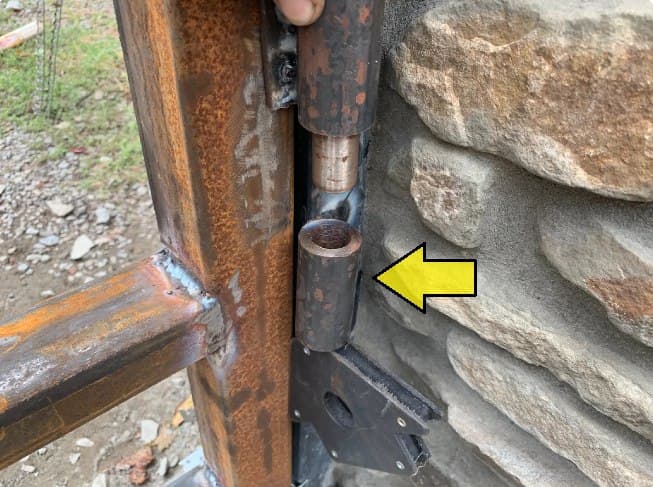
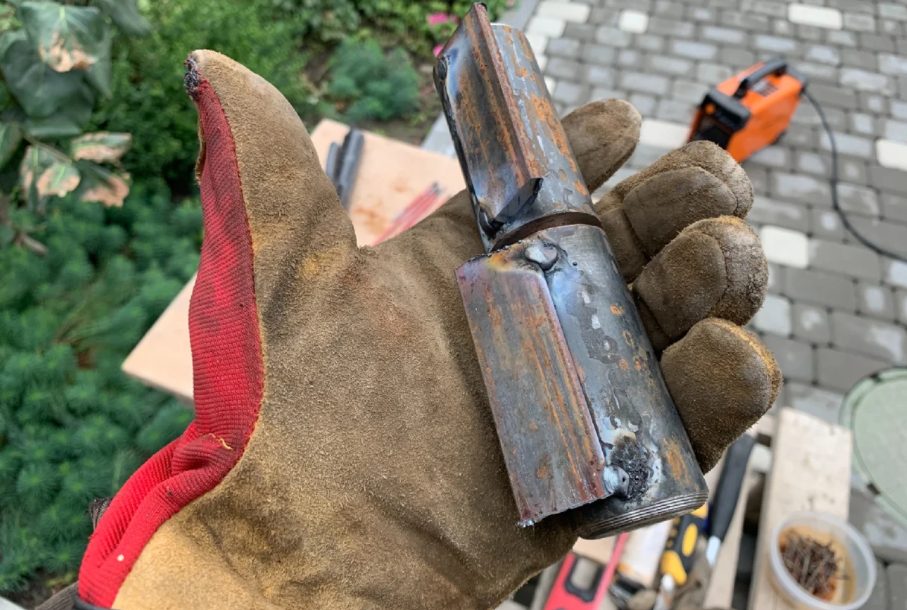
Before mounting the hinges, the master explained that it’s important to weld a small metal extension or “tail” onto them for better support. He also pointed out that hinges should not only be level — they must all line up perfectly on the same axis.
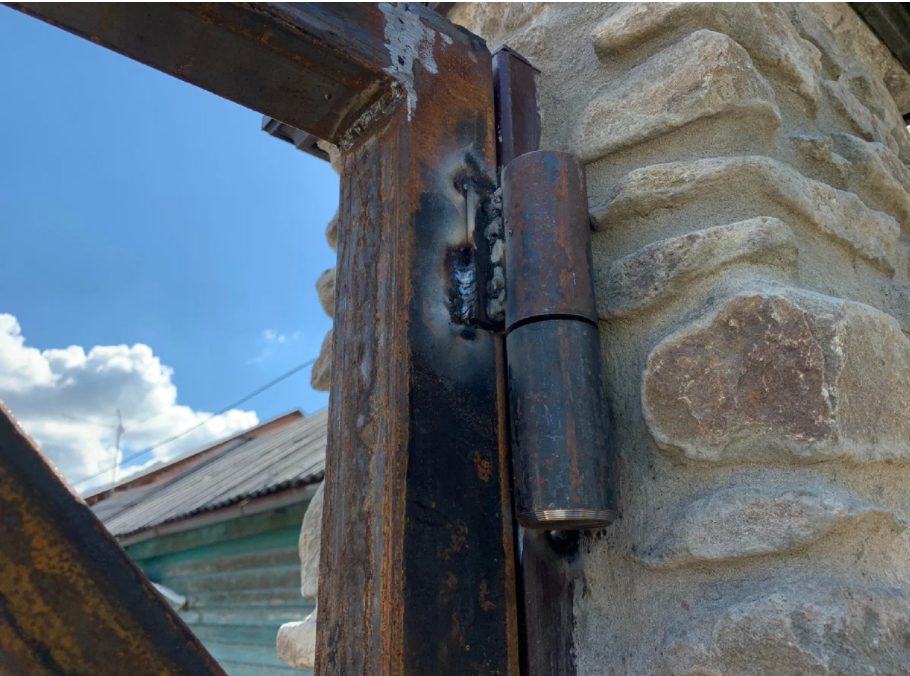
Professionals usually use a straight edge or ruler during installation. The hinges are first tack-welded into place, then a long straight tool is pressed against both hinge bodies to ensure perfect alignment.
But the biggest surprise came when the craftsman explained that gate hinges must always be installed with the “cup” section facing downward.
That means the upper hinge piece (“male” part) is welded on top, while the lower “female” cup-shaped section stays at the bottom.
The homeowner admitted he felt embarrassed because he had never heard this before. He even remembered helping his grandfather install gates as a child — and realizing they had mounted the hinges incorrectly back then too.
Naturally, he asked the craftsman one simple question:
— Why does the cup have to stay at the bottom?
The explanation turned out to be incredibly logical.
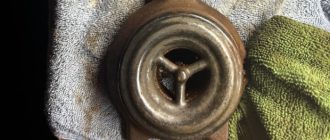
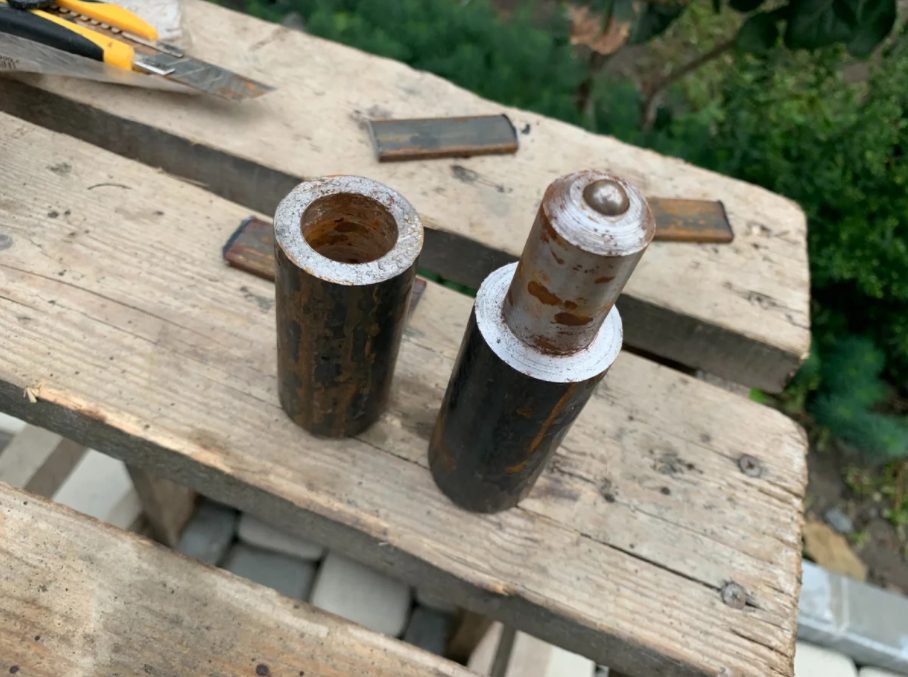
Inside most heavy-duty gate hinges is a small metal ball bearing. That tiny ball prevents friction between the moving parts and helps the gate open smoothly.
However, the bearing must constantly stay lubricated.
The cylindrical “cup” section is specifically designed to hold grease or oil inside the hinge. If the hinge is installed upside down, the lubricant slowly leaks out over time.
Once the grease disappears, the metal ball begins wearing down quickly. The hinges start squeaking, grinding, and eventually the gate may begin sticking or sagging.
A tiny installation detail — but one that can completely affect how long the entire gate lasts.