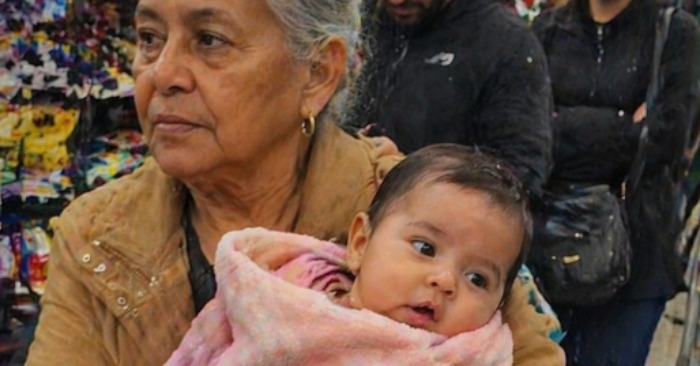
At 72, I never thought I’d be raising a baby again, but life has a way of surprising you when you least expect it.
Six months ago, as I was preparing breakfast in the kitchen, my daughter Sarah packed a suitcase. I heard her footsteps on the stairs, and when she entered holding her two-week-old daughter, I thought she was just going out for a quick walk with the baby.
But instead, she carefully placed Lily in her bassinet, kissed her forehead, and softly said, “I need some time to clear my head, Mom.”
“Alright, sweetheart,” I responded, stirring the oatmeal. “Don’t stay out too long. It’s chilly out.”
But she never returned.
The following morning, I found a folded note on the counter next to the coffeepot. It was brief, written hastily in Sarah’s handwriting: “Mom, I can’t do this. Don’t try to find me.”
I called her phone, first 20 times, then 50. Eventually, I lost track.
Every call went straight to voicemail. I filed a missing person report, but the police informed me that since Sarah was an adult and had left voluntarily, there was little they could do unless there was evidence of foul play.
I felt like I was banging my head against a wall.
I contacted the baby’s father, a man Sarah had briefly dated. When he finally answered, his voice was cold and detached.
“Look, I told Sarah from the start I wasn’t ready for this,” he said, unemotionally.
“But you have a daughter!” I cried. “She needs you!”
“You’re the grandmother,” he replied dismissively. “Handle it.”
And then the line went dead. When I tried calling again, I discovered he’d blocked me.
Now, here I am, at 3 a.m., rocking a baby in my arms and counting pennies at noon. Retirement, which I imagined would be filled with leisurely book clubs and garden parties, was replaced with late-night feedings and scouring for baby formula deals.
I live off my late husband’s pension and what’s left of our savings, which dwindles a little more each month.
Some nights, I heat up canned soup for dinner, telling myself that Lily doesn’t care about the difference between store-brand and name-brand formula. She’s healthy, and that’s what matters.
A few weeks ago, things felt overwhelming. My back ached from carrying Lily, the kitchen sink was leaking again, and I couldn’t afford to fix it. The washing machine was making a terrible noise, and I knew it was only a matter of time before it broke.
We ran out of diapers and baby food, so I bundled Lily into her carrier, pulled on my worn winter coat, and headed to the grocery store.
The cold November air hit us as we stepped outside. I tightened my coat around us both and whispered, “We’ll be quick, sweetheart. Grandma promises.”
The store was a madhouse. The loud holiday music echoed through the aisles, people were bickering over the last discounted turkeys, and shopping carts clogged every path. I hurried to the baby food section, feeling out of place in a world that seemed to be celebrating while I was just trying to make it through the week. The upbeat jingles only made the anxiety in my stomach grow tighter.
I picked up a few jars of baby food, a small pack of diapers—too small, but it was all I could afford—and a modest piece of turkey breast. I wanted to give us a little something special for Thanksgiving, even if it was just the two of us sitting at my small kitchen table.
When I reached the register, I managed a tired smile at the cashier, who looked like he wanted to be anywhere but here. I swiped my card, hoping it would go through.
Beep.
Declined.
A wave of panic rushed over me. This had never happened before.
Maybe the pension deposit hadn’t cleared yet, I thought. Maybe I miscalculated after paying the electric bill.
I tried again, my hands trembling.
Beep.
The same result.
“Could you try again?” I asked the cashier, my voice quivering with uncertainty.
Behind me, I heard a man’s frustrated groan. “Oh, for crying out loud. What is this, some kind of charity line?”
I mumbled an apology, trying to regain my composure, but the tension in my chest only grew. Lily began to fuss in her carrier, her soft whimpers soon escalating into full-blown cries.
I gently rocked her, whispering, “Shh, it’s okay, baby. We’ll figure this out. Grandma will make it work.”
Then, a woman’s voice pierced through the air. “Maybe if you spent less time having kids you can’t afford, you wouldn’t be holding up the line.”
Her companion laughed harshly. “Yeah, seriously. Or at least buy what you can actually pay for. People like this make me sick.”
My face flushed with embarrassment, and I just wanted to disappear. I reached into my purse with trembling hands, pulling out every crumpled bill and coin I could find. I quickly counted it—$8.
“Could you just ring up the baby food?” I asked softly, holding my breath. “Just the baby food, please.”
That’s when a deep, steady voice cut through the tension.
“Ma’am. You—with the baby.”
I froze, bracing myself for more humiliation. I turned slowly, my eyes closed, expecting more cruel words.
But when I saw him, I wasn’t expecting what I found at all.
The man standing behind me was in his mid-thirties, dressed in a long black coat over a dark suit. He looked like someone who belonged in a downtown office building, not in a crowded grocery store next to an elderly woman with a crying baby.
He raised both hands slightly, palms out. “Please don’t be upset,” he said, his voice soft and kind.
Before I could say anything, he stepped past me and spoke directly to the cashier.
“Cancel her order, please. Ring everything up again.”
The cashier looked confused but began scanning my items again. The man pulled out his wallet and swiped his card before I could even comprehend what was happening.
Beep. Approved.
The store seemed to go quiet for a moment, and then murmurs began to ripple through the line.
A man from the back scoffed. “What, you gonna pay for all of us now, hero? Want a medal?”
Someone else sneered. “Yeah, maybe he’s running a charity now.”
The man slowly turned toward them, his face composed but his voice steady and commanding. “You know what’s truly sad?” he said, his eyes scanning the crowd. “You all stood here, watching an elderly woman struggle to pay for baby food. Instead of offering help or keeping quiet, you chose to mock her. You made her feel worthless.” He paused for a moment, letting his words sink in. “If that were your mother standing here, how would you feel?”
Silence filled the air. No one met his gaze. Even the woman who had mocked me looked down at her shoes. The cashier stared at the register screen, avoiding everyone’s eyes.
My face burned, but this time, it wasn’t from shame. It was from shock and overwhelming gratitude.
I didn’t know what to say. Words failed me.
“Thank you,” I whispered, my voice cracking. “Thank you so much. I don’t know how to—”
He smiled gently. “You don’t need to thank me, ma’am. Just take care of your little one. That’s all that matters.”
Lily had stopped crying, as if she could sense the calmness that had settled around us. I gathered my bags with trembling hands, still in disbelief.
As he finished his shopping, I watched him from the window, then caught him before he left.
“Please,” I said, “give me your number or your email. I’ll transfer the money as soon as I can. I think something’s wrong with my card, or maybe the deposit—”
He shook his head firmly. “No need for that. Really, there’s no need.”
His tone softened. “My mother passed away two months ago. You remind me of her.” He paused. “Please don’t offer to pay me back. I have more than enough money. It feels good to do something kind in her memory.”
Tears welled up in my eyes. I hadn’t heard such genuine kindness in years.
He noticed me hesitating and gently said, “Let me at least drive you home.”
I wanted to refuse. I’d been taught never to accept rides from strangers. But my legs were exhausted, and the bus stop was a long walk away.
“I don’t want to bother you,” I murmured. “You’ve already done so much.”
“You’re not bothering me,” he said softly. “Please. Let me help.”
His name was Michael, I learned as we walked to the car. He had a sleek black car, the kind I’d only ever seen in magazines. He carefully loaded my bags into the trunk and even pulled out a child safety seat.
“Let me buckle her in,” he said, reaching for Lily.
I handed her over without hesitation. He secured her in the seat with practiced care.
“You have kids?” I asked, settling into the passenger seat.
“Yeah. Two. My little girl just turned three, and my son is seven. They keep us busy.”
“Must be a good father,” I said, smiling despite my exhaustion.
“I try,” he chuckled. “Some days are better than others.”
As we drove, he asked about Lily and listened intently. I told him everything—about Sarah leaving, about the sleepless nights, about stretching my husband’s pension.
“You must be exhausted,” he said, his voice gentle. “Let me help. I can hire a nanny for you. Someone trustworthy with excellent references.”
I shook my head quickly. “I couldn’t afford that.”
“You wouldn’t have to pay,” he said. “I’ll cover it. In memory of my mom. She would have wanted me to help.”
I refused again, though his kindness was almost too much to bear. “You’ve already done enough. More than enough.”
When we arrived, Michael insisted on carrying the groceries up for me. I thanked him again, certain that I’d never see him again.
But the next afternoon, there was a knock at my door.
It was Michael, with his wife and kids. He was holding a steaming pie dish in one hand.
“We came to invite you and Lily to Thanksgiving dinner tomorrow,” he said, smiling warmly. “And my wife brought something for you.”
His wife handed me a folder with photos and references for several professional nannies.
“We thought you might want to choose someone yourself,” she said kindly.
Tears filled my eyes as I took the folder, overwhelmed by their generosity.
That Thanksgiving was the warmest, most loving holiday I had in years. I’ll never forget what Michael did for me and my granddaughter.
And every Thanksgiving since, I’ve brought a homemade pie to their home, just like the one they brought to mine that first time.