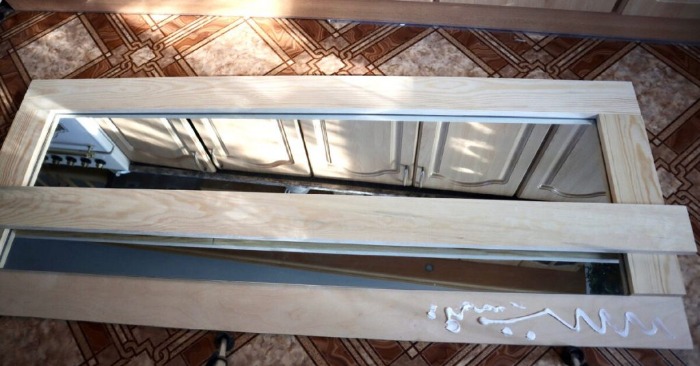
For decades, almost every home had a massive Soviet-era wardrobe. They were sturdy, reliable, and built to last — but eventually modern sliding-door closets replaced them.
Most of the old wardrobes were thrown away, taken to summer cottages, or dismantled for spare wood. Their polished boards often ended up reused as shelves in garages or workshops.
But one part of those old wardrobes frequently survived: the large full-length mirror mounted inside the door.
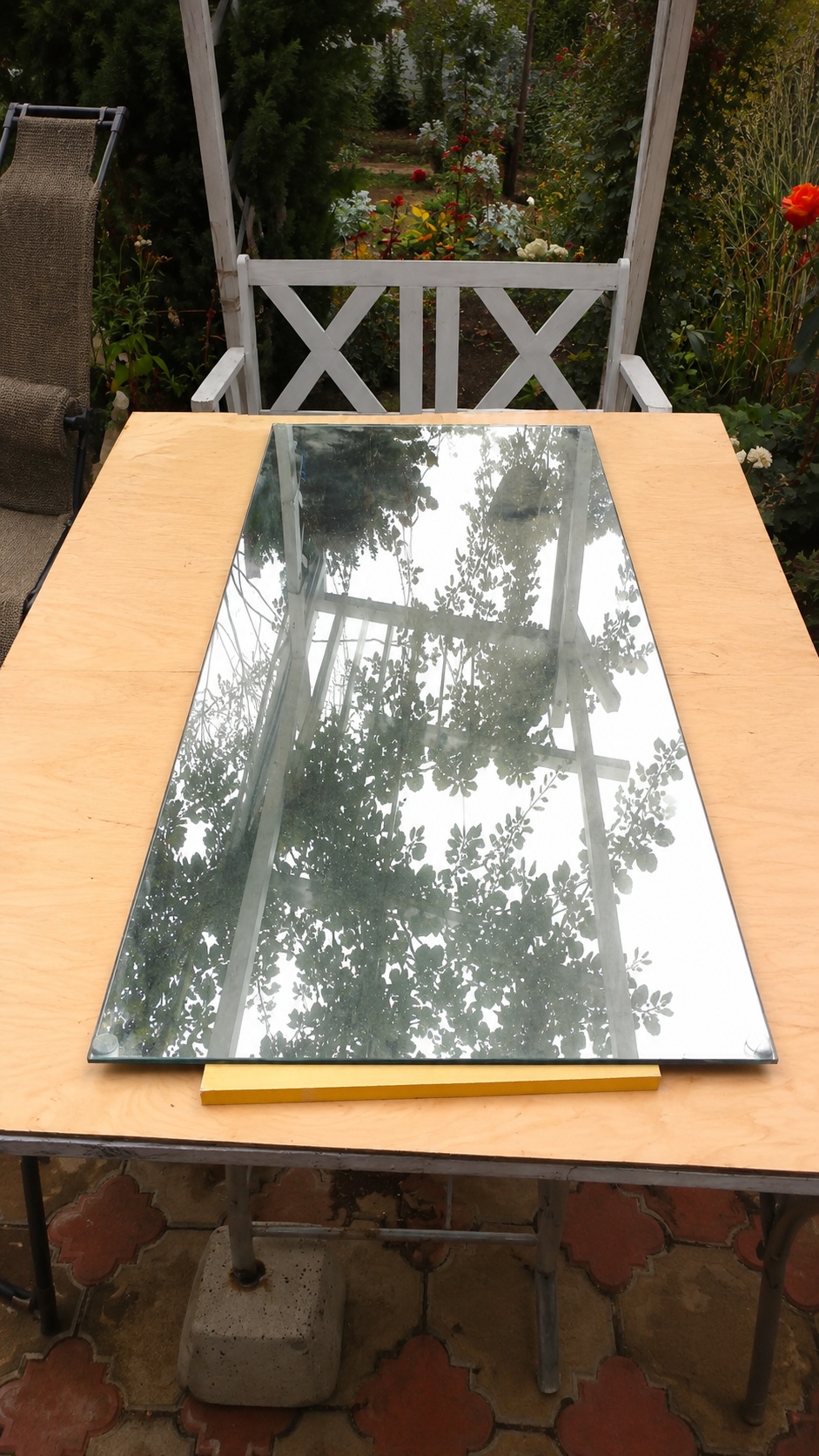
One woman had kept such a mirror sitting unused in her garage for years, slowly collecting dust. Then one day she realized she could finally give it a second life.
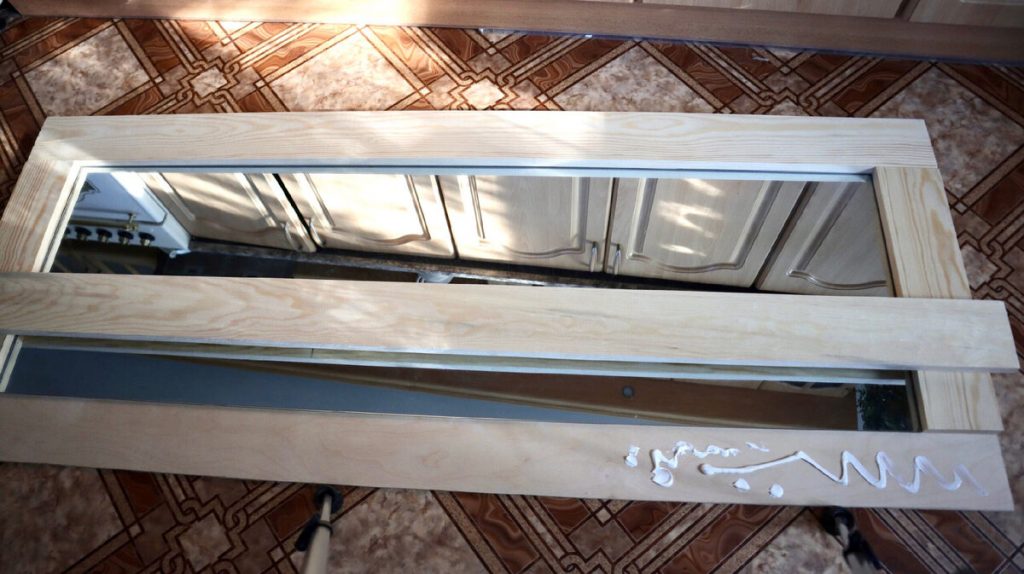
Buying a large decorative mirror in stores can be expensive, and her old mirror was still in perfect condition. The only thing missing was a beautiful frame.
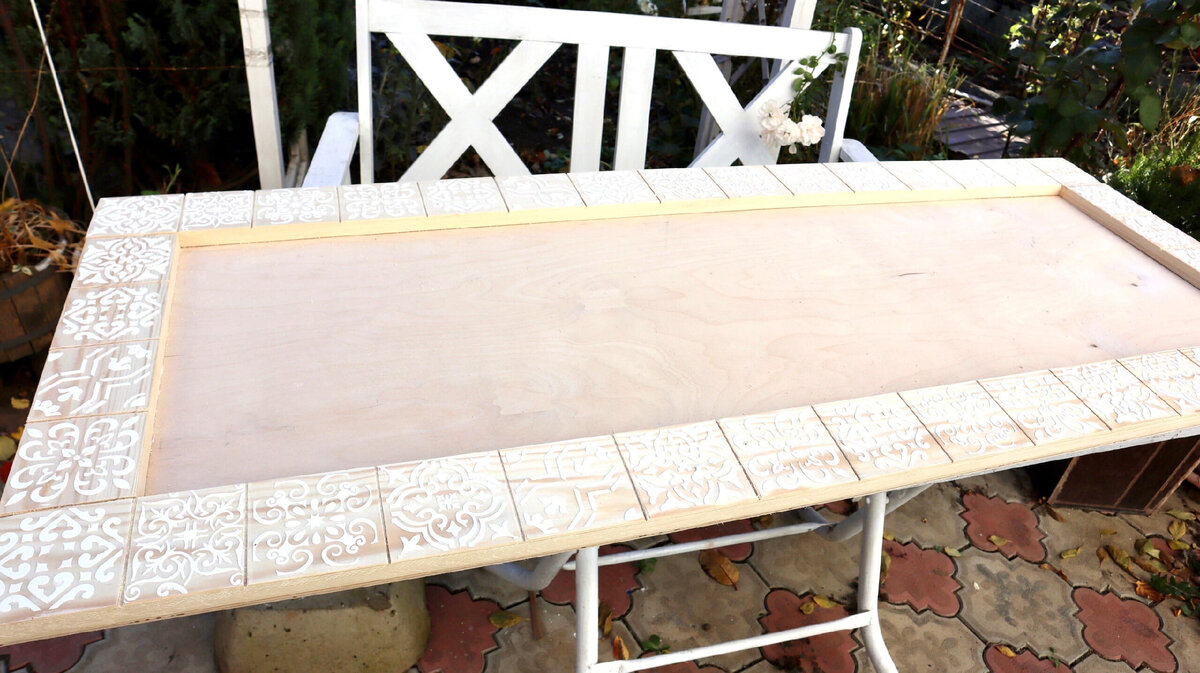
Instead of taking it to a professional workshop for custom molding, she decided to create the entire design herself.
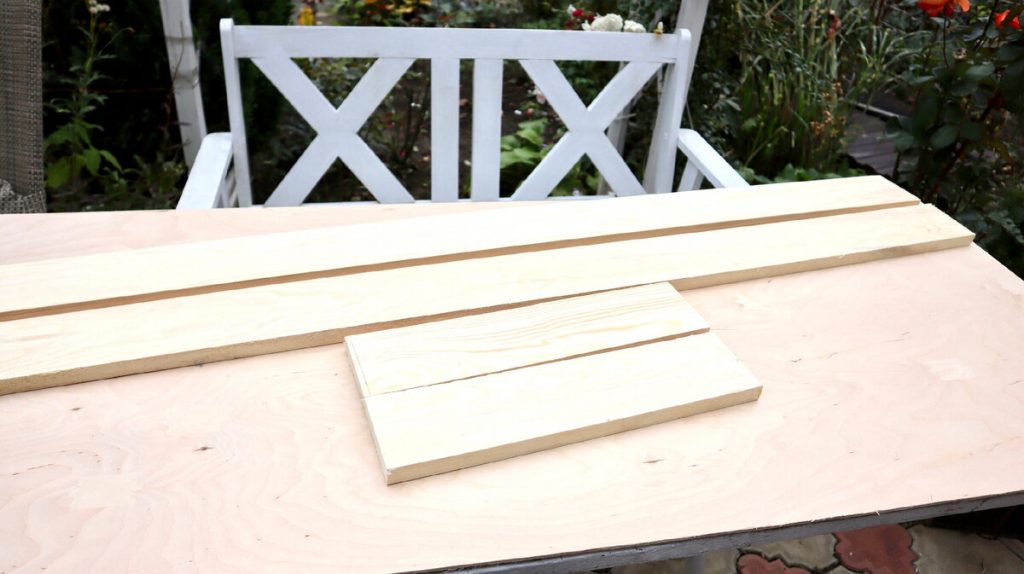
For the project, she used a sheet of plywood slightly larger than the mirror and several wooden boards about 10 centimeters wide to build the frame.
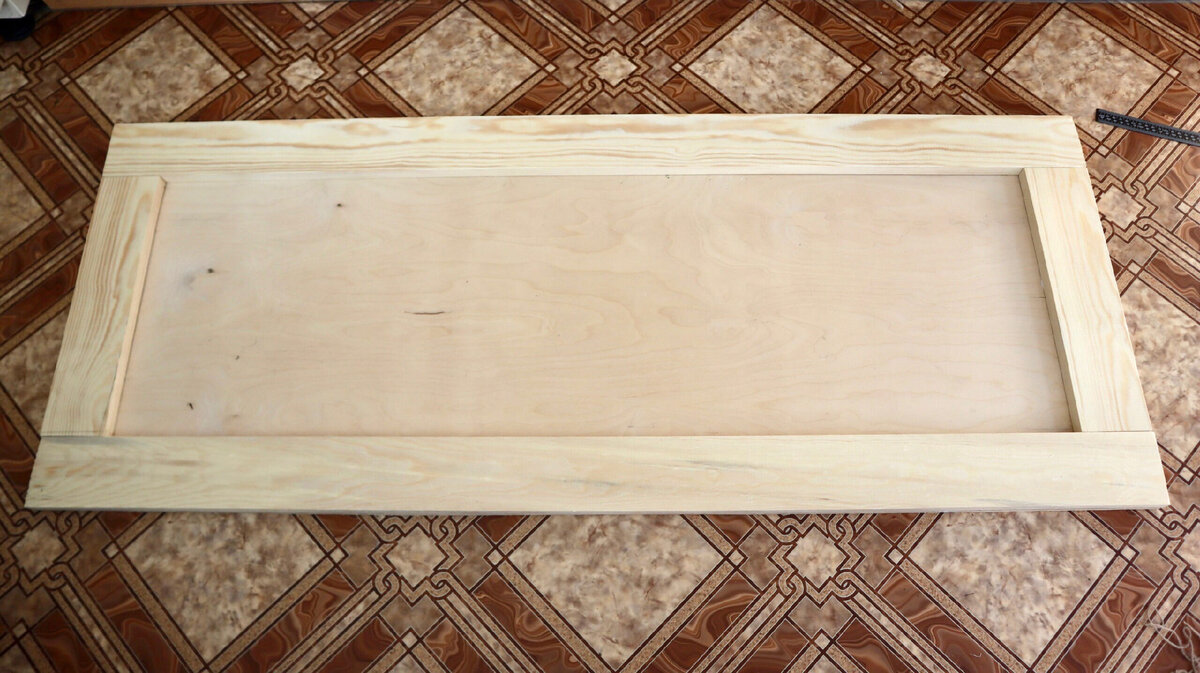
First, she cut the plywood so that the mirror would fit in the center while leaving an even border around the edges.
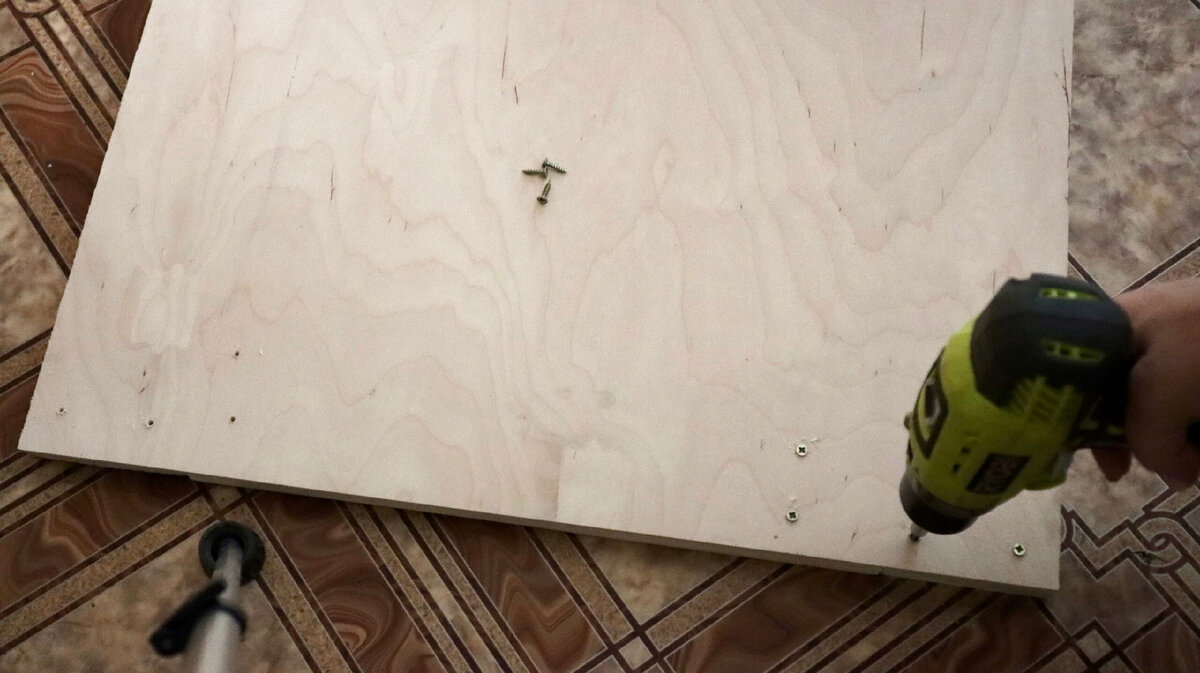
The wooden boards were glued onto the plywood to form the frame, then reinforced from the back with short screws for extra strength.
But the real transformation came next.
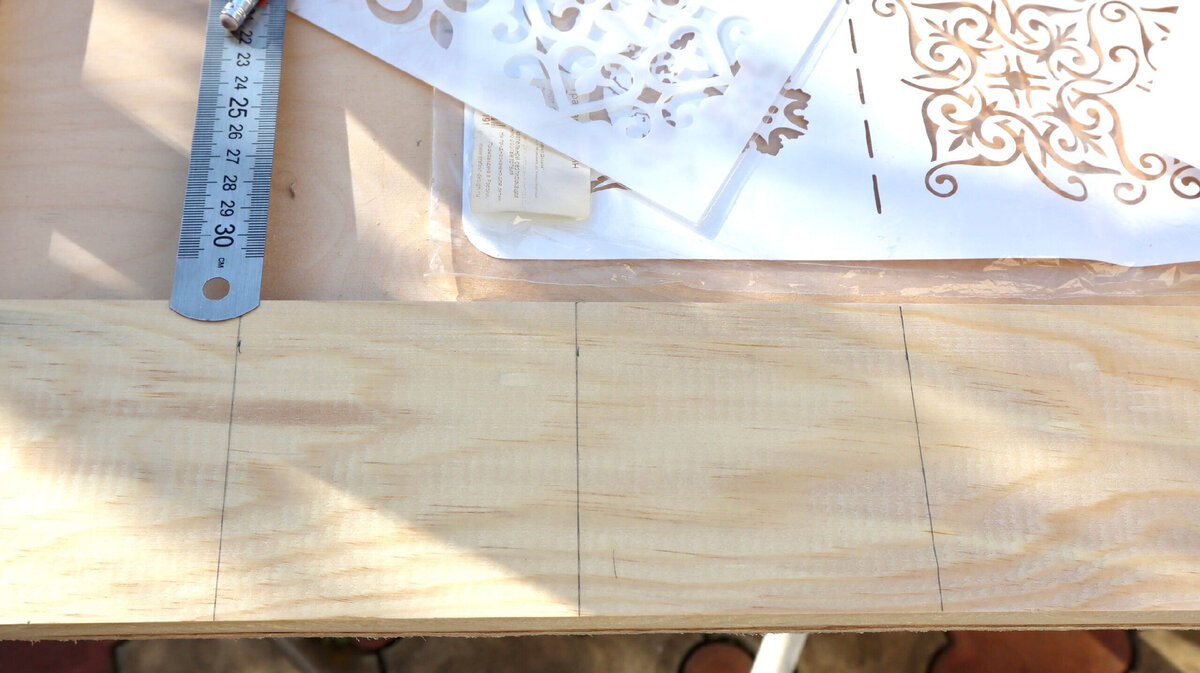
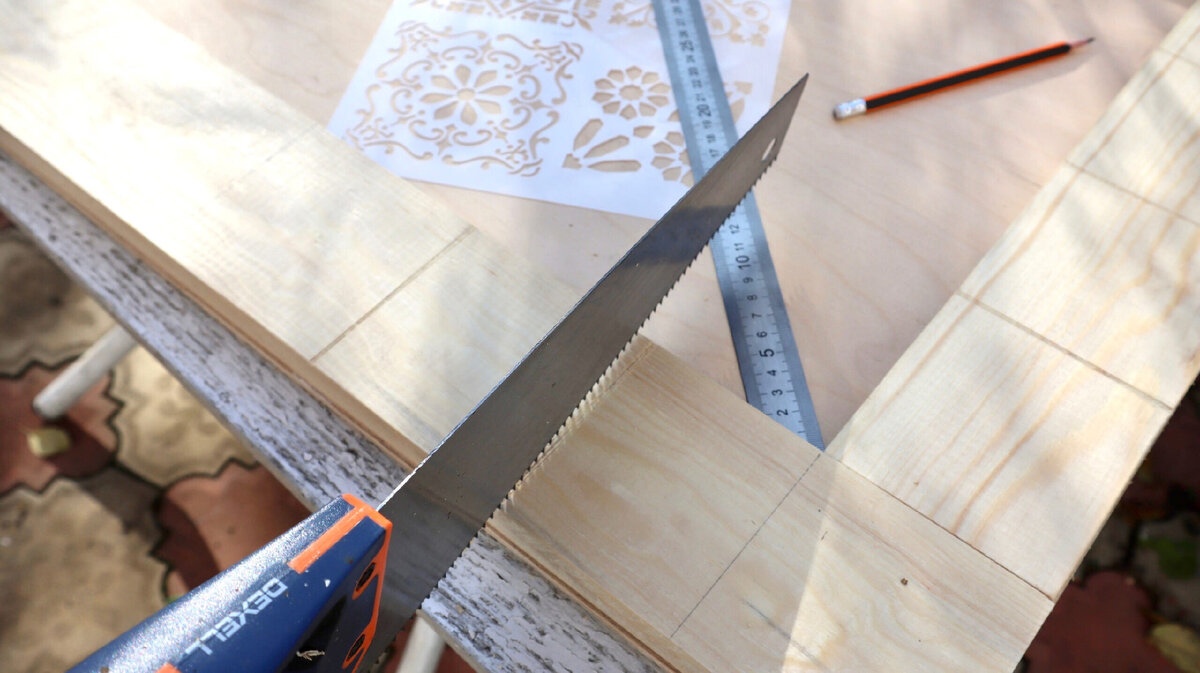
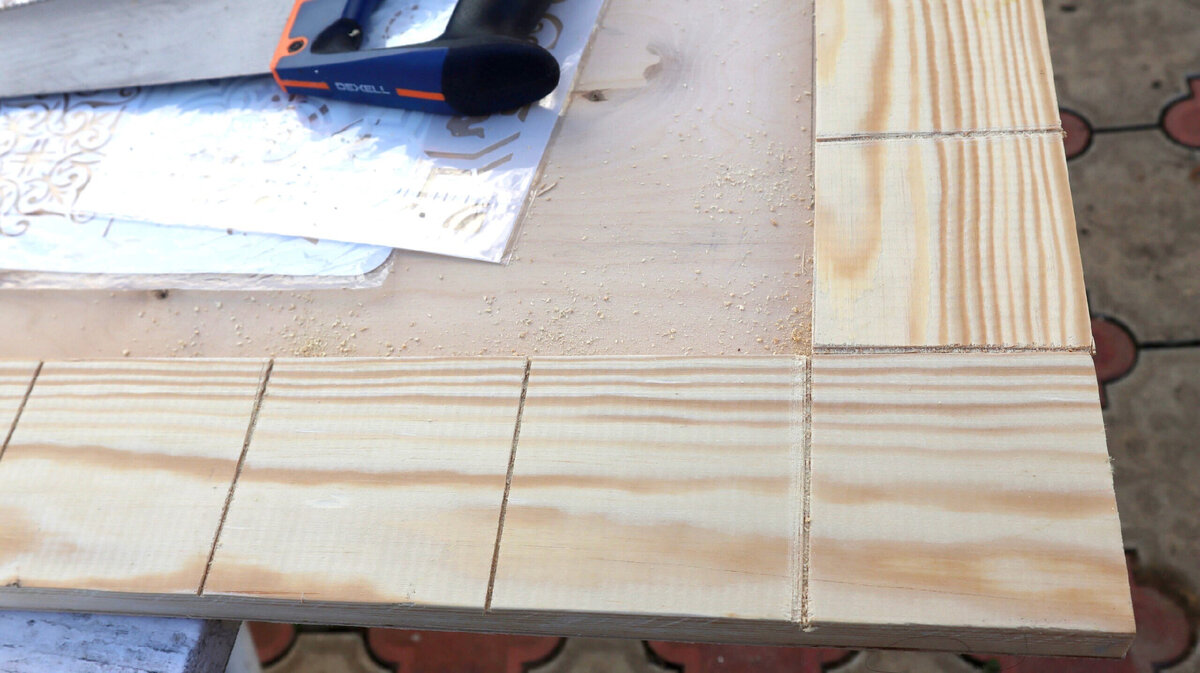
Every 10 centimeters, she marked the wooden frame and carefully cut shallow grooves into it. Visually, the cuts created the illusion that the frame was made from dozens of separate square wooden blocks.
]
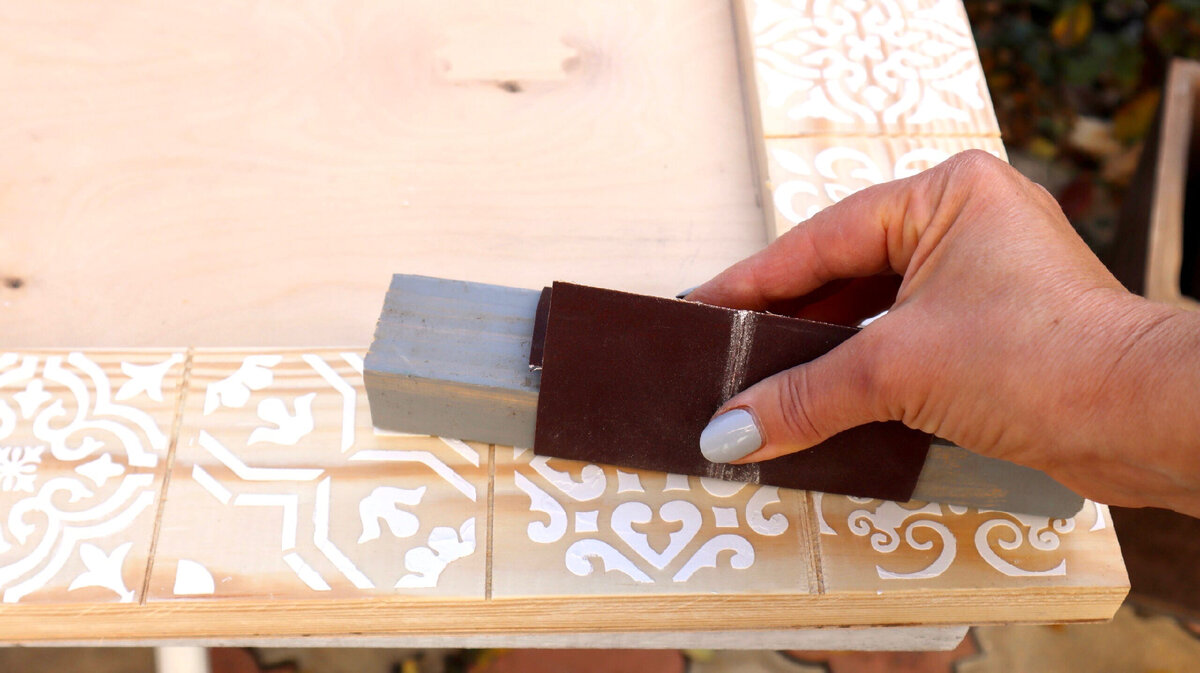
After smoothing the grooves with fine sandpaper, she started decorating each individual section.
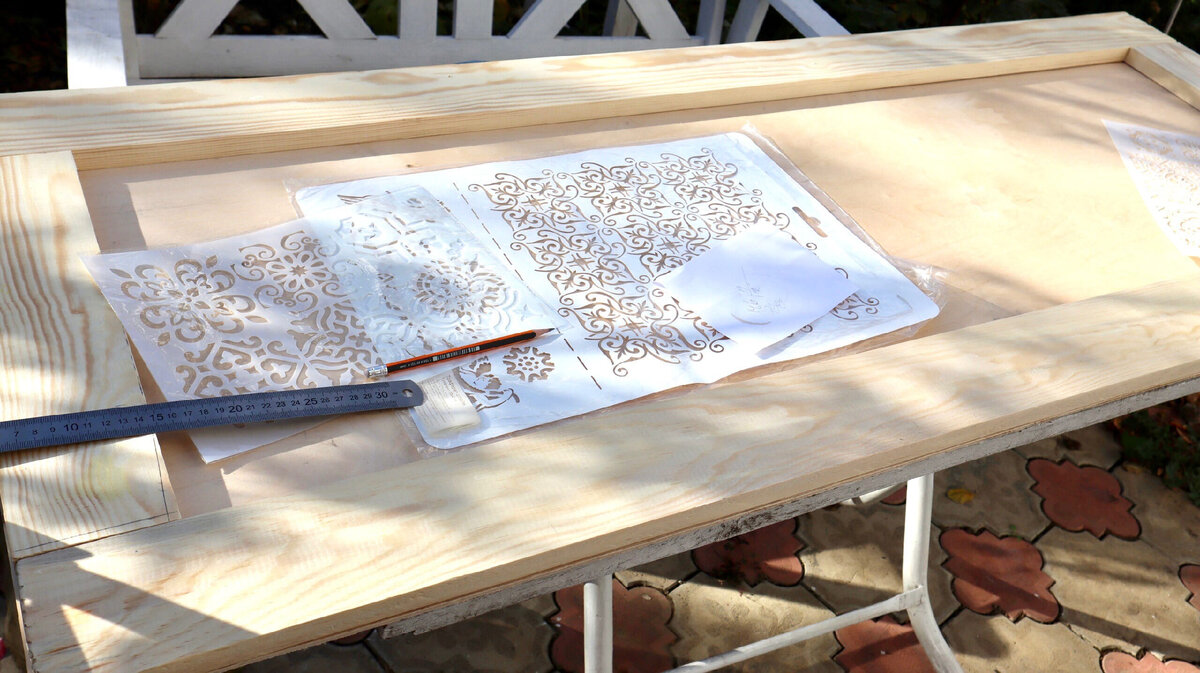
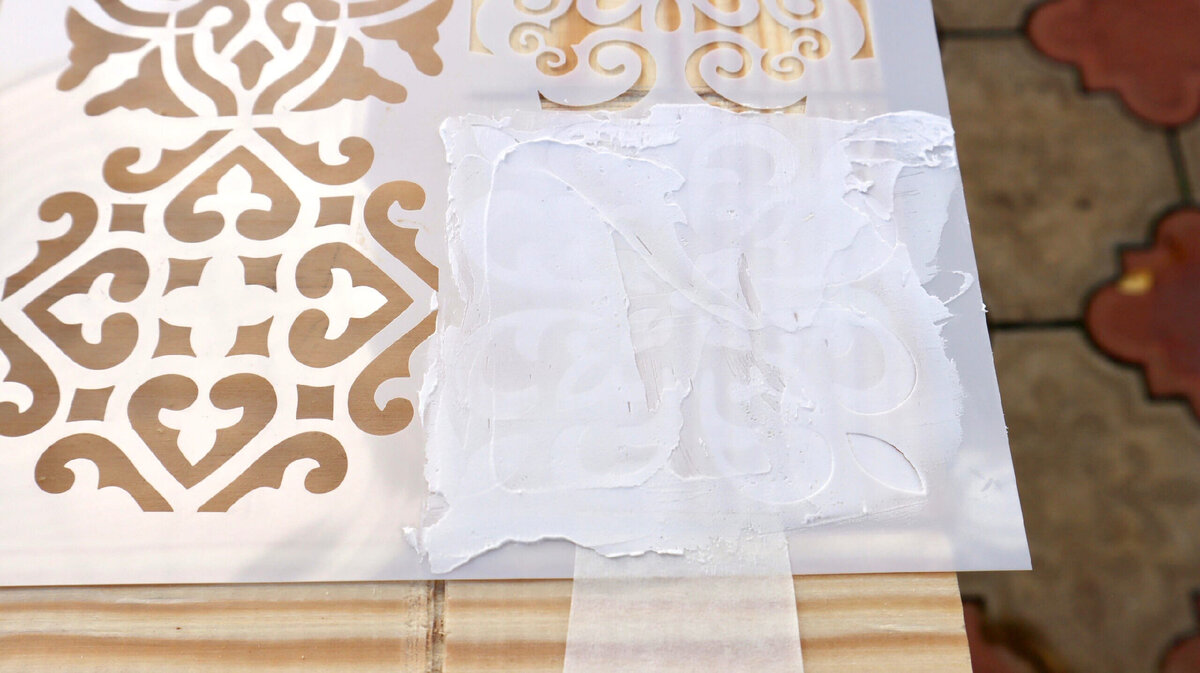
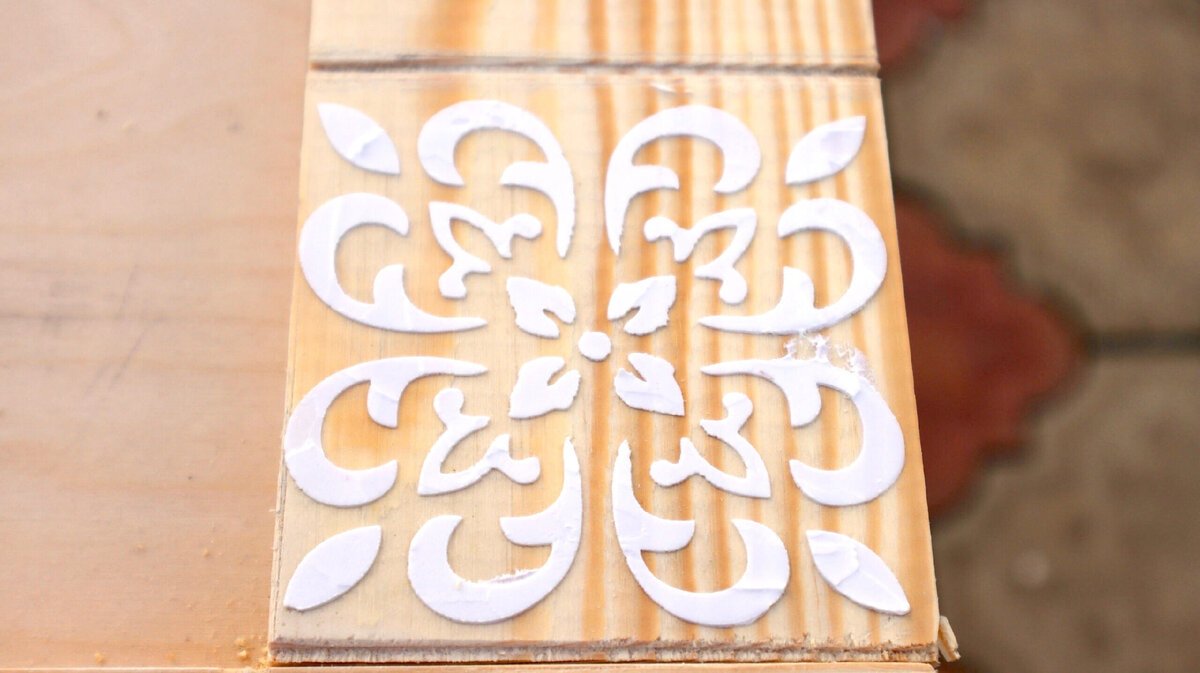
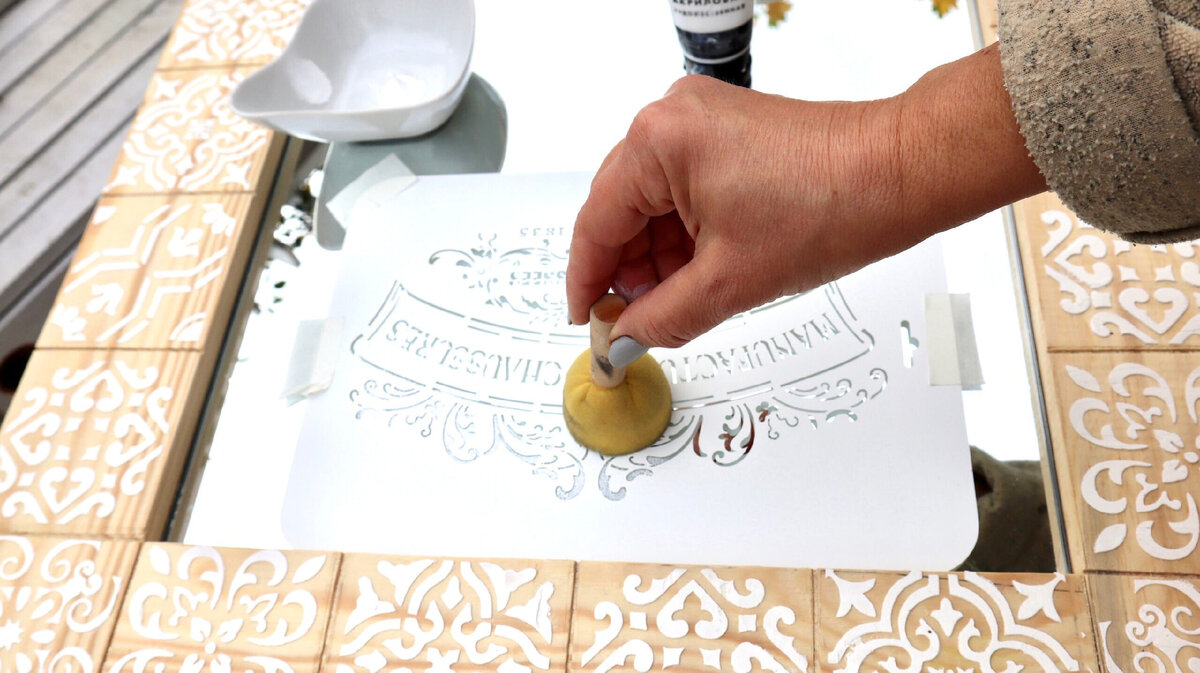
Using stencils and wood filler, she added raised ornamental patterns onto every square. The stencil had to be secured carefully during the process so the designs would not shift.
To avoid damaging fresh details, she worked slowly — decorating every second or third square while allowing the previous ones time to dry.
The process required patience, focus, and several free hours, but the result slowly began looking like something from an expensive interior design store.
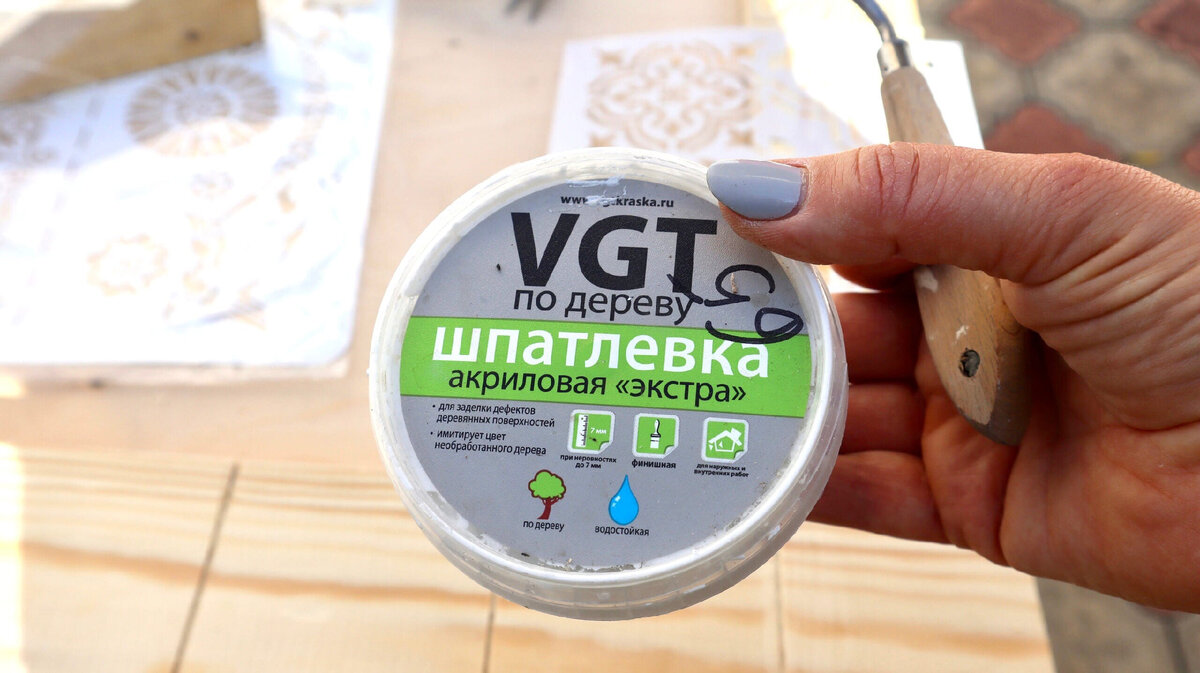
After the wood filler dried overnight, she gently sanded everything smooth.
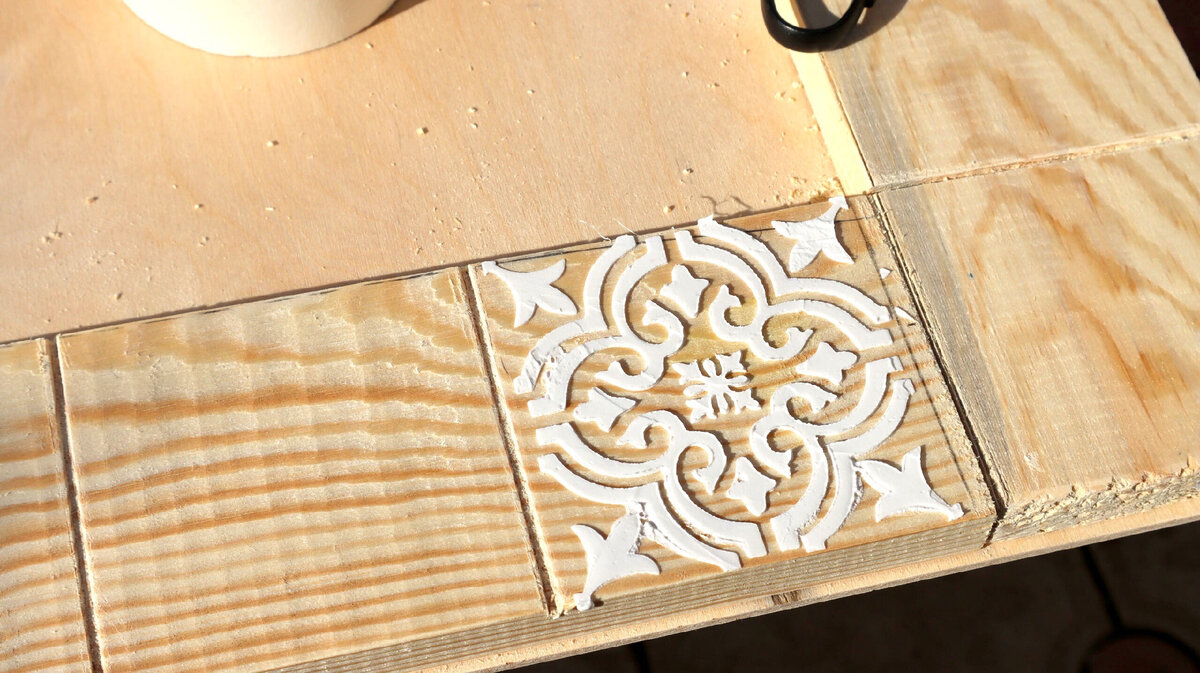
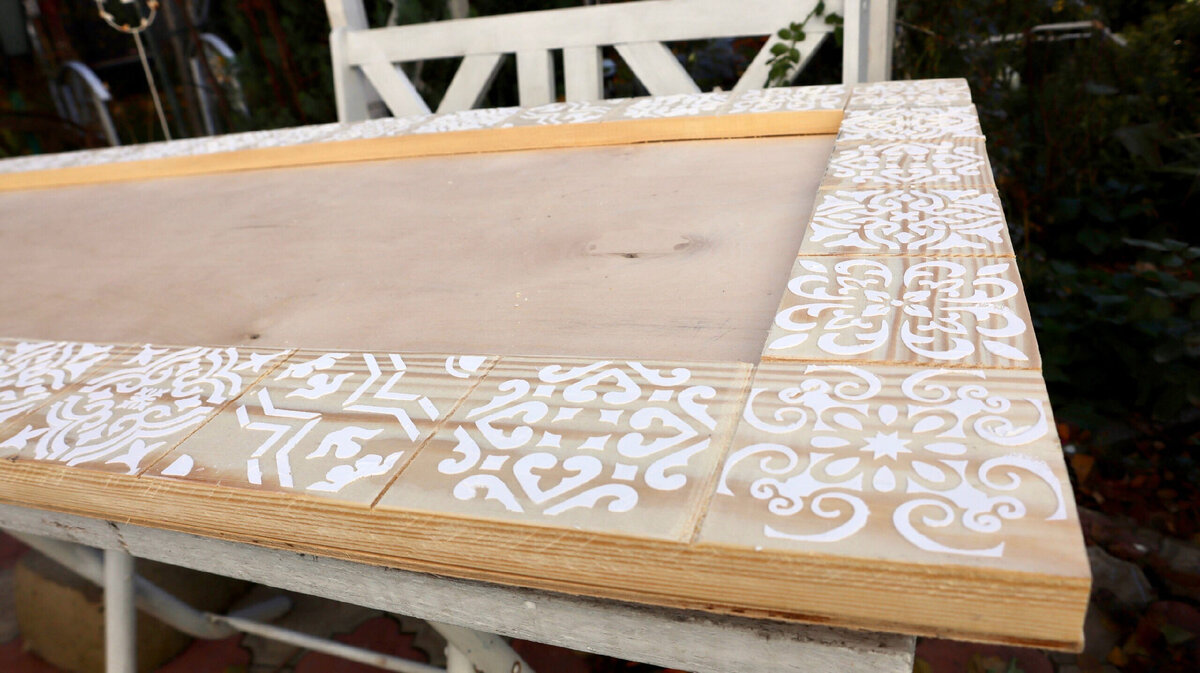
Originally, she planned to paint the entire frame gray with white highlights. But once she saw how beautiful the natural wood looked against the light-colored decorative patterns, she completely changed her mind.
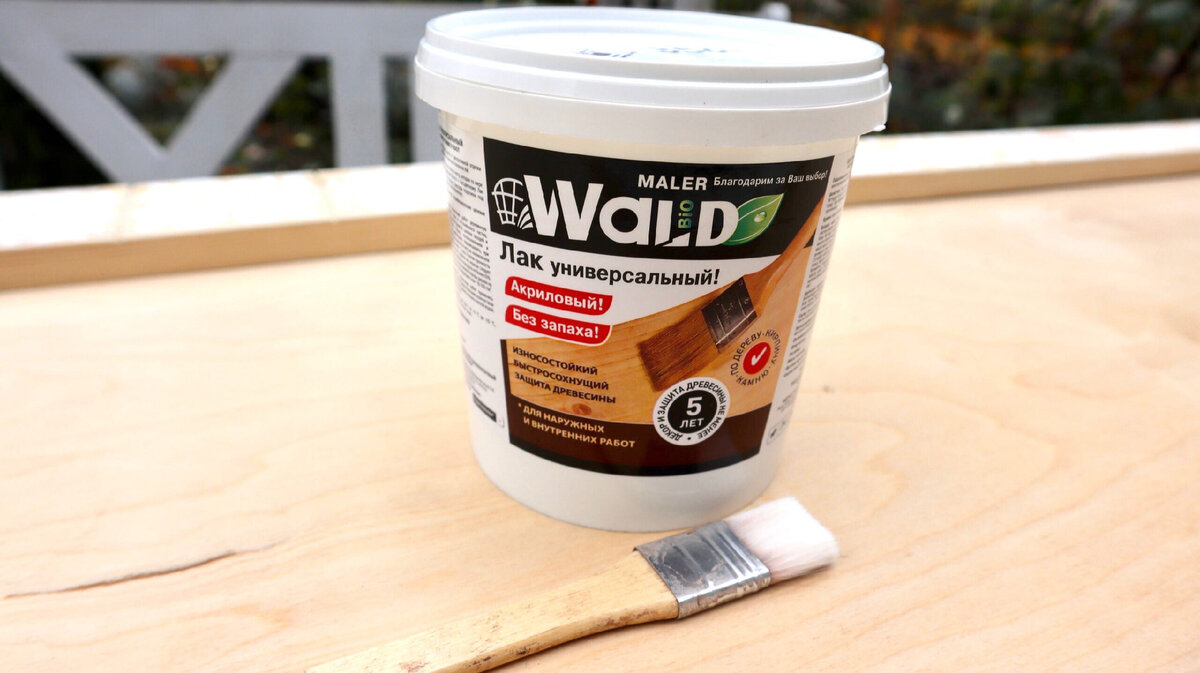
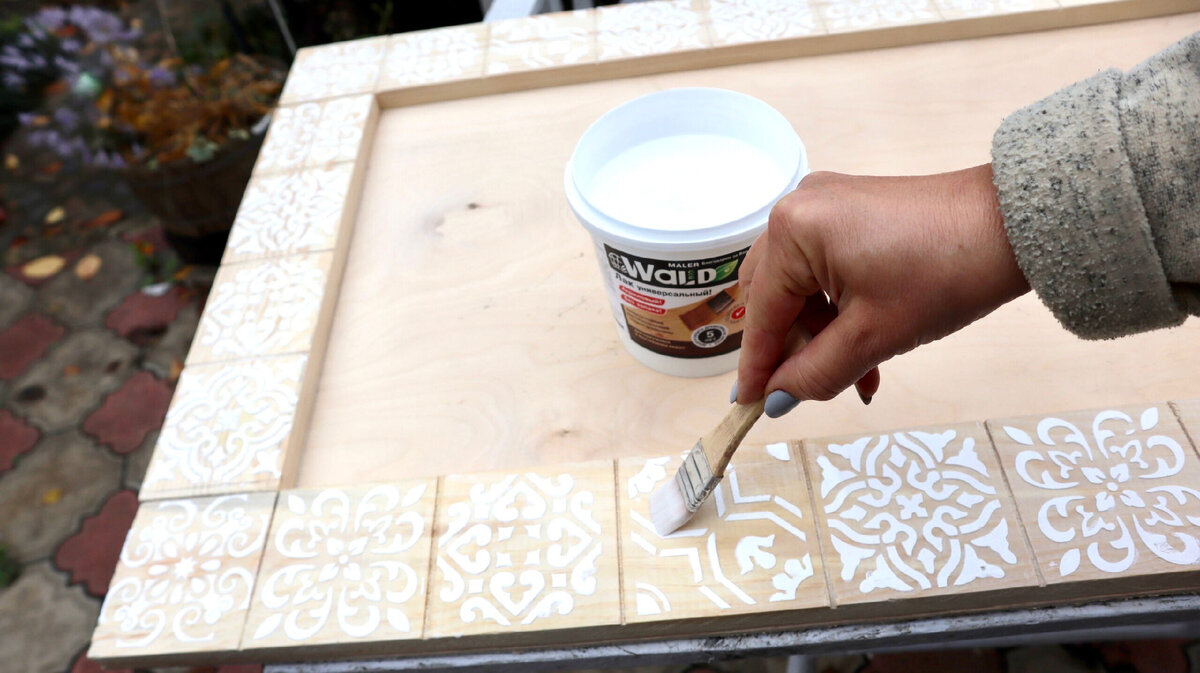
Instead, she left the frame mostly natural and protected everything with several coats of acrylic varnish.
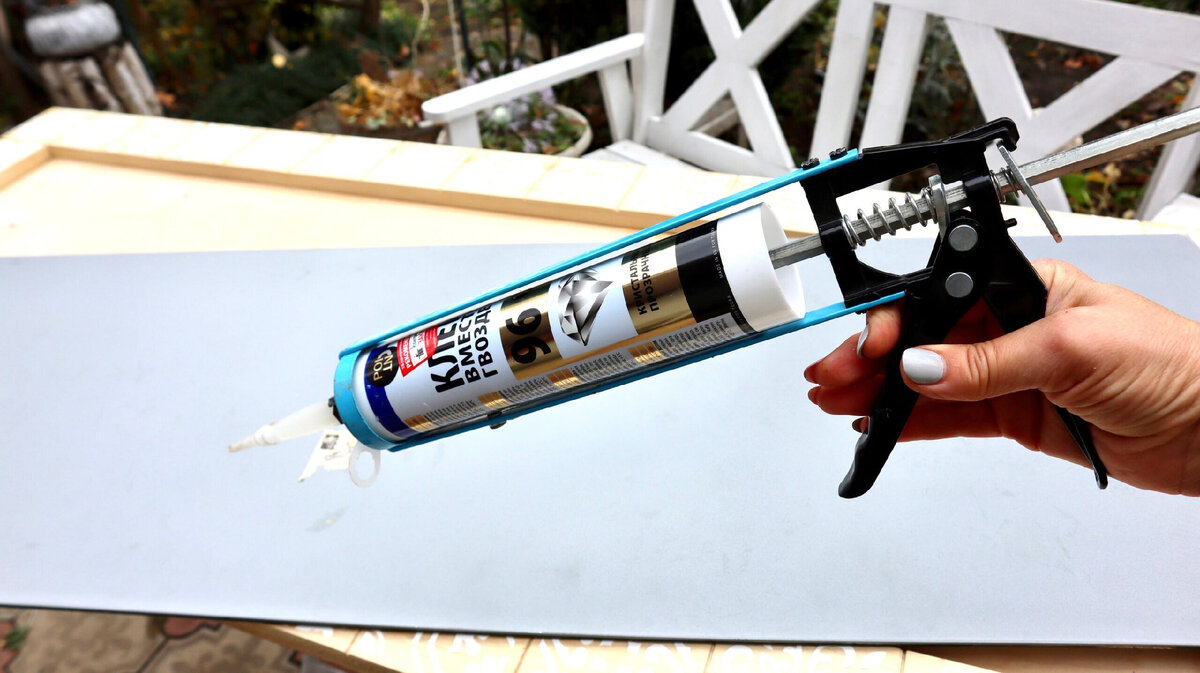
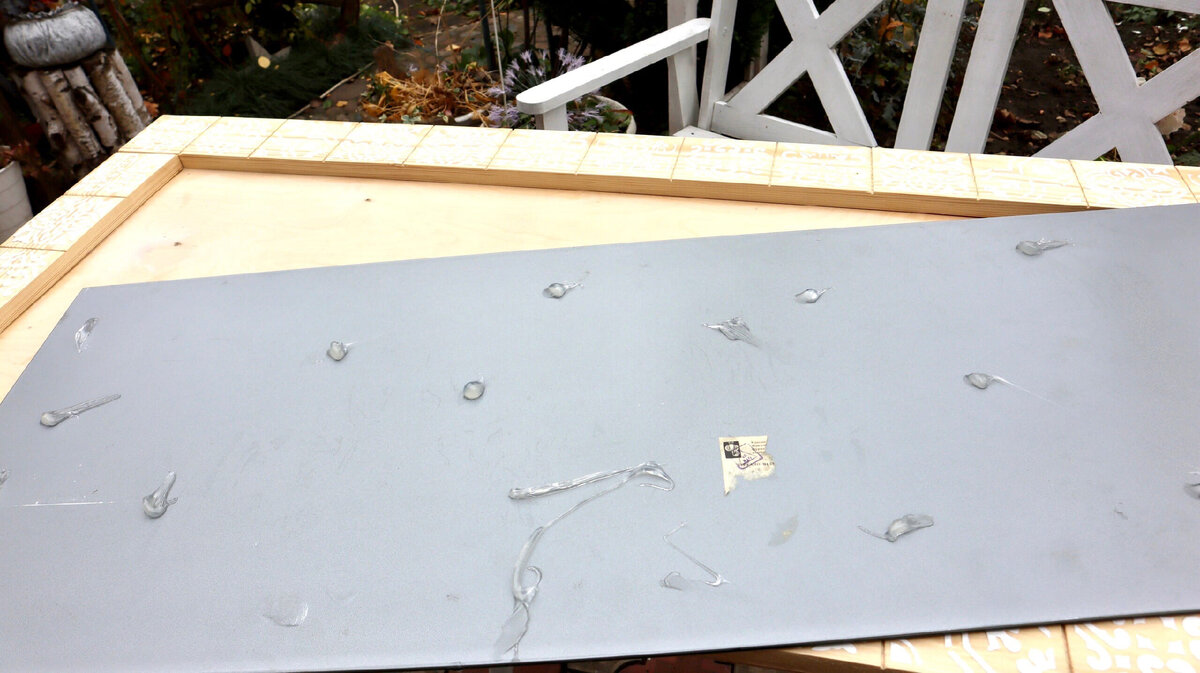
The mirror itself was attached using liquid nails, and she even added decorative stencil details directly onto the glass.
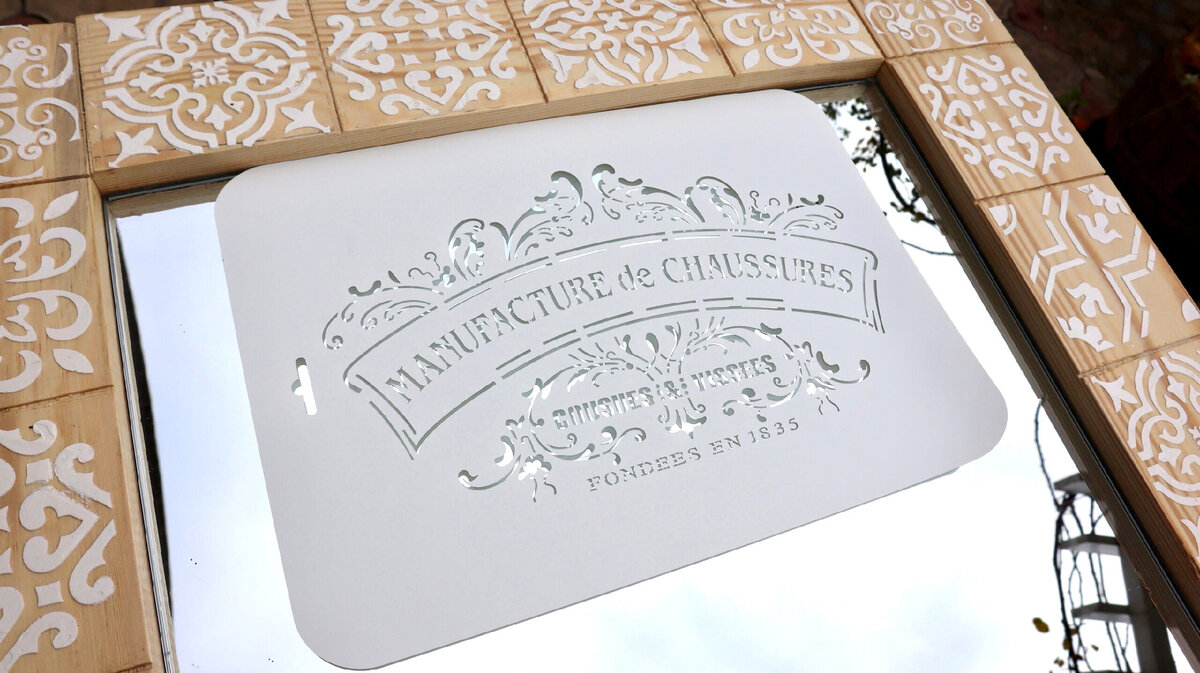
In the end, the forgotten wardrobe mirror no longer looked old-fashioned or outdated.
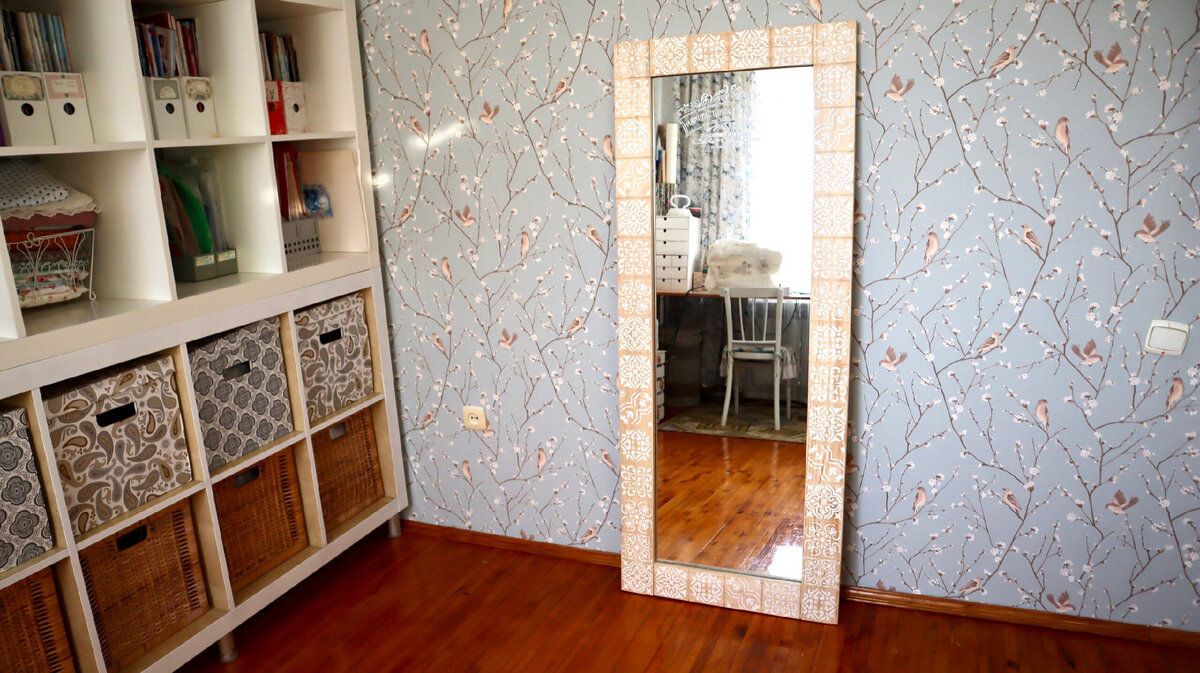
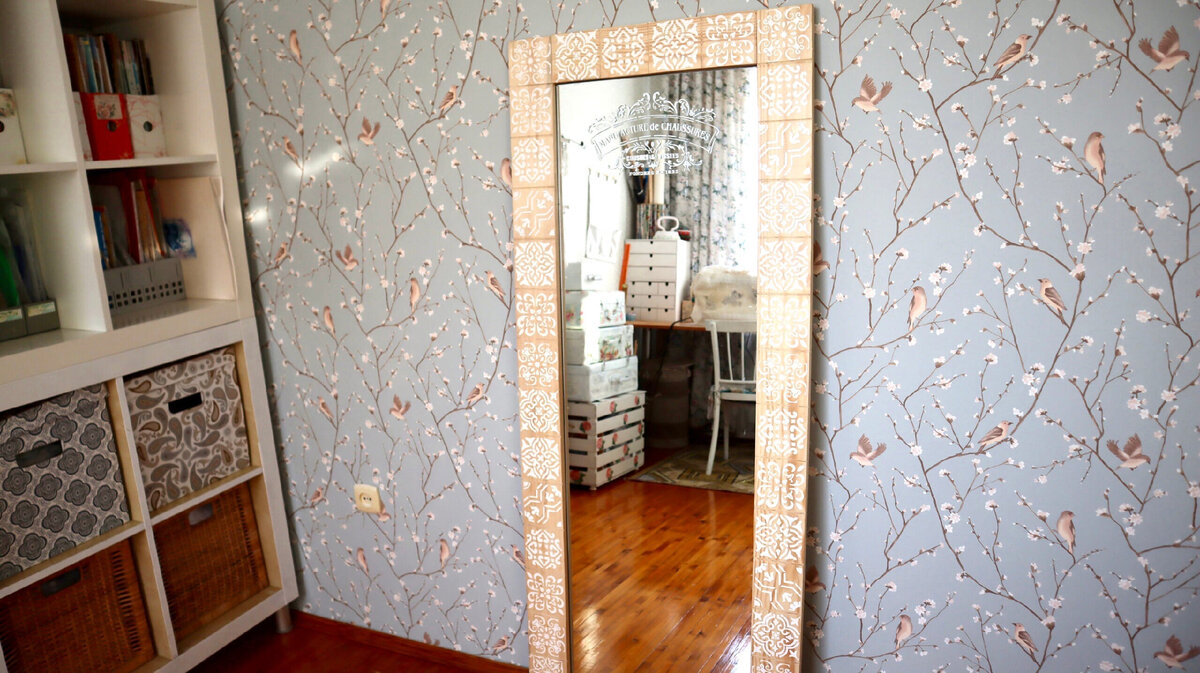
It became an elegant, handcrafted statement piece that looked far more luxurious than anyone expected.