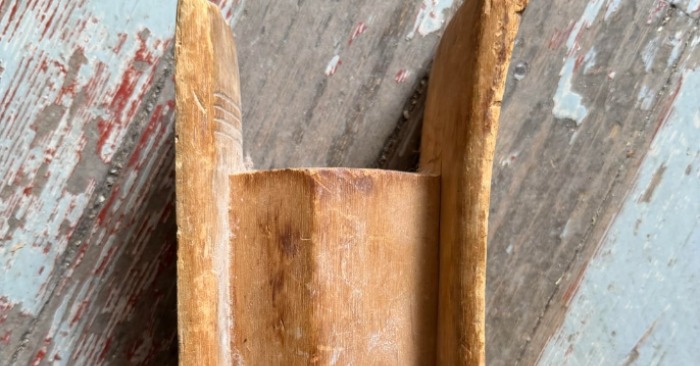
At first glance, it doesn’t seem like much. Just a lightweight wooden object measuring roughly 8 inches long, 5 inches wide, and 4 inches tall. No moving parts. No markings. No obvious hardware. Found inside the home of an elderly artist, it looks almost too simple to identify.
Yet that simplicity is exactly what makes it so intriguing.
The unusual piece consists of two flat wooden ends connected by a curved central section, creating a shape that resembles an oversized spool or winding frame. Years of handling have left smooth wear marks along the edges, suggesting it was regularly picked up, carried, or used rather than displayed.
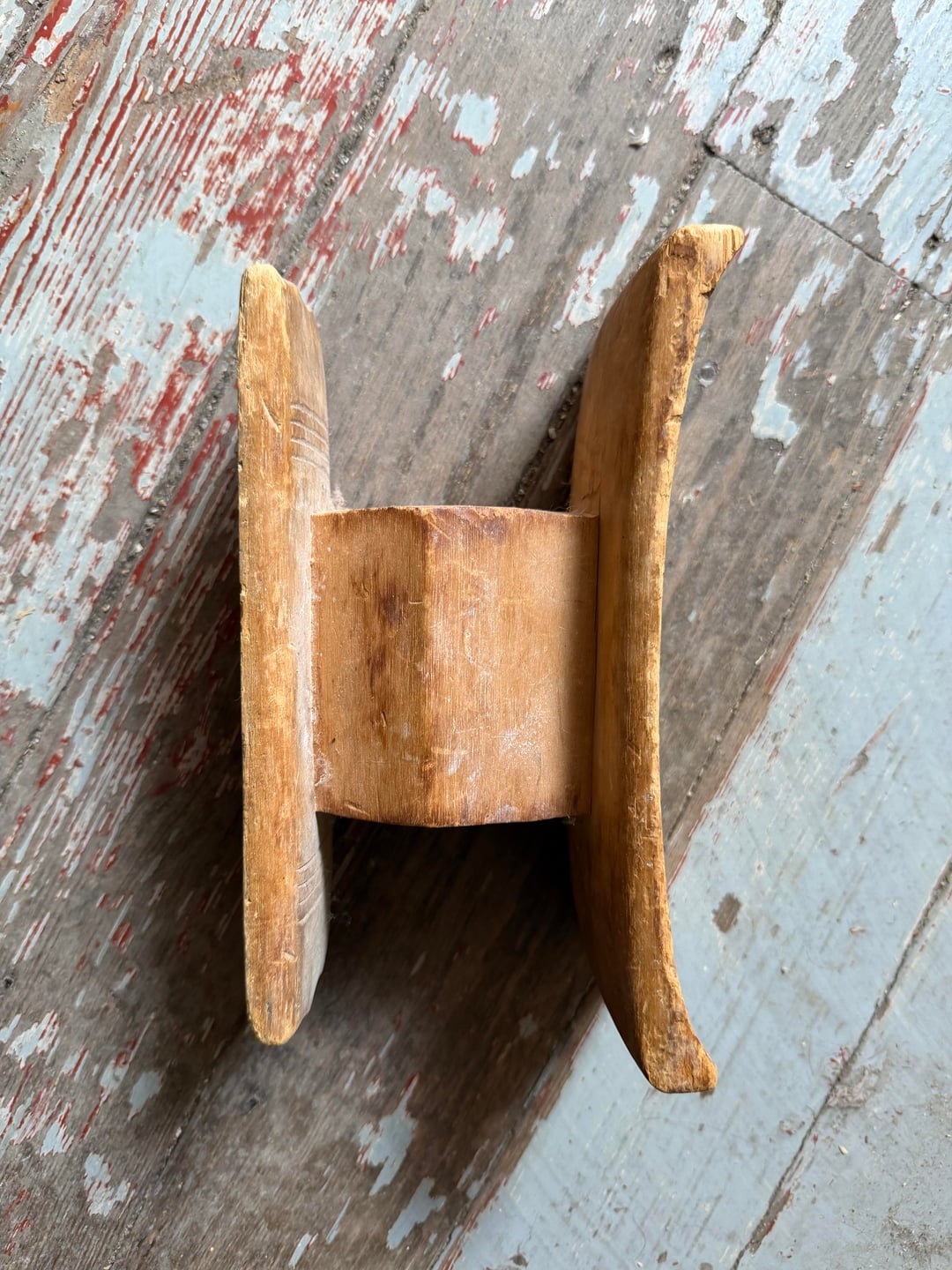
When people encounter objects like this today, their first assumption is often that they are decorative. But many handmade wooden tools from earlier generations were intentionally simple and built for a single practical purpose.
That is especially true in artistic and craft-oriented households.
Before modern plastic organizers and mass-produced supplies became common, artists, weavers, quilters, and crafters frequently relied on handmade wooden devices for storing, winding, stretching, organizing, or transporting materials. Tools that once served obvious functions to their owners can appear completely mysterious decades later.
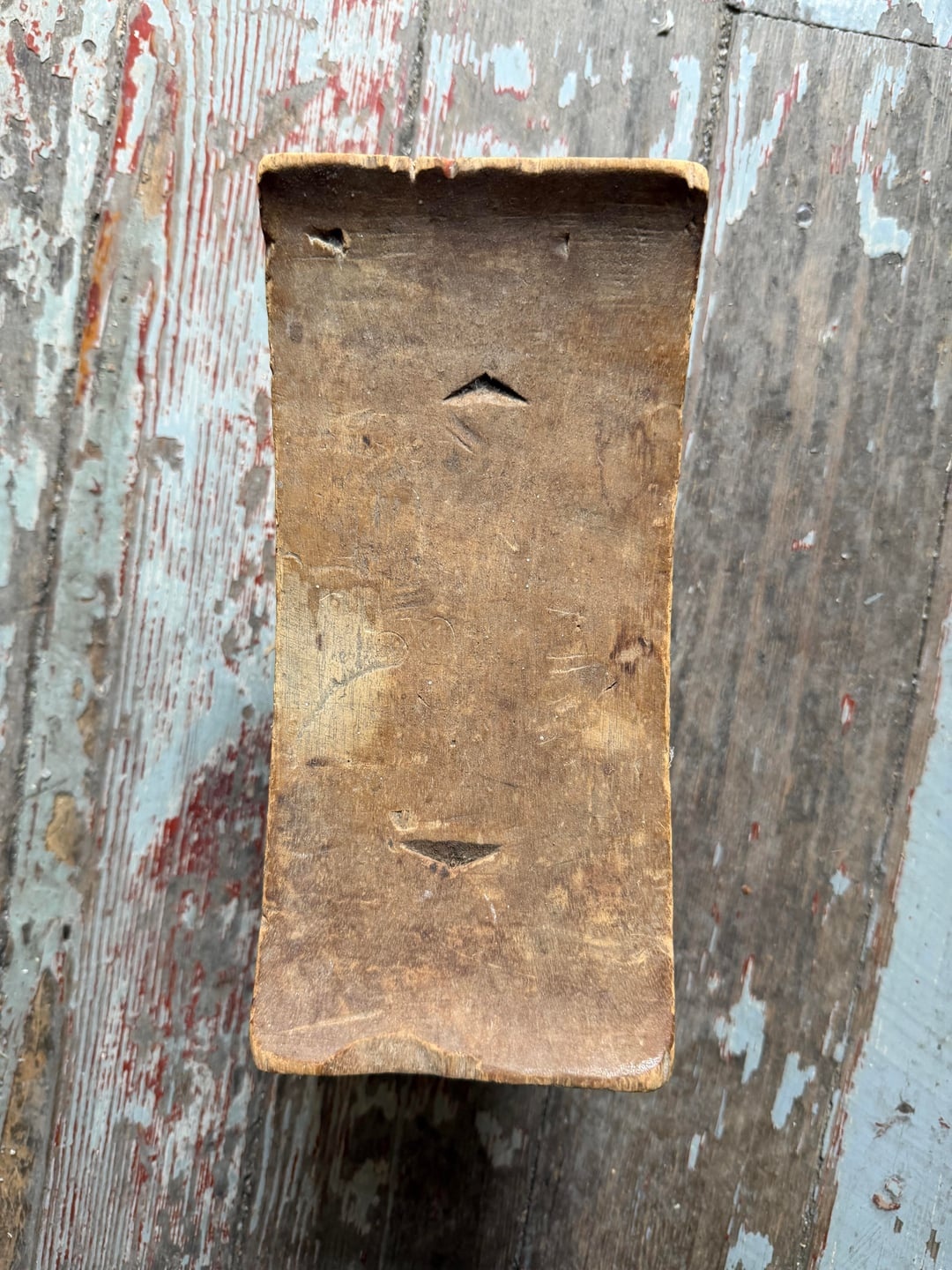
The object’s spool-like construction offers an important clue.
Similar designs have historically been used to hold ribbon, cord, twine, yarn, wire, fabric strips, or other flexible materials. The curved center section would keep materials contained while the wider ends prevented them from slipping off during storage.
Its lightweight wood construction also suggests it may have been intended for repeated handling rather than heavy-duty work.
The fact that it was found in an artist’s home makes the mystery even more fascinating. Artists often repurpose everyday objects, create custom tools, or modify existing equipment for highly specialized tasks. What appears unusual today may have been an essential part of someone’s creative process for many years.
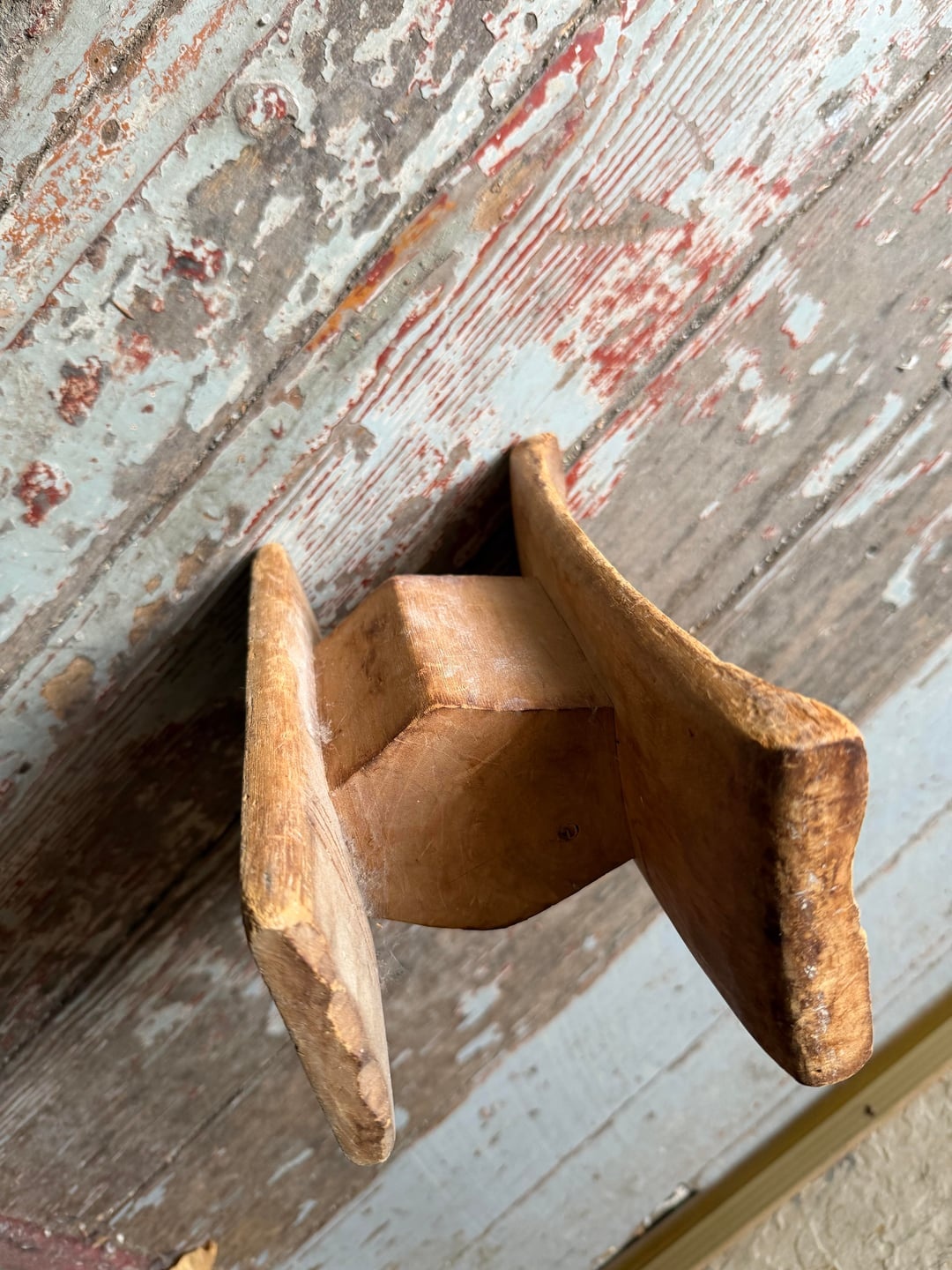
Unfortunately, once the original owner is gone, the knowledge behind these handmade tools often disappears as well.
That is why discoveries like this continue captivating people online. A simple piece of wood can suddenly become a historical puzzle, carrying traces of a forgotten hobby, profession, or artistic practice.
Today, this modest wooden object remains a reminder that some of the most puzzling antiques are not complex machines at all — but everyday tools whose purpose was once so familiar that nobody ever thought to write it down.