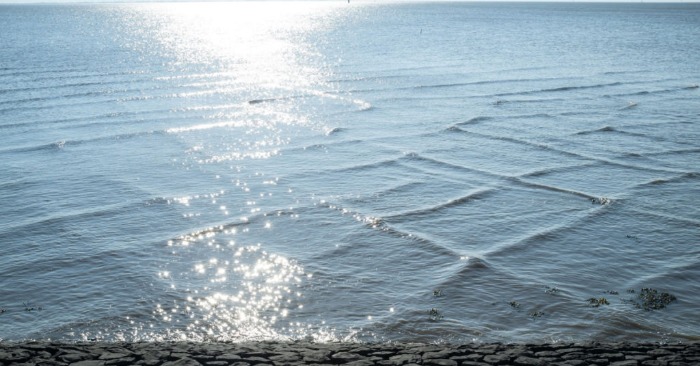
At first glance, square waves may look breathtaking — almost too perfect to be real.
But experts warn that these unusual ocean patterns can actually be extremely dangerous for swimmers and boats alike.
Known scientifically as “cross seas,” square waves form when two different wave systems collide from separate directions, creating a striking checkerboard or grid-like pattern across the surface of the water.
The result can look mesmerizing from the shore or from above, but beneath the beauty hides a serious hazard.
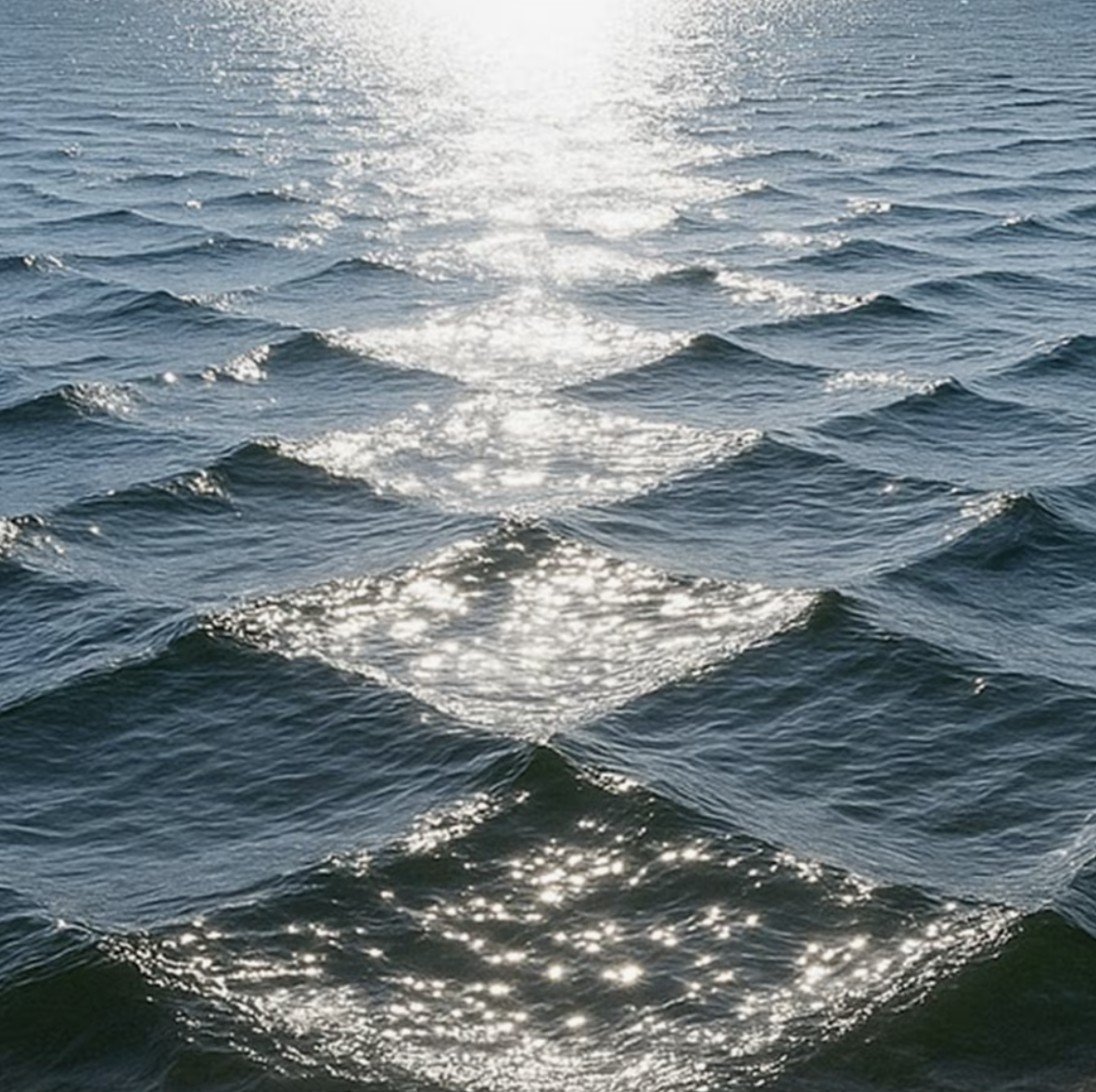
According to ocean experts and the European Space Agency, these conditions are more common than many people realize and can create powerful, unpredictable currents capable of overwhelming swimmers and destabilizing boats.
In some cases, the waves generated by crossing seas can reach heights of up to 10 feet while producing chaotic water movement that becomes difficult to navigate safely.
That is why experts strongly advise people to leave the water immediately if they notice square wave formations nearby.
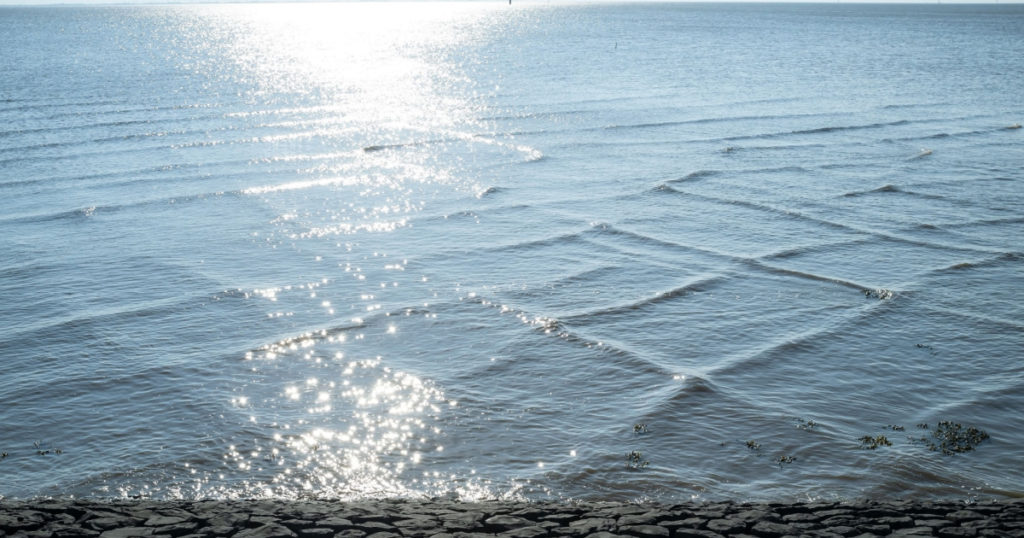
Unlike normal waves moving in a single direction, cross seas create conflicting forces beneath the surface, increasing the risk of dangerous currents and sudden shifts in water movement.
Square waves are especially common in places where two large bodies of water meet.
One of the most famous locations for viewing them is the French island of Île de Ré near La Rochelle, where tourists often gather at lighthouses to safely observe the incredible phenomenon from land.
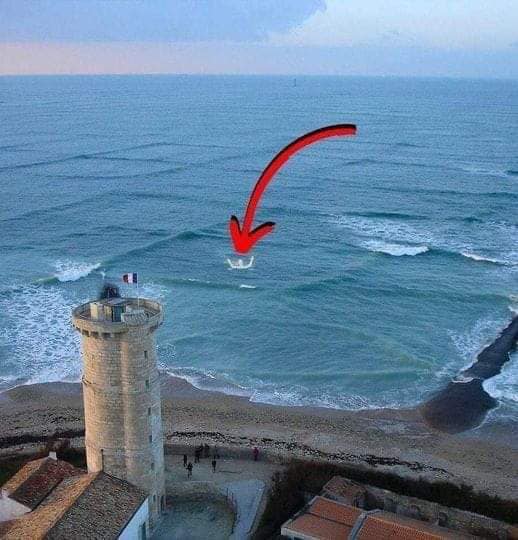
Another well-known location is Cape Reinga in New Zealand, where the Pacific Ocean and Tasman Sea collide dramatically.
Scientists believe square waves are a real-world example of complex mathematical wave interactions known as the Kadomtsev–Petviashvili equation, which describes nonlinear wave motion and how different weather systems interact with one another.
Despite the science behind them, most people simply see something stunning — and potentially deadly.
Experts say the safest way to enjoy square waves is from a secure distance on shore, never from inside the water.
Because while they may be beautiful to watch, they are not something you want to swim through.